

1 The Ultimate Question
15
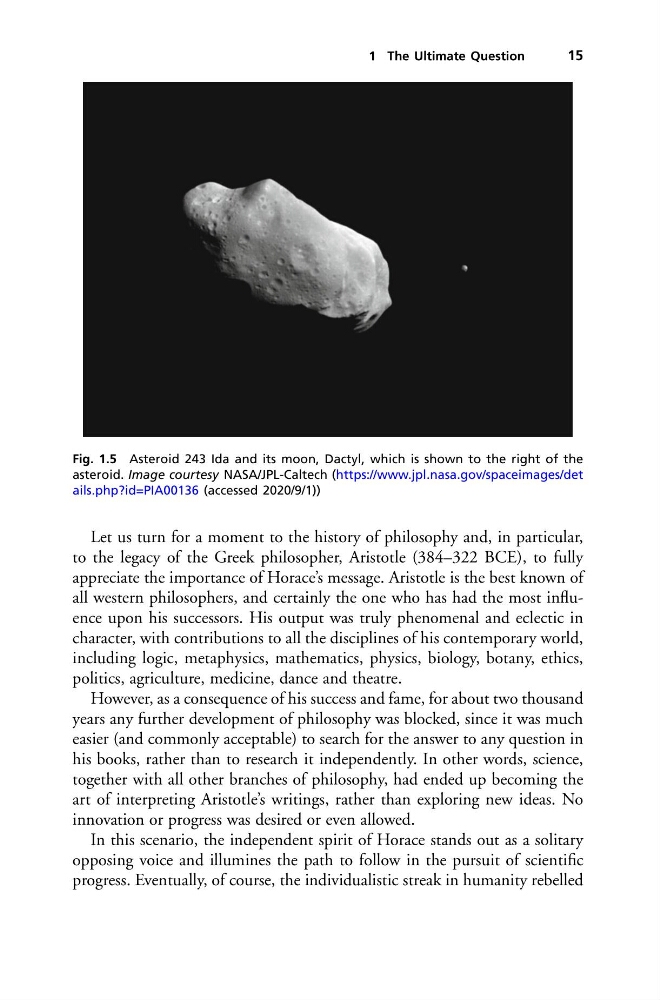
Fig. 1.5 Asteroid 243 Ida and its moon, Dactyl, which is shown to the right of the
asteroid. Image courtesy NASA/JPL-Caltech (https://www.jpl.nasa.gov/spaceimages/det
ails.php?id=PIA00136 (accessed 2020/9/1))
Let us turn for a moment to the history of philosophy and, in particular,
to the legacy of the Greek philosopher, Aristotle (384–322 BCE), to fully
appreciate the importance of Horace’s message. Aristotle is the best known of
all western philosophers, and certainly the one who has had the most influence upon his successors. His output was truly phenomenal and eclectic in
character, with contributions to all the disciplines of his contemporary world,
including logic, metaphysics, mathematics, physics, biology, botany, ethics,
politics, agriculture, medicine, dance and theatre.
However, as a consequence of his success and fame, for about two thousand
years any further development of philosophy was blocked, since it was much
easier (and commonly acceptable) to search for the answer to any question in
his books, rather than to research it independently. In other words, science,
together with all other branches of philosophy, had ended up becoming the
art of interpreting Aristotle’s writings, rather than exploring new ideas. No
innovation or progress was desired or even allowed.
In this scenario, the independent spirit of Horace stands out as a solitary
opposing voice and illumines the path to follow in the pursuit of scientific
progress. Eventually, of course, the individualistic streak in humanity rebelled
15
Fig. 1.5 Asteroid 243 Ida and its moon, Dactyl, which is shown to the right of the
asteroid. Image courtesy NASA/JPL-Caltech (https://www.jpl.nasa.gov/spaceimages/det
ails.php?id=PIA00136 (accessed 2020/9/1))
Let us turn for a moment to the history of philosophy and, in particular,
to the legacy of the Greek philosopher, Aristotle (384–322 BCE), to fully
appreciate the importance of Horace’s message. Aristotle is the best known of
all western philosophers, and certainly the one who has had the most influence upon his successors. His output was truly phenomenal and eclectic in
character, with contributions to all the disciplines of his contemporary world,
including logic, metaphysics, mathematics, physics, biology, botany, ethics,
politics, agriculture, medicine, dance and theatre.
However, as a consequence of his success and fame, for about two thousand
years any further development of philosophy was blocked, since it was much
easier (and commonly acceptable) to search for the answer to any question in
his books, rather than to research it independently. In other words, science,
together with all other branches of philosophy, had ended up becoming the
art of interpreting Aristotle’s writings, rather than exploring new ideas. No
innovation or progress was desired or even allowed.
In this scenario, the independent spirit of Horace stands out as a solitary
opposing voice and illumines the path to follow in the pursuit of scientific
progress. Eventually, of course, the individualistic streak in humanity rebelled