

242
R. Barrett and P. P. Delsanto
So enrapt were cosmologists by the success of the inflation model of Alan
Guth (see Chap. 10) that they applied it to the era immediately after the Big
Bang. At these times, because of the infinitesimal size of the space containing
all matter/energy, gravity is expected to dominate all physical interactions.
Indeed, all of the forces of physics may have been unified at this time. Unlike
in Guth’s original proposal for inflation, it has been suggested in a new model
known as “eternal inflation” that inflation persists forever. Within the inflation field, quantum fluctuations occur spontaneously and randomly from
place to place and time to time. Some of these fluctuations result in regions
where inflation stops, and a universe such as ours begins evolving. In others,
inflation continues rapidly. In this theory, our universe is a single “pocket”
or “bubble” embedded in a vast assemblage of universes in an inflating space
without end.
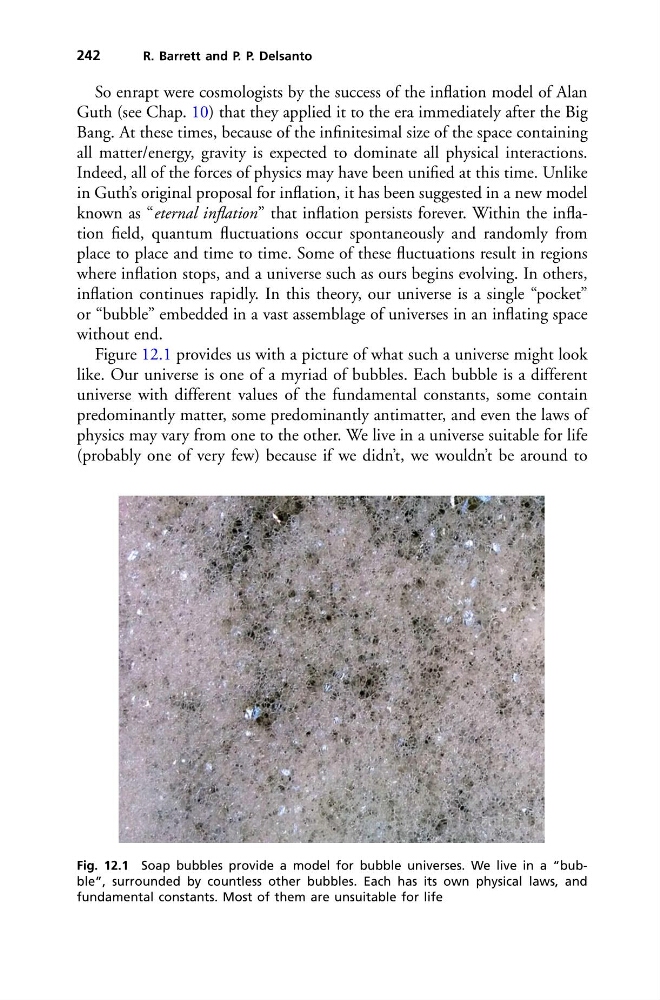
Figure 12.1 provides us with a picture of what such a universe might look
like. Our universe is one of a myriad of bubbles. Each bubble is a different
universe with different values of the fundamental constants, some contain
predominantly matter, some predominantly antimatter, and even the laws of
physics may vary from one to the other. We live in a universe suitable for life
(probably one of very few) because if we didn’t, we wouldn’t be around to
Fig. 12.1 Soap bubbles provide a model for bubble universes. We live in a “bubble”, surrounded by countless other bubbles. Each has its own physical laws, and
fundamental constants. Most of them are unsuitable for life
R. Barrett and P. P. Delsanto
So enrapt were cosmologists by the success of the inflation model of Alan
Guth (see Chap. 10) that they applied it to the era immediately after the Big
Bang. At these times, because of the infinitesimal size of the space containing
all matter/energy, gravity is expected to dominate all physical interactions.
Indeed, all of the forces of physics may have been unified at this time. Unlike
in Guth’s original proposal for inflation, it has been suggested in a new model
known as “eternal inflation” that inflation persists forever. Within the inflation field, quantum fluctuations occur spontaneously and randomly from
place to place and time to time. Some of these fluctuations result in regions
where inflation stops, and a universe such as ours begins evolving. In others,
inflation continues rapidly. In this theory, our universe is a single “pocket”
or “bubble” embedded in a vast assemblage of universes in an inflating space
without end.
Figure 12.1 provides us with a picture of what such a universe might look
like. Our universe is one of a myriad of bubbles. Each bubble is a different
universe with different values of the fundamental constants, some contain
predominantly matter, some predominantly antimatter, and even the laws of
physics may vary from one to the other. We live in a universe suitable for life
(probably one of very few) because if we didn’t, we wouldn’t be around to
Fig. 12.1 Soap bubbles provide a model for bubble universes. We live in a “bubble”, surrounded by countless other bubbles. Each has its own physical laws, and
fundamental constants. Most of them are unsuitable for life