

9 The Standard Model of Fundamental Particles
179
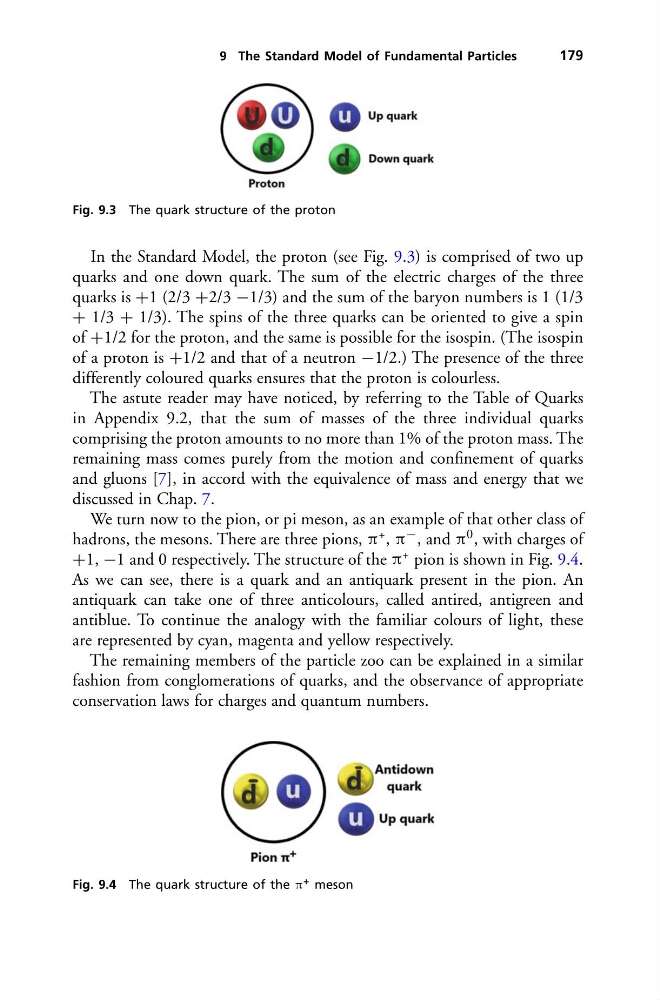
Fig. 9.3 The quark structure of the proton
In the Standard Model, the proton (see Fig. 9.3) is comprised of two up
quarks and one down quark. The sum of the electric charges of the three
quarks is +1 (2/3 +2/3 −1/3) and the sum of the baryon numbers is 1 (1/3
+ 1/3 + 1/3). The spins of the three quarks can be oriented to give a spin
of +1/2 for the proton, and the same is possible for the isospin. (The isospin
of a proton is +1/2 and that of a neutron −1/2.) The presence of the three
differently coloured quarks ensures that the proton is colourless.
The astute reader may have noticed, by referring to the Table of Quarks
in Appendix 9.2, that the sum of masses of the three individual quarks
comprising the proton amounts to no more than 1% of the proton mass. The
remaining mass comes purely from the motion and confinement of quarks
and gluons [7], in accord with the equivalence of mass and energy that we
discussed in Chap. 7.
We turn now to the pion, or pi meson, as an example of that other class of
hadrons, the mesons. There are three pions, π + , π − , and π 0 , with charges of
+1, −1 and 0 respectively. The structure of the π + pion is shown in Fig. 9.4.
As we can see, there is a quark and an antiquark present in the pion. An
antiquark can take one of three anticolours, called antired, antigreen and
antiblue. To continue the analogy with the familiar colours of light, these
are represented by cyan, magenta and yellow respectively.
The remaining members of the particle zoo can be explained in a similar
fashion from conglomerations of quarks, and the observance of appropriate
conservation laws for charges and quantum numbers.
Fig. 9.4 The quark structure of the π + meson
179
Fig. 9.3 The quark structure of the proton
In the Standard Model, the proton (see Fig. 9.3) is comprised of two up
quarks and one down quark. The sum of the electric charges of the three
quarks is +1 (2/3 +2/3 −1/3) and the sum of the baryon numbers is 1 (1/3
+ 1/3 + 1/3). The spins of the three quarks can be oriented to give a spin
of +1/2 for the proton, and the same is possible for the isospin. (The isospin
of a proton is +1/2 and that of a neutron −1/2.) The presence of the three
differently coloured quarks ensures that the proton is colourless.
The astute reader may have noticed, by referring to the Table of Quarks
in Appendix 9.2, that the sum of masses of the three individual quarks
comprising the proton amounts to no more than 1% of the proton mass. The
remaining mass comes purely from the motion and confinement of quarks
and gluons [7], in accord with the equivalence of mass and energy that we
discussed in Chap. 7.
We turn now to the pion, or pi meson, as an example of that other class of
hadrons, the mesons. There are three pions, π + , π − , and π 0 , with charges of
+1, −1 and 0 respectively. The structure of the π + pion is shown in Fig. 9.4.
As we can see, there is a quark and an antiquark present in the pion. An
antiquark can take one of three anticolours, called antired, antigreen and
antiblue. To continue the analogy with the familiar colours of light, these
are represented by cyan, magenta and yellow respectively.
The remaining members of the particle zoo can be explained in a similar
fashion from conglomerations of quarks, and the observance of appropriate
conservation laws for charges and quantum numbers.
Fig. 9.4 The quark structure of the π + meson