

138
R. Barrett and P. P. Delsanto
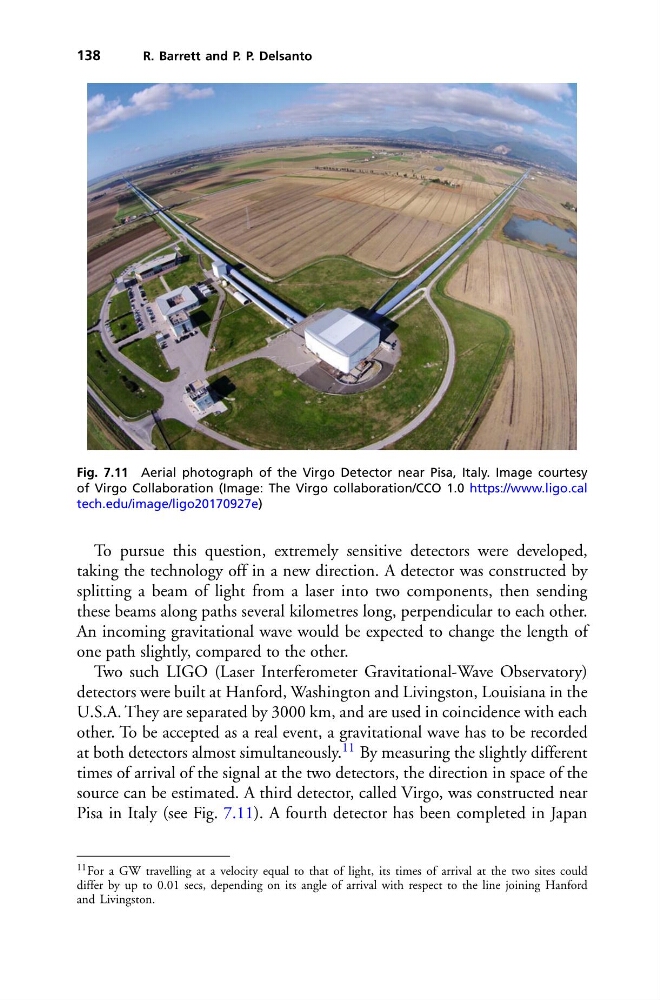
Fig. 7.11 Aerial photograph of the Virgo Detector near Pisa, Italy. Image courtesy
of Virgo Collaboration (Image: The Virgo collaboration/CCO 1.0 https://www.ligo.cal
tech.edu/image/ligo20170927e)
To pursue this question, extremely sensitive detectors were developed,
taking the technology off in a new direction. A detector was constructed by
splitting a beam of light from a laser into two components, then sending
these beams along paths several kilometres long, perpendicular to each other.
An incoming gravitational wave would be expected to change the length of
one path slightly, compared to the other.
Two such LIGO (Laser Interferometer Gravitational-Wave Observatory)
detectors were built at Hanford, Washington and Livingston, Louisiana in the
U.S.A. They are separated by 3000 km, and are used in coincidence with each
other. To be accepted as a real event, a gravitational wave has to be recorded
at both detectors almost simultaneously. 11 By measuring the slightly different
times of arrival of the signal at the two detectors, the direction in space of the
source can be estimated. A third detector, called Virgo, was constructed near
Pisa in Italy (see Fig. 7.11). A fourth detector has been completed in Japan
11 For a GW travelling at a velocity equal to that of light, its times of arrival at the two sites could
differ by up to 0.01 secs, depending on its angle of arrival with respect to the line joining Hanford
and Livingston.
R. Barrett and P. P. Delsanto
Fig. 7.11 Aerial photograph of the Virgo Detector near Pisa, Italy. Image courtesy
of Virgo Collaboration (Image: The Virgo collaboration/CCO 1.0 https://www.ligo.cal
tech.edu/image/ligo20170927e)
To pursue this question, extremely sensitive detectors were developed,
taking the technology off in a new direction. A detector was constructed by
splitting a beam of light from a laser into two components, then sending
these beams along paths several kilometres long, perpendicular to each other.
An incoming gravitational wave would be expected to change the length of
one path slightly, compared to the other.
Two such LIGO (Laser Interferometer Gravitational-Wave Observatory)
detectors were built at Hanford, Washington and Livingston, Louisiana in the
U.S.A. They are separated by 3000 km, and are used in coincidence with each
other. To be accepted as a real event, a gravitational wave has to be recorded
at both detectors almost simultaneously. 11 By measuring the slightly different
times of arrival of the signal at the two detectors, the direction in space of the
source can be estimated. A third detector, called Virgo, was constructed near
Pisa in Italy (see Fig. 7.11). A fourth detector has been completed in Japan
11 For a GW travelling at a velocity equal to that of light, its times of arrival at the two sites could
differ by up to 0.01 secs, depending on its angle of arrival with respect to the line joining Hanford
and Livingston.