

hydrogenation of acetylene. The enhanced activity compared to the monometallic
parent catalysts was explained by a weaker coordination of acetylene and ethylene
on the bimetallic surfaces.
In 2018, Henkelman and Humphrey reported for the first time bimetallic AgIr
alloy NPs [132]. Naturally, Ag and Ir are immiscible metals, but using a microwaveassisted polyol synthesis method, small AgIr alloy NPs (2.5–5.5 nm) were successfully obtained. Bimetallic alloy NPs were prepared with different metal compositions, Ag x Ir (100Àx) NPs (x ¼ 6–31), from Ag(NO 3 ) and IrCl 3 precursors. Ir-rich NPs,
stabilised with PVP and dispersed in SiO 2 , showed a higher activity in the gas-phase
alkene hydrogenation (cyclohexene to cyclohexane) than the analogous pure Ir
catalyst (Fig. 23a). More specifically, Ag 6 Ir 94 showed a TOF 75% higher than
pure Ir NPs, even presenting a large particle size (i.e. Ag 6 Ir 94 NPs ¼ 2.5 nm; Ir
NPs ¼ 1.7 nm). DFT calculations explain this difference in activity by the larger
proportion of weakly bound H atoms on Ag 6 Ir 94 NPs, due to their large size and
higher surface/edge sites ratio. The weaker H-binding sites of Ag 6 Ir 94 NPs facilitate
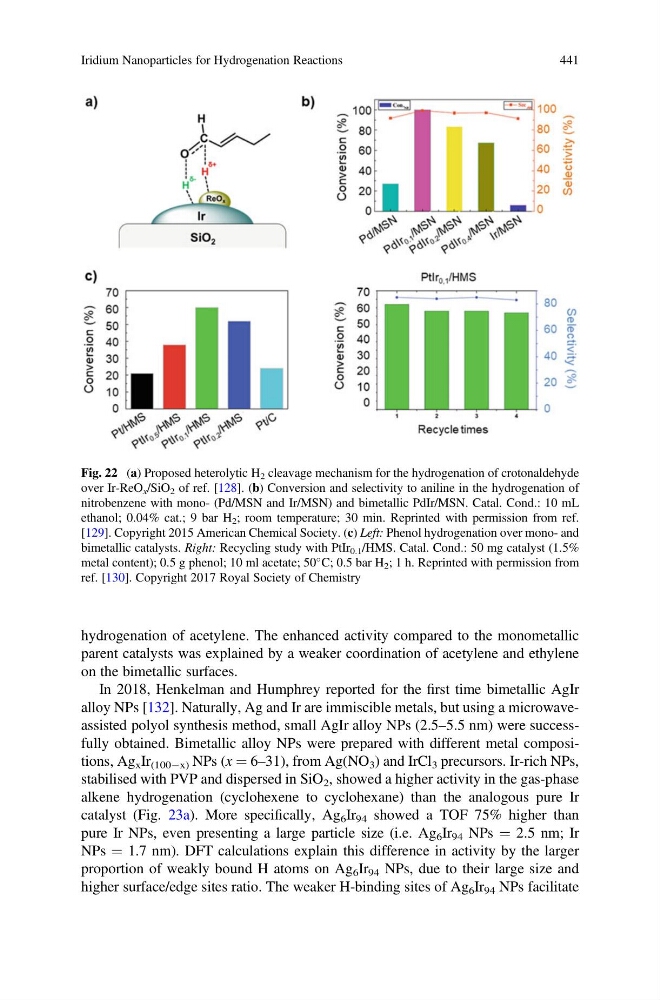
Fig. 22 (a) Proposed heterolytic H 2 cleavage mechanism for the hydrogenation of crotonaldehyde
over Ir-ReO x /SiO 2 of ref. [128]. (b) Conversion and selectivity to aniline in the hydrogenation of
nitrobenzene with mono- (Pd/MSN and Ir/MSN) and bimetallic PdIr/MSN. Catal. Cond.: 10 mL
ethanol; 0.04% cat.; 9 bar H 2 ; room temperature; 30 min. Reprinted with permission from ref.
[129]. Copyright 2015 American Chemical Society. (c) Left: Phenol hydrogenation over mono- and
bimetallic catalysts. Right: Recycling study with PtIr 0.1 /HMS. Catal. Cond.: 50 mg catalyst (1.5%
metal content); 0.5 g phenol; 10 ml acetate; 50
C; 0.5 bar H 2 ; 1 h. Reprinted with permission from
ref. [130]. Copyright 2017 Royal Society of Chemistry
Iridium Nanoparticles for Hydrogenation Reactions
441
parent catalysts was explained by a weaker coordination of acetylene and ethylene
on the bimetallic surfaces.
In 2018, Henkelman and Humphrey reported for the first time bimetallic AgIr
alloy NPs [132]. Naturally, Ag and Ir are immiscible metals, but using a microwaveassisted polyol synthesis method, small AgIr alloy NPs (2.5–5.5 nm) were successfully obtained. Bimetallic alloy NPs were prepared with different metal compositions, Ag x Ir (100Àx) NPs (x ¼ 6–31), from Ag(NO 3 ) and IrCl 3 precursors. Ir-rich NPs,
stabilised with PVP and dispersed in SiO 2 , showed a higher activity in the gas-phase
alkene hydrogenation (cyclohexene to cyclohexane) than the analogous pure Ir
catalyst (Fig. 23a). More specifically, Ag 6 Ir 94 showed a TOF 75% higher than
pure Ir NPs, even presenting a large particle size (i.e. Ag 6 Ir 94 NPs ¼ 2.5 nm; Ir
NPs ¼ 1.7 nm). DFT calculations explain this difference in activity by the larger
proportion of weakly bound H atoms on Ag 6 Ir 94 NPs, due to their large size and
higher surface/edge sites ratio. The weaker H-binding sites of Ag 6 Ir 94 NPs facilitate
Fig. 22 (a) Proposed heterolytic H 2 cleavage mechanism for the hydrogenation of crotonaldehyde
over Ir-ReO x /SiO 2 of ref. [128]. (b) Conversion and selectivity to aniline in the hydrogenation of
nitrobenzene with mono- (Pd/MSN and Ir/MSN) and bimetallic PdIr/MSN. Catal. Cond.: 10 mL
ethanol; 0.04% cat.; 9 bar H 2 ; room temperature; 30 min. Reprinted with permission from ref.
[129]. Copyright 2015 American Chemical Society. (c) Left: Phenol hydrogenation over mono- and
bimetallic catalysts. Right: Recycling study with PtIr 0.1 /HMS. Catal. Cond.: 50 mg catalyst (1.5%
metal content); 0.5 g phenol; 10 ml acetate; 50
C; 0.5 bar H 2 ; 1 h. Reprinted with permission from
ref. [130]. Copyright 2017 Royal Society of Chemistry
Iridium Nanoparticles for Hydrogenation Reactions
441