

studies and catalyst characterisations proposed that the active sites are the interface
among Ir
0 , Ir
4+ and Fe
2+ species on the MgO support. More specifically, the cation
Fe
2+ next to the anion O
2À dissociate the H 2 in a heterolytic way and generate H
À
and H
+ species (Fig. 16). Next to these hydride and proton species, C¼O bonds
adsorb on Ir
4+ sites through a dipole-dipole interactions and form a six-membered
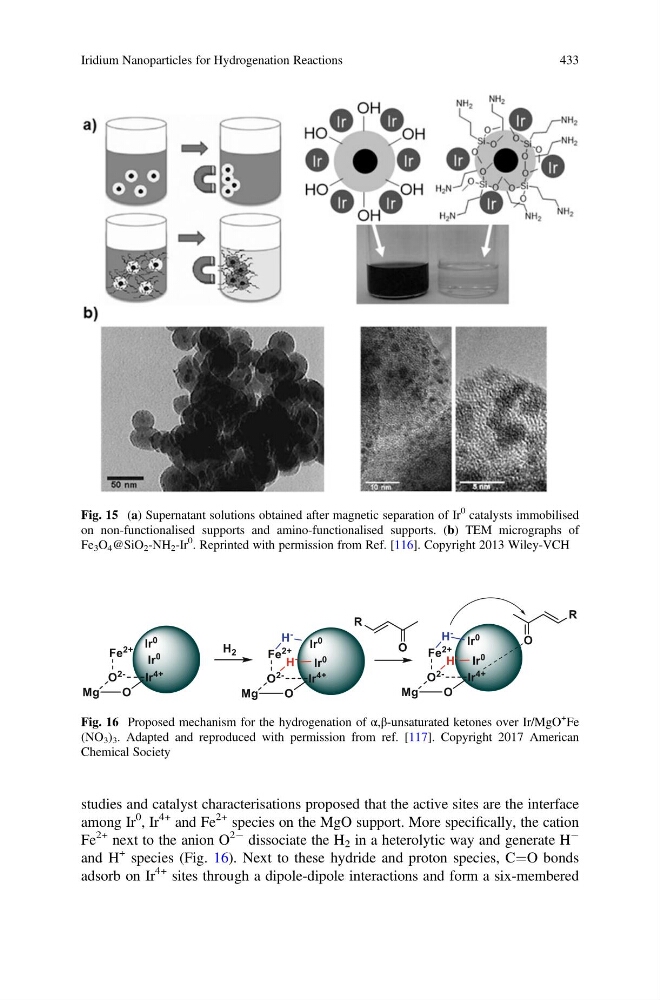
Fig. 15 (a) Supernatant solutions obtained after magnetic separation of Ir
0 catalysts immobilised
on non-functionalised supports and amino-functionalised supports. (b) TEM micrographs of
Fe 3 O 4 @SiO 2 -NH 2 -Ir
0
. Reprinted with permission from Ref. [116]. Copyright 2013 Wiley-VCH
Fig. 16 Proposed mechanism for the hydrogenation of α,β-unsaturated ketones over Ir/MgO
+ Fe
(NO 3 ) 3 . Adapted and reproduced with permission from ref. [117]. Copyright 2017 American
Chemical Society
Iridium Nanoparticles for Hydrogenation Reactions
433
among Ir
0 , Ir
4+ and Fe
2+ species on the MgO support. More specifically, the cation
Fe
2+ next to the anion O
2À dissociate the H 2 in a heterolytic way and generate H
À
and H
+ species (Fig. 16). Next to these hydride and proton species, C¼O bonds
adsorb on Ir
4+ sites through a dipole-dipole interactions and form a six-membered
Fig. 15 (a) Supernatant solutions obtained after magnetic separation of Ir
0 catalysts immobilised
on non-functionalised supports and amino-functionalised supports. (b) TEM micrographs of
Fe 3 O 4 @SiO 2 -NH 2 -Ir
0
. Reprinted with permission from Ref. [116]. Copyright 2013 Wiley-VCH
Fig. 16 Proposed mechanism for the hydrogenation of α,β-unsaturated ketones over Ir/MgO
+ Fe
(NO 3 ) 3 . Adapted and reproduced with permission from ref. [117]. Copyright 2017 American
Chemical Society
Iridium Nanoparticles for Hydrogenation Reactions
433