

results revealed that the sensory properties (color, texture, taste, odor, and overall
acceptability) of developed biscuits were not significantly different than control
whereas, sensory properties of developed cakes were significantly different. The
study indicated that germination of seeds further improves its nutritional quality, by
enhancing its micronutrient content, fatty acid, and macronutrients composition.
Atuonwu and Akobundu (2010) observed that wheat flour can be replaced up to
10% with defatted pumpkin seed flour to yield cookies with enhanced nutritional and
acceptable sensory qualities of cookies. Białek et al. (2015) developed muffins by
partial substitution of wheat flour with pumpkin seed flour (33%). Incorporation of
pumpkin seed flour not only resulted in a general decrease in short and long chain
saturated fatty acids (especially myristic, palmitic and stearic) but also marked
reduction in the concentration of odd and branched chain fatty acids independent
of storage time was observed. El-Soukkary (2001) evaluated bread quality prepared
with the fortification of wheat flour with various pumpkin seed products like raw,
roasted, germinated, fermented protein concentrates and isolates. He reported that
the addition of pumpkin seed products to wheat flour resulted in an enhancement in
the protein and mineral concentration of bread compared with that of control without
any detrimental effects on dough or loaf quality.
Revathy and Sabitha (2013) developed and analyzed various bakery products viz.
bread, bun (plain, coconut), biscuits (sweet, salt, and coconut), and cake (plain,
plum) using pumpkin seed flour with partial replacement of wheat flour at 10, 20,
and 30% level. The findings of the study revealed that incorporation of pumpkin
seed flour resulted in an enhancement in the nutritive value and their acceptability
was at par with that of standard products.
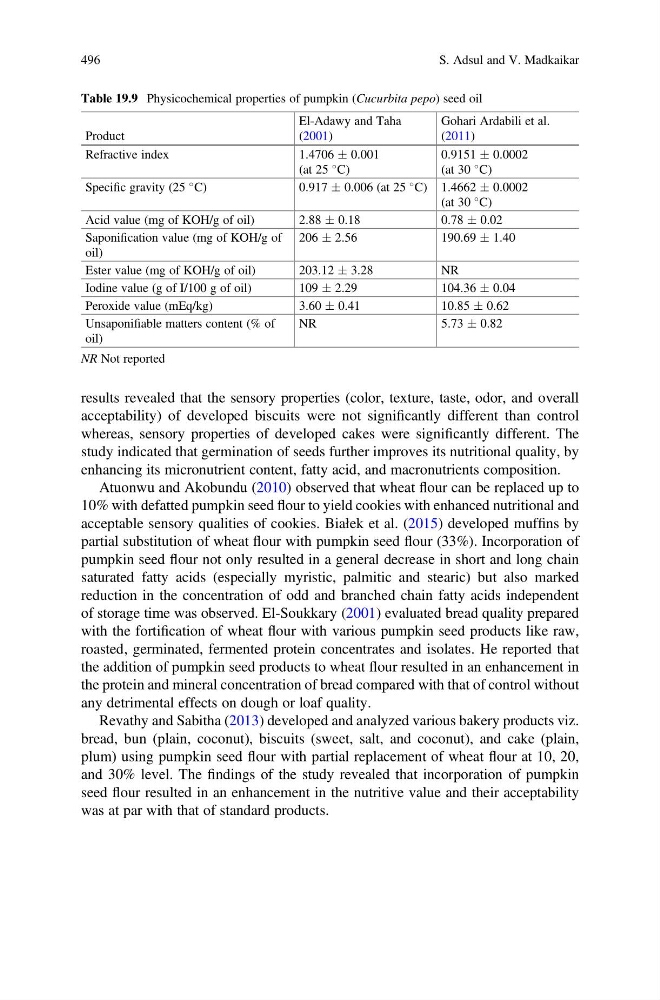
Table 19.9 Physicochemical properties of pumpkin (Cucurbita pepo) seed oil
Product
El-Adawy and Taha
(2001)
Gohari Ardabili et al.
(2011)
Refractive index
1.4706 Æ 0.001
(at 25
C)
0.9151 Æ 0.0002
(at 30
C)
Specific gravity (25
C)
0.917 Æ 0.006 (at 25
C) 1.4662 Æ 0.0002
(at 30
C)
Acid value (mg of KOH/g of oil)
2.88 Æ 0.18
0.78 Æ 0.02
Saponification value (mg of KOH/g of
oil)
206 Æ 2.56
190.69 Æ 1.40
Ester value (mg of KOH/g of oil)
203.12 Æ 3.28
NR
Iodine value (g of I/100 g of oil)
109 Æ 2.29
104.36 Æ 0.04
Peroxide value (mEq/kg)
3.60 Æ 0.41
10.85 Æ 0.62
Unsaponifiable matters content (% of
oil)
NR
5.73 Æ 0.82
NR Not reported
496
S. Adsul and V. Madkaikar
acceptability) of developed biscuits were not significantly different than control
whereas, sensory properties of developed cakes were significantly different. The
study indicated that germination of seeds further improves its nutritional quality, by
enhancing its micronutrient content, fatty acid, and macronutrients composition.
Atuonwu and Akobundu (2010) observed that wheat flour can be replaced up to
10% with defatted pumpkin seed flour to yield cookies with enhanced nutritional and
acceptable sensory qualities of cookies. Białek et al. (2015) developed muffins by
partial substitution of wheat flour with pumpkin seed flour (33%). Incorporation of
pumpkin seed flour not only resulted in a general decrease in short and long chain
saturated fatty acids (especially myristic, palmitic and stearic) but also marked
reduction in the concentration of odd and branched chain fatty acids independent
of storage time was observed. El-Soukkary (2001) evaluated bread quality prepared
with the fortification of wheat flour with various pumpkin seed products like raw,
roasted, germinated, fermented protein concentrates and isolates. He reported that
the addition of pumpkin seed products to wheat flour resulted in an enhancement in
the protein and mineral concentration of bread compared with that of control without
any detrimental effects on dough or loaf quality.
Revathy and Sabitha (2013) developed and analyzed various bakery products viz.
bread, bun (plain, coconut), biscuits (sweet, salt, and coconut), and cake (plain,
plum) using pumpkin seed flour with partial replacement of wheat flour at 10, 20,
and 30% level. The findings of the study revealed that incorporation of pumpkin
seed flour resulted in an enhancement in the nutritive value and their acceptability
was at par with that of standard products.
Table 19.9 Physicochemical properties of pumpkin (Cucurbita pepo) seed oil
Product
El-Adawy and Taha
(2001)
Gohari Ardabili et al.
(2011)
Refractive index
1.4706 Æ 0.001
(at 25
C)
0.9151 Æ 0.0002
(at 30
C)
Specific gravity (25
C)
0.917 Æ 0.006 (at 25
C) 1.4662 Æ 0.0002
(at 30
C)
Acid value (mg of KOH/g of oil)
2.88 Æ 0.18
0.78 Æ 0.02
Saponification value (mg of KOH/g of
oil)
206 Æ 2.56
190.69 Æ 1.40
Ester value (mg of KOH/g of oil)
203.12 Æ 3.28
NR
Iodine value (g of I/100 g of oil)
109 Æ 2.29
104.36 Æ 0.04
Peroxide value (mEq/kg)
3.60 Æ 0.41
10.85 Æ 0.62
Unsaponifiable matters content (% of
oil)
NR
5.73 Æ 0.82
NR Not reported
496
S. Adsul and V. Madkaikar