

19.8.9 For Better Sleep and Antidepressant Activity
In Ayurveda, consumption of 1–2 spoons pumpkin seeds—“Kushmanda Beeja” is
advised for sound sleep. It is considered as “Sleep Inducing Substance” (“Nidra
Janaka Dravya”) due to the presence of high amounts of magnesium and zinc
(Jambli et al. 2017). Halson (2013, 2014) suggested the inclusion of ~200 g of
pumpkin seeds equivalent to 1 g of tryptophan to enhance sleep latency and
subjective sleep quality.
Traditionally pumpkin seeds are used to treat depression (Lim 2017). Antidepressant qualities are attributed to mood-enhancing amino acid tryptophan which is
present in considerable amounts in pumpkin seeds (Yadav et al. 2010). Umadevi
et al. (2011) studied the effect of aqueous and alcoholic Cucurbita pepo seeds extract
on methyl isobutyl ketone-induced depression in male albino Wistar rats. Forced
Swim Test (FST) was conducted to examine the antidepressant activity. Rats were
randomly categorized into 5 groups as Group I – control and Group II – depressive
control, Group III and IV treated with aqueous and alcoholic seed extracts (100 mg/
kg body weight) for 30 days, and Group V treated with the standard drug (imipramine) at a dose of 30 mg/kg body weight for 15 days. The forced swim test (FST)
results showed a marked decrease in immobility time in comparison with depressed
rats after receiving seed extracts. The activity of antioxidant enzymes namely
superoxide dismutase, glutathione peroxidase, and catalase was found to increase
in the brain and serum of rats treated with extracts, in addition to improvement in the
concentration of reduced glutathione, vitamin C and decreased lipid peroxidation in
the brain and serum of test rats in comparison with depressed rats. The extracts were
found to be as effective as antidepressant drug – imipramine (used as control).
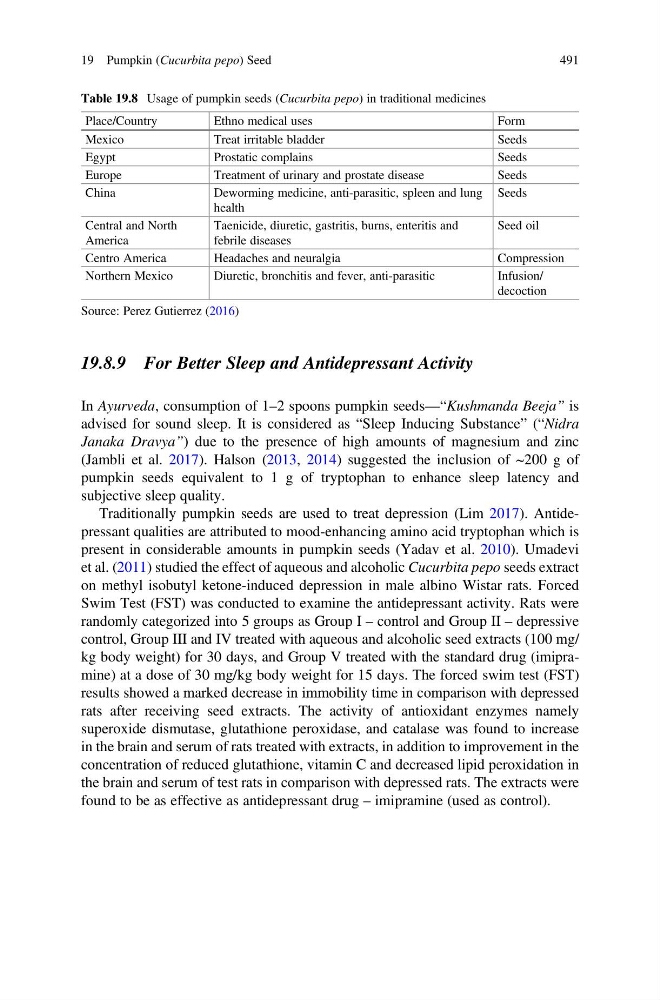
Table 19.8 Usage of pumpkin seeds (Cucurbita pepo) in traditional medicines
Place/Country
Ethno medical uses
Form
Mexico
Treat irritable bladder
Seeds
Egypt
Prostatic complains
Seeds
Europe
Treatment of urinary and prostate disease
Seeds
China
Deworming medicine, anti-parasitic, spleen and lung
health
Seeds
Central and North
America
Taenicide, diuretic, gastritis, burns, enteritis and
febrile diseases
Seed oil
Centro America
Headaches and neuralgia
Compression
Northern Mexico
Diuretic, bronchitis and fever, anti-parasitic
Infusion/
decoction
Source: Perez Gutierrez (2016)
19 Pumpkin (Cucurbita pepo) Seed
491
In Ayurveda, consumption of 1–2 spoons pumpkin seeds—“Kushmanda Beeja” is
advised for sound sleep. It is considered as “Sleep Inducing Substance” (“Nidra
Janaka Dravya”) due to the presence of high amounts of magnesium and zinc
(Jambli et al. 2017). Halson (2013, 2014) suggested the inclusion of ~200 g of
pumpkin seeds equivalent to 1 g of tryptophan to enhance sleep latency and
subjective sleep quality.
Traditionally pumpkin seeds are used to treat depression (Lim 2017). Antidepressant qualities are attributed to mood-enhancing amino acid tryptophan which is
present in considerable amounts in pumpkin seeds (Yadav et al. 2010). Umadevi
et al. (2011) studied the effect of aqueous and alcoholic Cucurbita pepo seeds extract
on methyl isobutyl ketone-induced depression in male albino Wistar rats. Forced
Swim Test (FST) was conducted to examine the antidepressant activity. Rats were
randomly categorized into 5 groups as Group I – control and Group II – depressive
control, Group III and IV treated with aqueous and alcoholic seed extracts (100 mg/
kg body weight) for 30 days, and Group V treated with the standard drug (imipramine) at a dose of 30 mg/kg body weight for 15 days. The forced swim test (FST)
results showed a marked decrease in immobility time in comparison with depressed
rats after receiving seed extracts. The activity of antioxidant enzymes namely
superoxide dismutase, glutathione peroxidase, and catalase was found to increase
in the brain and serum of rats treated with extracts, in addition to improvement in the
concentration of reduced glutathione, vitamin C and decreased lipid peroxidation in
the brain and serum of test rats in comparison with depressed rats. The extracts were
found to be as effective as antidepressant drug – imipramine (used as control).
Table 19.8 Usage of pumpkin seeds (Cucurbita pepo) in traditional medicines
Place/Country
Ethno medical uses
Form
Mexico
Treat irritable bladder
Seeds
Egypt
Prostatic complains
Seeds
Europe
Treatment of urinary and prostate disease
Seeds
China
Deworming medicine, anti-parasitic, spleen and lung
health
Seeds
Central and North
America
Taenicide, diuretic, gastritis, burns, enteritis and
febrile diseases
Seed oil
Centro America
Headaches and neuralgia
Compression
Northern Mexico
Diuretic, bronchitis and fever, anti-parasitic
Infusion/
decoction
Source: Perez Gutierrez (2016)
19 Pumpkin (Cucurbita pepo) Seed
491