

14.10.2 Anticarcinogenic Activity
Cancer is the second leading cause of death globally and is responsible for an
estimated 9.6 million deaths in 2018 (WHO 2018). Borage oil has been reported
to exert anticarcinogenic effects in several in vivo and in vitro animal models (Jiang
et al. 2000; Zhang et al. 2015; Wauquier et al. 2012). A few studies have been
conducted to know the effect of dietary supplementation of borage oil and/or GLA
Diet
Linoleic acid
(C18:2; 9,12) ( -6)
-Linolenic acid
(C18:3; 6, 9, 12) ( -6)
Di-homo -Linolenic acid
(DGLA)
(C20:3; 8, 11, 14) ( -6)
Arachidonic acid
(C20:4; 5, 8, 11, 14) ( -6)
1-series Prostaglandins
(PGE1, PGH1) &
15-hydroxydihomo-γ-linolenic acid
Precursors of anti-inflammatory
compounds
2-series Prostaglandins
(PGE2, PGH2, PGD2) &
4-series Leukotrienes
Precursors of Pro-inflammatory
compounds
Cyclooxygenase &
Lipoxygenase
Cyclooxygenase &
Lipoxygenase
6-Desaturase
5-Desaturase
Elongases
Dietary borage
oil
Chronic inflammation
Reduced mutagenic activity
Platelet aggregation
Vasodilation
Rheumatoid arthritis
Atherosclerosis
Dermatitis
Cancer
Cardiovascular diseases
Hypercholesterolemia
Chronic inflammation
Reduced mutagenic activity
Platelet aggregation
Vasodilation
Joint pain & arthritis
Atherosclerosis
Dermatitis and skin irritation
Cancer
Cardiovascular diseases
Hypercholesterolemia
Inhibition
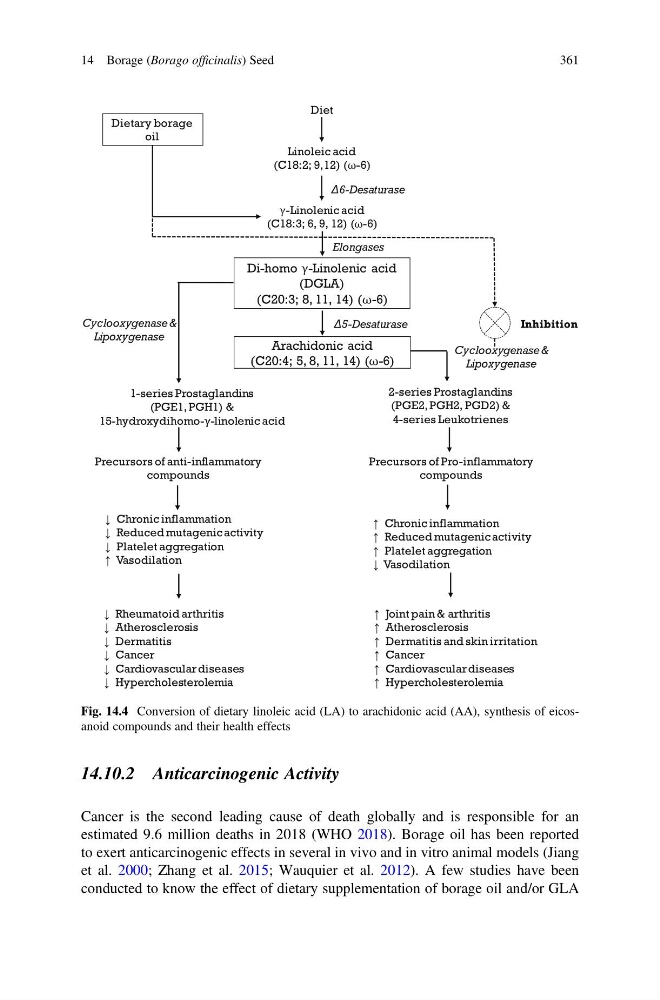
Fig. 14.4 Conversion of dietary linoleic acid (LA) to arachidonic acid (AA), synthesis of eicosanoid compounds and their health effects
14 Borage (Borago officinalis) Seed
361
Cancer is the second leading cause of death globally and is responsible for an
estimated 9.6 million deaths in 2018 (WHO 2018). Borage oil has been reported
to exert anticarcinogenic effects in several in vivo and in vitro animal models (Jiang
et al. 2000; Zhang et al. 2015; Wauquier et al. 2012). A few studies have been
conducted to know the effect of dietary supplementation of borage oil and/or GLA
Diet
Linoleic acid
(C18:2; 9,12) ( -6)
-Linolenic acid
(C18:3; 6, 9, 12) ( -6)
Di-homo -Linolenic acid
(DGLA)
(C20:3; 8, 11, 14) ( -6)
Arachidonic acid
(C20:4; 5, 8, 11, 14) ( -6)
1-series Prostaglandins
(PGE1, PGH1) &
15-hydroxydihomo-γ-linolenic acid
Precursors of anti-inflammatory
compounds
2-series Prostaglandins
(PGE2, PGH2, PGD2) &
4-series Leukotrienes
Precursors of Pro-inflammatory
compounds
Cyclooxygenase &
Lipoxygenase
Cyclooxygenase &
Lipoxygenase
6-Desaturase
5-Desaturase
Elongases
Dietary borage
oil
Chronic inflammation
Reduced mutagenic activity
Platelet aggregation
Vasodilation
Rheumatoid arthritis
Atherosclerosis
Dermatitis
Cancer
Cardiovascular diseases
Hypercholesterolemia
Chronic inflammation
Reduced mutagenic activity
Platelet aggregation
Vasodilation
Joint pain & arthritis
Atherosclerosis
Dermatitis and skin irritation
Cancer
Cardiovascular diseases
Hypercholesterolemia
Inhibition
Fig. 14.4 Conversion of dietary linoleic acid (LA) to arachidonic acid (AA), synthesis of eicosanoid compounds and their health effects
14 Borage (Borago officinalis) Seed
361