

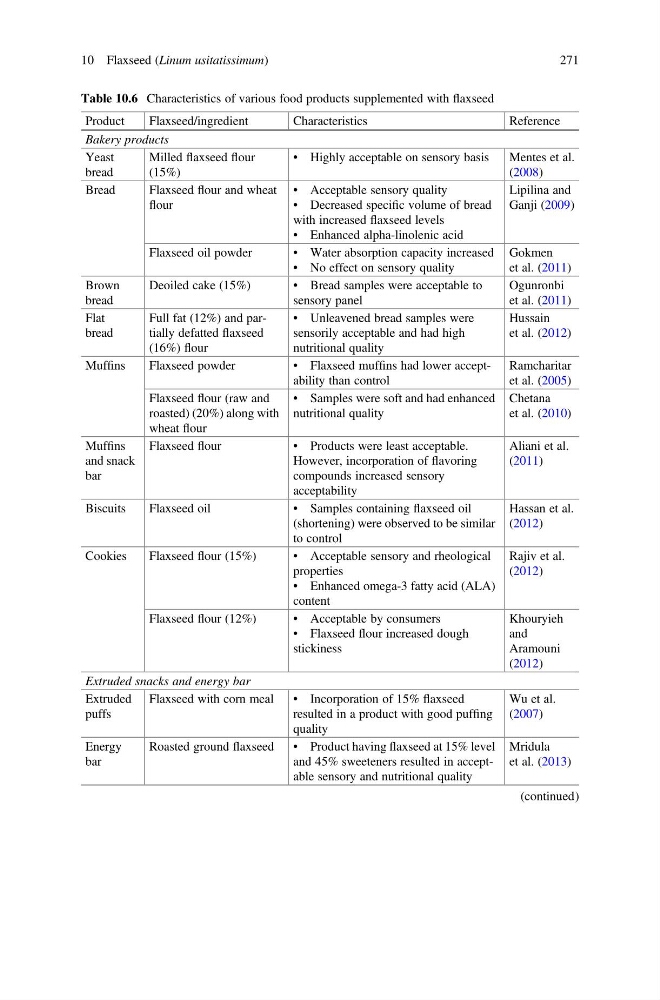
Table 10.6 Characteristics of various food products supplemented with flaxseed
Product
Flaxseed/ingredient
Characteristics
Reference
Bakery products
Yeast
bread
Milled flaxseed flour
(15%)
• Highly acceptable on sensory basis
Mentes et al.
(2008)
Bread
Flaxseed flour and wheat
flour
• Acceptable sensory quality
• Decreased specific volume of bread
with increased flaxseed levels
• Enhanced alpha-linolenic acid
Lipilina and
Ganji (2009)
Flaxseed oil powder
• Water absorption capacity increased
• No effect on sensory quality
Gokmen
et al. (2011)
Brown
bread
Deoiled cake (15%)
• Bread samples were acceptable to
sensory panel
Ogunronbi
et al. (2011)
Flat
bread
Full fat (12%) and partially defatted flaxseed
(16%) flour
• Unleavened bread samples were
sensorily acceptable and had high
nutritional quality
Hussain
et al. (2012)
Muffins
Flaxseed powder
• Flaxseed muffins had lower acceptability than control
Ramcharitar
et al. (2005)
Flaxseed flour (raw and
roasted) (20%) along with
wheat flour
• Samples were soft and had enhanced
nutritional quality
Chetana
et al. (2010)
Muffins
and snack
bar
Flaxseed flour
• Products were least acceptable.
However, incorporation of flavoring
compounds increased sensory
acceptability
Aliani et al.
(2011)
Biscuits
Flaxseed oil
• Samples containing flaxseed oil
(shortening) were observed to be similar
to control
Hassan et al.
(2012)
Cookies
Flaxseed flour (15%)
• Acceptable sensory and rheological
properties
• Enhanced omega-3 fatty acid (ALA)
content
Rajiv et al.
(2012)
Flaxseed flour (12%)
• Acceptable by consumers
• Flaxseed flour increased dough
stickiness
Khouryieh
and
Aramouni
(2012)
Extruded snacks and energy bar
Extruded
puffs
Flaxseed with corn meal
• Incorporation of 15% flaxseed
resulted in a product with good puffing
quality
Wu et al.
(2007)
Energy
bar
Roasted ground flaxseed • Product having flaxseed at 15% level
and 45% sweeteners resulted in acceptable sensory and nutritional quality
Mridula
et al. (2013)
(continued)
10 Flaxseed (Linum usitatissimum)
271
Product
Flaxseed/ingredient
Characteristics
Reference
Bakery products
Yeast
bread
Milled flaxseed flour
(15%)
• Highly acceptable on sensory basis
Mentes et al.
(2008)
Bread
Flaxseed flour and wheat
flour
• Acceptable sensory quality
• Decreased specific volume of bread
with increased flaxseed levels
• Enhanced alpha-linolenic acid
Lipilina and
Ganji (2009)
Flaxseed oil powder
• Water absorption capacity increased
• No effect on sensory quality
Gokmen
et al. (2011)
Brown
bread
Deoiled cake (15%)
• Bread samples were acceptable to
sensory panel
Ogunronbi
et al. (2011)
Flat
bread
Full fat (12%) and partially defatted flaxseed
(16%) flour
• Unleavened bread samples were
sensorily acceptable and had high
nutritional quality
Hussain
et al. (2012)
Muffins
Flaxseed powder
• Flaxseed muffins had lower acceptability than control
Ramcharitar
et al. (2005)
Flaxseed flour (raw and
roasted) (20%) along with
wheat flour
• Samples were soft and had enhanced
nutritional quality
Chetana
et al. (2010)
Muffins
and snack
bar
Flaxseed flour
• Products were least acceptable.
However, incorporation of flavoring
compounds increased sensory
acceptability
Aliani et al.
(2011)
Biscuits
Flaxseed oil
• Samples containing flaxseed oil
(shortening) were observed to be similar
to control
Hassan et al.
(2012)
Cookies
Flaxseed flour (15%)
• Acceptable sensory and rheological
properties
• Enhanced omega-3 fatty acid (ALA)
content
Rajiv et al.
(2012)
Flaxseed flour (12%)
• Acceptable by consumers
• Flaxseed flour increased dough
stickiness
Khouryieh
and
Aramouni
(2012)
Extruded snacks and energy bar
Extruded
puffs
Flaxseed with corn meal
• Incorporation of 15% flaxseed
resulted in a product with good puffing
quality
Wu et al.
(2007)
Energy
bar
Roasted ground flaxseed • Product having flaxseed at 15% level
and 45% sweeteners resulted in acceptable sensory and nutritional quality
Mridula
et al. (2013)
(continued)
10 Flaxseed (Linum usitatissimum)
271