

7.4 Phytonutrients
Coconut has an abundant amount of phytonutrients present in it. The ethanolic
extract of coconut mesocarp shown the presence of a range of phytonutrients such
as tannins, phenols, flavonoids, triterpenes, steroids, leucoanthocyanidins, and alkaloids (Matos 1997), while butanol extract revealed the presence of saponins, condensed tannins, and triterpenes (Costa et al. 2010). A different part of the coconut
tree, as well as fruit, contains a good amount of phytochemicals such as coconut oil
which is a rich source of lauric acid (Tangwatcharin and Khopaibool 2012) and
α-tocopherol (Arlee et al. 2013). Liquid albumen of coconut fruit has an adequate
amount of ascorbic acid (Yong et al. 2009) and L-arginine (Yong et al. 2009; Salil
and Rajamohan 2001). Coconut leaves (epicuticular wax) are rich in lupeolmethylether, skimmiwalin, and iso- skimmiwalin (Erosa et al. 2002). The roots of
the palm contain saponins (Pal et al. 2011), while coconut fiber contains catechins
(Matos 1997; Freitas et al. 2011). Coconut fiber root inflorescence is rich in
flavonoids (Matos 1997; Pal et al. 2011; Renjith et al. 2013), and coconut fiber
inflorescence contains tannins (Freitas et al. 2011; Renjith et al. 2013).
7.5 Health Attributes
Various researchers have exploited the health benefits of the tropical palm over the
years. It has got many health-promoting applications. The traditional uses of coconut
in the treatment of various diseases are presented in Table 7.8.
Numerous studies have been conducted to identify the active ingredients present
in coconut and their health attributes. Some of the important pharmacological
activities of active molecules present in coconut are explained hereunder.
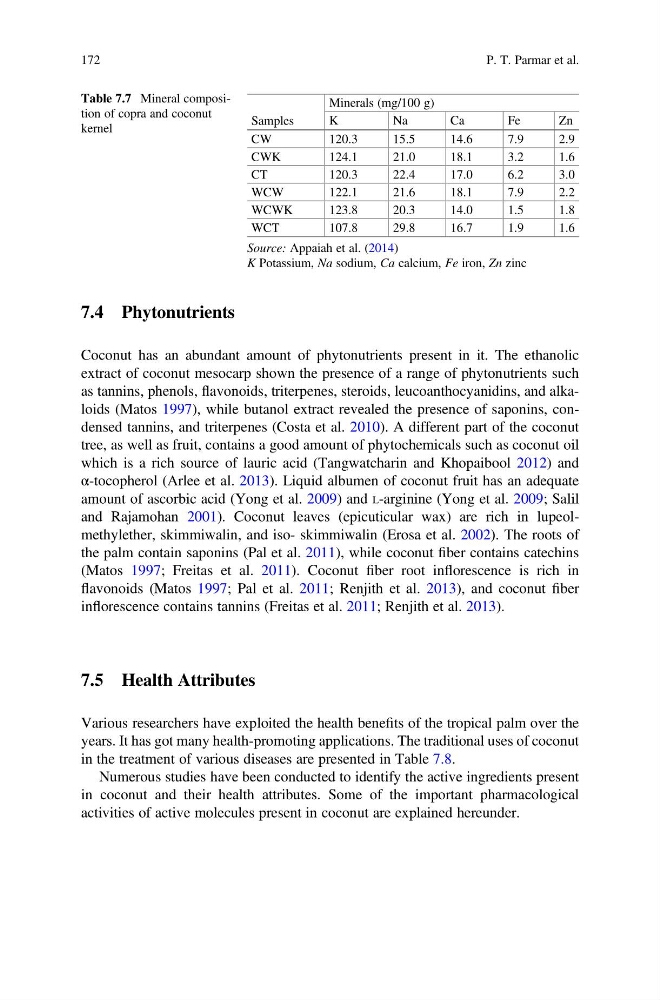
Table 7.7 Mineral composition of copra and coconut
kernel
Samples
Minerals (mg/100 g)
K
N a
C a
F e
Z n
CW
120.3
15.5
14.6
7.9
2.9
CWK
124.1
21.0
18.1
3.2
1.6
CT
120.3
22.4
17.0
6.2
3.0
WCW
122.1
21.6
18.1
7.9
2.2
WCWK
123.8
20.3
14.0
1.5
1.8
WCT
107.8
29.8
16.7
1.9
1.6
Source: Appaiah et al. (2014)
K Potassium, Na sodium, Ca calcium, Fe iron, Zn zinc
172
P. T. Parmar et al.
Coconut has an abundant amount of phytonutrients present in it. The ethanolic
extract of coconut mesocarp shown the presence of a range of phytonutrients such
as tannins, phenols, flavonoids, triterpenes, steroids, leucoanthocyanidins, and alkaloids (Matos 1997), while butanol extract revealed the presence of saponins, condensed tannins, and triterpenes (Costa et al. 2010). A different part of the coconut
tree, as well as fruit, contains a good amount of phytochemicals such as coconut oil
which is a rich source of lauric acid (Tangwatcharin and Khopaibool 2012) and
α-tocopherol (Arlee et al. 2013). Liquid albumen of coconut fruit has an adequate
amount of ascorbic acid (Yong et al. 2009) and L-arginine (Yong et al. 2009; Salil
and Rajamohan 2001). Coconut leaves (epicuticular wax) are rich in lupeolmethylether, skimmiwalin, and iso- skimmiwalin (Erosa et al. 2002). The roots of
the palm contain saponins (Pal et al. 2011), while coconut fiber contains catechins
(Matos 1997; Freitas et al. 2011). Coconut fiber root inflorescence is rich in
flavonoids (Matos 1997; Pal et al. 2011; Renjith et al. 2013), and coconut fiber
inflorescence contains tannins (Freitas et al. 2011; Renjith et al. 2013).
7.5 Health Attributes
Various researchers have exploited the health benefits of the tropical palm over the
years. It has got many health-promoting applications. The traditional uses of coconut
in the treatment of various diseases are presented in Table 7.8.
Numerous studies have been conducted to identify the active ingredients present
in coconut and their health attributes. Some of the important pharmacological
activities of active molecules present in coconut are explained hereunder.
Table 7.7 Mineral composition of copra and coconut
kernel
Samples
Minerals (mg/100 g)
K
N a
C a
F e
Z n
CW
120.3
15.5
14.6
7.9
2.9
CWK
124.1
21.0
18.1
3.2
1.6
CT
120.3
22.4
17.0
6.2
3.0
WCW
122.1
21.6
18.1
7.9
2.2
WCWK
123.8
20.3
14.0
1.5
1.8
WCT
107.8
29.8
16.7
1.9
1.6
Source: Appaiah et al. (2014)
K Potassium, Na sodium, Ca calcium, Fe iron, Zn zinc
172
P. T. Parmar et al.