

6.5 Health Effects
Palm oil is one of the most widely used vegetable oil in the world, and its nutritional
and health properties are well documented in the literature. Palm oil has a high
demand and strong appeal globally as a cooking medium, as it is free from trans fats
which are reported to be the leading cause of clogging of arteries. It is more oxidative
stable and has better handling properties. Also, food processors prefer it over other
vegetable oils as it has distinct quality and requires little or no hydrogenation and
extends the shelf life of different food products (Mukherjee and Mitra 2009). Palm
oil is one of the largest sources of tocotrienol. It contains about 10% linoleic acid,
which is a PUFA (ω-6 fatty acid) and one of the two essential fatty acids. Animal
studies as well as human studies have reported several health benefits of the
phytonutrients present in crude palm oil such as reduced risk of arterial thrombosis
and atherosclerosis, cholesterol lowering effects, anti-ageing, anti-inflammatory and
anticarcinogenic effects, inhibition of platelet aggregation and reduced blood pressure (Loganathan et al. 2008, 2010; Boon et al. 2013; Boateng et al. 2016;
Obahiagbon 2012). However, palm oil in the oxidized state is reported to have
adverse health effects (Mukherjee and Mitra 2009).
Red palm oil has abundant carotenoids (500–700 mg/L) giving it the characteristic colour in crude oil. The carotenoids, vitamin E, ascorbic acid, enzymes and
proteins collectively convert highly reactive radicals and free fatty peroxy radicals to
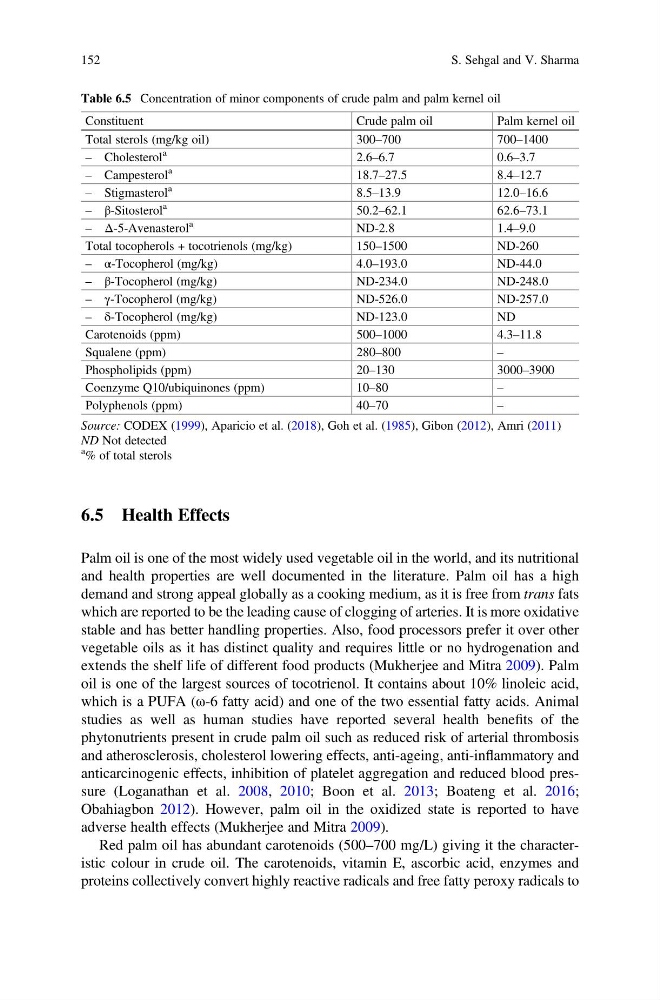
Table 6.5 Concentration of minor components of crude palm and palm kernel oil
Constituent
Crude palm oil
Palm kernel oil
Total sterols (mg/kg oil)
300–700
700–1400
– Cholesterol
a
2.6–6.7
0.6–3.7
– Campesterol
a
18.7–27.5
8.4–12.7
– Stigmasterol
a
8.5–13.9
12.0–16.6
– β-Sitosterol
a
50.2–62.1
62.6–73.1
– Δ-5-Avenasterol
a
ND-2.8
1.4–9.0
Total tocopherols + tocotrienols (mg/kg)
150–1500
ND-260
– α-Tocopherol (mg/kg)
4.0–193.0
ND-44.0
– β-Tocopherol (mg/kg)
ND-234.0
ND-248.0
– γ-Tocopherol (mg/kg)
ND-526.0
ND-257.0
– δ-Tocopherol (mg/kg)
ND-123.0
ND
Carotenoids (ppm)
500–1000
4.3–11.8
Squalene (ppm)
280–800
–
Phospholipids (ppm)
20–130
3000–3900
Coenzyme Q10/ubiquinones (ppm)
10–80
–
Polyphenols (ppm)
40–70
–
Source: CODEX (1999), Aparicio et al. (2018), Goh et al. (1985), Gibon (2012), Amri (2011)
ND Not detected
a % of total sterols
152
S. Sehgal and V. Sharma
Palm oil is one of the most widely used vegetable oil in the world, and its nutritional
and health properties are well documented in the literature. Palm oil has a high
demand and strong appeal globally as a cooking medium, as it is free from trans fats
which are reported to be the leading cause of clogging of arteries. It is more oxidative
stable and has better handling properties. Also, food processors prefer it over other
vegetable oils as it has distinct quality and requires little or no hydrogenation and
extends the shelf life of different food products (Mukherjee and Mitra 2009). Palm
oil is one of the largest sources of tocotrienol. It contains about 10% linoleic acid,
which is a PUFA (ω-6 fatty acid) and one of the two essential fatty acids. Animal
studies as well as human studies have reported several health benefits of the
phytonutrients present in crude palm oil such as reduced risk of arterial thrombosis
and atherosclerosis, cholesterol lowering effects, anti-ageing, anti-inflammatory and
anticarcinogenic effects, inhibition of platelet aggregation and reduced blood pressure (Loganathan et al. 2008, 2010; Boon et al. 2013; Boateng et al. 2016;
Obahiagbon 2012). However, palm oil in the oxidized state is reported to have
adverse health effects (Mukherjee and Mitra 2009).
Red palm oil has abundant carotenoids (500–700 mg/L) giving it the characteristic colour in crude oil. The carotenoids, vitamin E, ascorbic acid, enzymes and
proteins collectively convert highly reactive radicals and free fatty peroxy radicals to
Table 6.5 Concentration of minor components of crude palm and palm kernel oil
Constituent
Crude palm oil
Palm kernel oil
Total sterols (mg/kg oil)
300–700
700–1400
– Cholesterol
a
2.6–6.7
0.6–3.7
– Campesterol
a
18.7–27.5
8.4–12.7
– Stigmasterol
a
8.5–13.9
12.0–16.6
– β-Sitosterol
a
50.2–62.1
62.6–73.1
– Δ-5-Avenasterol
a
ND-2.8
1.4–9.0
Total tocopherols + tocotrienols (mg/kg)
150–1500
ND-260
– α-Tocopherol (mg/kg)
4.0–193.0
ND-44.0
– β-Tocopherol (mg/kg)
ND-234.0
ND-248.0
– γ-Tocopherol (mg/kg)
ND-526.0
ND-257.0
– δ-Tocopherol (mg/kg)
ND-123.0
ND
Carotenoids (ppm)
500–1000
4.3–11.8
Squalene (ppm)
280–800
–
Phospholipids (ppm)
20–130
3000–3900
Coenzyme Q10/ubiquinones (ppm)
10–80
–
Polyphenols (ppm)
40–70
–
Source: CODEX (1999), Aparicio et al. (2018), Goh et al. (1985), Gibon (2012), Amri (2011)
ND Not detected
a % of total sterols
152
S. Sehgal and V. Sharma