

3.1 The Understanding and Perception
79
13,769
6,960
1,803
2,105
1,719
1,257
813
1,655
1,616
1,040
1,356
1,211
672
657
1,858
1,909
1,561
1,336
1,358
1,052
1,169
1,123
502
1,419
685
835
647
361
203
525
704
449
311
303
314
295
Dadra & Nagar Haveli
Daman & Diu
Goa
Gujarat
Chhaƫsgarh
Maharashtra
Madhya Pradesh
Puducherry
Tamil Nadu
Andhra Pradesh[63]
Telangana
Karnataka
Kerala
Lakshadweep
Punjab
Haryana
Delhi
Himachal Pradesh
UƩarakhand
Chandigarh
Jammu & Kashmir
Rajasthan
UƩar Pradesh
Odisha
Sikkim
Jharkhand
West Bengal
Andaman & Nicobar Islands
Bihar
Arunachal Pradesh
Meghalaya
Mizoram
Nagaland
Tripura
Assam
Manipur
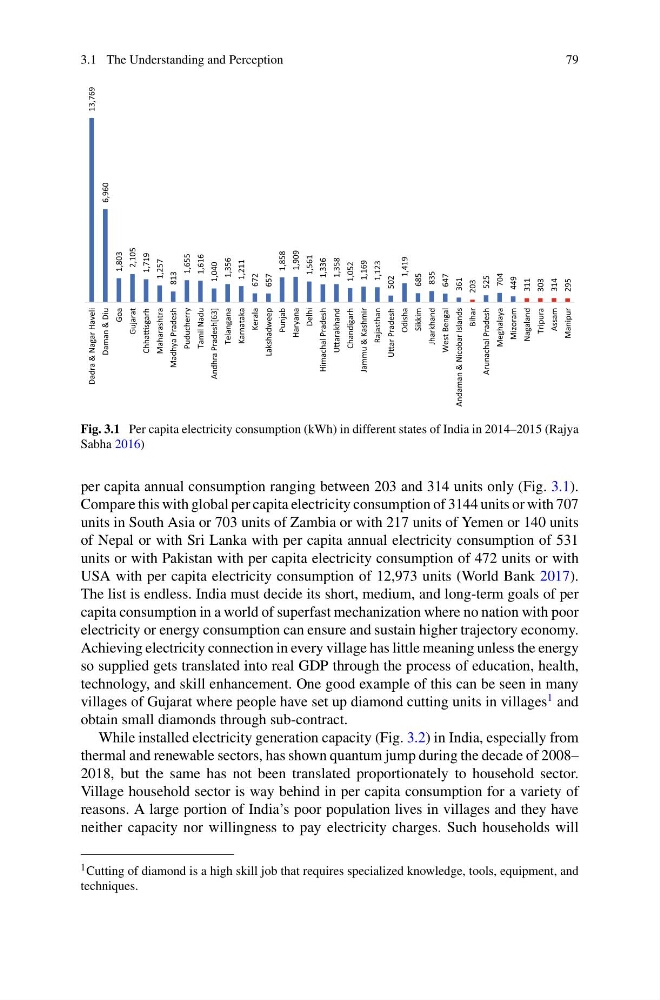
Fig. 3.1 Per capita electricity consumption (kWh) in different states of India in 2014–2015 (Rajya
Sabha 2016)
per capita annual consumption ranging between 203 and 314 units only (Fig. 3.1).
Compare this with global per capita electricity consumption of 3144 units or with 707
units in South Asia or 703 units of Zambia or with 217 units of Yemen or 140 units
of Nepal or with Sri Lanka with per capita annual electricity consumption of 531
units or with Pakistan with per capita electricity consumption of 472 units or with
USA with per capita electricity consumption of 12,973 units (World Bank 2017).
The list is endless. India must decide its short, medium, and long-term goals of per
capita consumption in a world of superfast mechanization where no nation with poor
electricity or energy consumption can ensure and sustain higher trajectory economy.
Achieving electricity connection in every village has little meaning unless the energy
so supplied gets translated into real GDP through the process of education, health,
technology, and skill enhancement. One good example of this can be seen in many
villages of Gujarat where people have set up diamond cutting units in villages
1 and
obtain small diamonds through sub-contract.
While installed electricity generation capacity (Fig. 3.2) in India, especially from
thermal and renewable sectors, has shown quantum jump during the decade of 2008–
2018, but the same has not been translated proportionately to household sector.
Village household sector is way behind in per capita consumption for a variety of
reasons. A large portion of India’s poor population lives in villages and they have
neither capacity nor willingness to pay electricity charges. Such households will
1 Cutting of diamond is a high skill job that requires specialized knowledge, tools, equipment, and
techniques.
79
13,769
6,960
1,803
2,105
1,719
1,257
813
1,655
1,616
1,040
1,356
1,211
672
657
1,858
1,909
1,561
1,336
1,358
1,052
1,169
1,123
502
1,419
685
835
647
361
203
525
704
449
311
303
314
295
Dadra & Nagar Haveli
Daman & Diu
Goa
Gujarat
Chhaƫsgarh
Maharashtra
Madhya Pradesh
Puducherry
Tamil Nadu
Andhra Pradesh[63]
Telangana
Karnataka
Kerala
Lakshadweep
Punjab
Haryana
Delhi
Himachal Pradesh
UƩarakhand
Chandigarh
Jammu & Kashmir
Rajasthan
UƩar Pradesh
Odisha
Sikkim
Jharkhand
West Bengal
Andaman & Nicobar Islands
Bihar
Arunachal Pradesh
Meghalaya
Mizoram
Nagaland
Tripura
Assam
Manipur
Fig. 3.1 Per capita electricity consumption (kWh) in different states of India in 2014–2015 (Rajya
Sabha 2016)
per capita annual consumption ranging between 203 and 314 units only (Fig. 3.1).
Compare this with global per capita electricity consumption of 3144 units or with 707
units in South Asia or 703 units of Zambia or with 217 units of Yemen or 140 units
of Nepal or with Sri Lanka with per capita annual electricity consumption of 531
units or with Pakistan with per capita electricity consumption of 472 units or with
USA with per capita electricity consumption of 12,973 units (World Bank 2017).
The list is endless. India must decide its short, medium, and long-term goals of per
capita consumption in a world of superfast mechanization where no nation with poor
electricity or energy consumption can ensure and sustain higher trajectory economy.
Achieving electricity connection in every village has little meaning unless the energy
so supplied gets translated into real GDP through the process of education, health,
technology, and skill enhancement. One good example of this can be seen in many
villages of Gujarat where people have set up diamond cutting units in villages
1 and
obtain small diamonds through sub-contract.
While installed electricity generation capacity (Fig. 3.2) in India, especially from
thermal and renewable sectors, has shown quantum jump during the decade of 2008–
2018, but the same has not been translated proportionately to household sector.
Village household sector is way behind in per capita consumption for a variety of
reasons. A large portion of India’s poor population lives in villages and they have
neither capacity nor willingness to pay electricity charges. Such households will
1 Cutting of diamond is a high skill job that requires specialized knowledge, tools, equipment, and
techniques.