

152
5 Fourth Industrial Revolution and India
0.00
100.00
200.00
300.00
400.00
500.00
600.00
700.00
800.00
900.00
2007-082008-092009-102010-112011-122012-132013-142014-152015-162016-17
Coal(Million Tonnes) Lignite (Million Tonnes) Crude Oil MMT Natural Gas(Billion Cubic Metres)
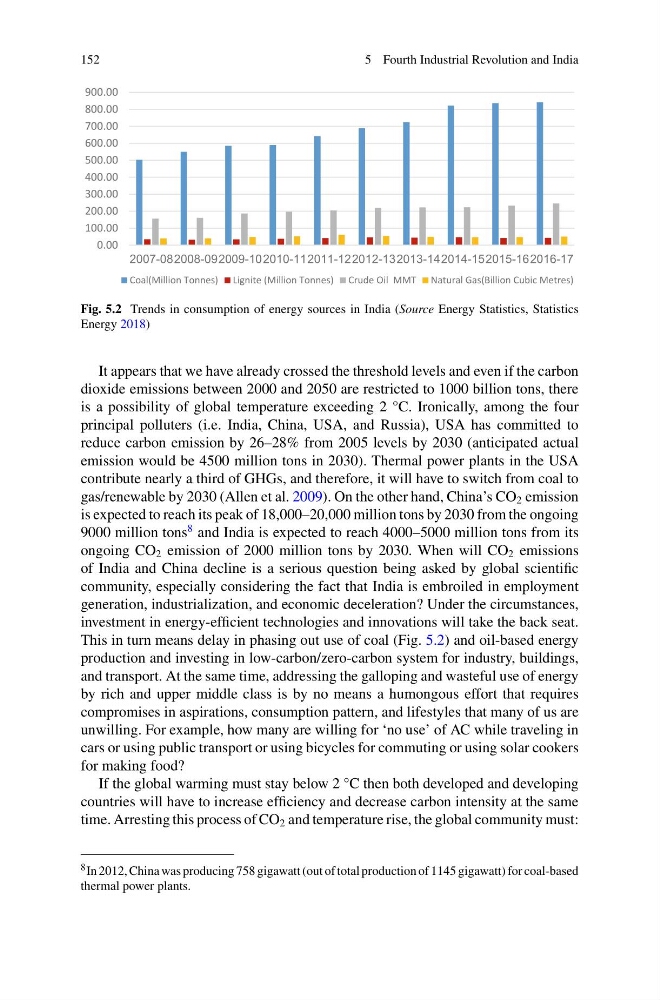
Fig. 5.2 Trends in consumption of energy sources in India (Source Energy Statistics, Statistics
Energy 2018)
It appears that we have already crossed the threshold levels and even if the carbon
dioxide emissions between 2000 and 2050 are restricted to 1000 billion tons, there
is a possibility of global temperature exceeding 2 °C. Ironically, among the four
principal polluters (i.e. India, China, USA, and Russia), USA has committed to
reduce carbon emission by 26–28% from 2005 levels by 2030 (anticipated actual
emission would be 4500 million tons in 2030). Thermal power plants in the USA
contribute nearly a third of GHGs, and therefore, it will have to switch from coal to
gas/renewable by 2030 (Allen et al. 2009). On the other hand, China’s CO 2 emission
is expected to reach its peak of 18,000–20,000 million tons by 2030 from the ongoing
9000 million tons
8 and India is expected to reach 4000–5000 million tons from its
ongoing CO 2 emission of 2000 million tons by 2030. When will CO 2 emissions
of India and China decline is a serious question being asked by global scientific
community, especially considering the fact that India is embroiled in employment
generation, industrialization, and economic deceleration? Under the circumstances,
investment in energy-efficient technologies and innovations will take the back seat.
This in turn means delay in phasing out use of coal (Fig. 5.2) and oil-based energy
production and investing in low-carbon/zero-carbon system for industry, buildings,
and transport. At the same time, addressing the galloping and wasteful use of energy
by rich and upper middle class is by no means a humongous effort that requires
compromises in aspirations, consumption pattern, and lifestyles that many of us are
unwilling. For example, how many are willing for ‘no use’ of AC while traveling in
cars or using public transport or using bicycles for commuting or using solar cookers
for making food?
If the global warming must stay below 2 °C then both developed and developing
countries will have to increase efficiency and decrease carbon intensity at the same
time. Arresting this process of CO 2 and temperature rise, the global community must:
8 In 2012, China was producing 758 gigawatt (out of total production of 1145 gigawatt) for coal-based
thermal power plants.
5 Fourth Industrial Revolution and India
0.00
100.00
200.00
300.00
400.00
500.00
600.00
700.00
800.00
900.00
2007-082008-092009-102010-112011-122012-132013-142014-152015-162016-17
Coal(Million Tonnes) Lignite (Million Tonnes) Crude Oil MMT Natural Gas(Billion Cubic Metres)
Fig. 5.2 Trends in consumption of energy sources in India (Source Energy Statistics, Statistics
Energy 2018)
It appears that we have already crossed the threshold levels and even if the carbon
dioxide emissions between 2000 and 2050 are restricted to 1000 billion tons, there
is a possibility of global temperature exceeding 2 °C. Ironically, among the four
principal polluters (i.e. India, China, USA, and Russia), USA has committed to
reduce carbon emission by 26–28% from 2005 levels by 2030 (anticipated actual
emission would be 4500 million tons in 2030). Thermal power plants in the USA
contribute nearly a third of GHGs, and therefore, it will have to switch from coal to
gas/renewable by 2030 (Allen et al. 2009). On the other hand, China’s CO 2 emission
is expected to reach its peak of 18,000–20,000 million tons by 2030 from the ongoing
9000 million tons
8 and India is expected to reach 4000–5000 million tons from its
ongoing CO 2 emission of 2000 million tons by 2030. When will CO 2 emissions
of India and China decline is a serious question being asked by global scientific
community, especially considering the fact that India is embroiled in employment
generation, industrialization, and economic deceleration? Under the circumstances,
investment in energy-efficient technologies and innovations will take the back seat.
This in turn means delay in phasing out use of coal (Fig. 5.2) and oil-based energy
production and investing in low-carbon/zero-carbon system for industry, buildings,
and transport. At the same time, addressing the galloping and wasteful use of energy
by rich and upper middle class is by no means a humongous effort that requires
compromises in aspirations, consumption pattern, and lifestyles that many of us are
unwilling. For example, how many are willing for ‘no use’ of AC while traveling in
cars or using public transport or using bicycles for commuting or using solar cookers
for making food?
If the global warming must stay below 2 °C then both developed and developing
countries will have to increase efficiency and decrease carbon intensity at the same
time. Arresting this process of CO 2 and temperature rise, the global community must:
8 In 2012, China was producing 758 gigawatt (out of total production of 1145 gigawatt) for coal-based
thermal power plants.