

4.7 Climate Vulnerability
141
0
10000
20000
30000
40000
50000
60000
70000
80000
WEST BENGAL
BIHAR
UTTAR PRADESH
ANDHRA PR.
ODISHA
ASSAM
MADHYA PR.
GUJARAT
RAJASTHAN
MAHARASHTRA
KARNATAKA
J & K
PUNJAB
TAMIL NADU
ARUNACHAL PR.
CHHATTISGARH
TELANGANA
HIMACHAL PR.
MANIPUR
NAGALAND
UTTARAKHAND
KERALA
MEGHALAYA
MIZORAM
GOA
SIKKIM
TRIPURA
PUDUCHERRY
JHARKHAND
LAKSHADWEEP
HARYANA
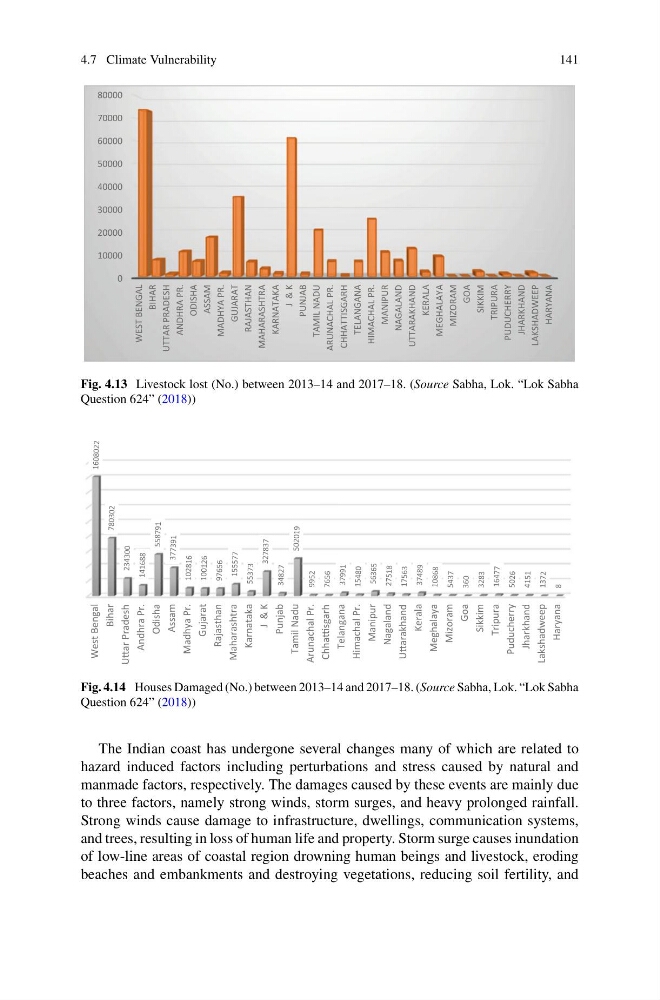
Fig. 4.13 Livestock lost (No.) between 2013–14 and 2017–18. (Source Sabha, Lok. “Lok Sabha
Question 624” (2018))
West Bengal
Bihar
UƩar Pradesh
Andhra Pr.
Odisha
Assam
Madhya Pr.
Gujarat
Rajasthan
Maharashtra
Karnataka
J & K
Punjab
Tamil Nadu
Arunachal Pr.
Chhaƫsgarh
Telangana
Himachal Pr.
Manipur
Nagaland
UƩarakhand
Kerala
Meghalaya
Mizoram
Goa
Sikkim
Tripura
Puducherry
Jharkhand
Lakshadweep
Haryana
Fig. 4.14 Houses Damaged (No.) between 2013–14 and 2017–18. (Source Sabha, Lok. “Lok Sabha
Question 624” (2018))
The Indian coast has undergone several changes many of which are related to
hazard induced factors including perturbations and stress caused by natural and
manmade factors, respectively. The damages caused by these events are mainly due
to three factors, namely strong winds, storm surges, and heavy prolonged rainfall.
Strong winds cause damage to infrastructure, dwellings, communication systems,
and trees, resulting in loss of human life and property. Storm surge causes inundation
of low-line areas of coastal region drowning human beings and livestock, eroding
beaches and embankments and destroying vegetations, reducing soil fertility, and
141
0
10000
20000
30000
40000
50000
60000
70000
80000
WEST BENGAL
BIHAR
UTTAR PRADESH
ANDHRA PR.
ODISHA
ASSAM
MADHYA PR.
GUJARAT
RAJASTHAN
MAHARASHTRA
KARNATAKA
J & K
PUNJAB
TAMIL NADU
ARUNACHAL PR.
CHHATTISGARH
TELANGANA
HIMACHAL PR.
MANIPUR
NAGALAND
UTTARAKHAND
KERALA
MEGHALAYA
MIZORAM
GOA
SIKKIM
TRIPURA
PUDUCHERRY
JHARKHAND
LAKSHADWEEP
HARYANA
Fig. 4.13 Livestock lost (No.) between 2013–14 and 2017–18. (Source Sabha, Lok. “Lok Sabha
Question 624” (2018))
West Bengal
Bihar
UƩar Pradesh
Andhra Pr.
Odisha
Assam
Madhya Pr.
Gujarat
Rajasthan
Maharashtra
Karnataka
J & K
Punjab
Tamil Nadu
Arunachal Pr.
Chhaƫsgarh
Telangana
Himachal Pr.
Manipur
Nagaland
UƩarakhand
Kerala
Meghalaya
Mizoram
Goa
Sikkim
Tripura
Puducherry
Jharkhand
Lakshadweep
Haryana
Fig. 4.14 Houses Damaged (No.) between 2013–14 and 2017–18. (Source Sabha, Lok. “Lok Sabha
Question 624” (2018))
The Indian coast has undergone several changes many of which are related to
hazard induced factors including perturbations and stress caused by natural and
manmade factors, respectively. The damages caused by these events are mainly due
to three factors, namely strong winds, storm surges, and heavy prolonged rainfall.
Strong winds cause damage to infrastructure, dwellings, communication systems,
and trees, resulting in loss of human life and property. Storm surge causes inundation
of low-line areas of coastal region drowning human beings and livestock, eroding
beaches and embankments and destroying vegetations, reducing soil fertility, and