

1.1 Why is the Work Function Important?
3
Collider
Car plug
SEM/
TEM
Fluorescent
lamp
Electron
lithography
Electron
emission
Discharge
Plasma
Photodetector Sensor
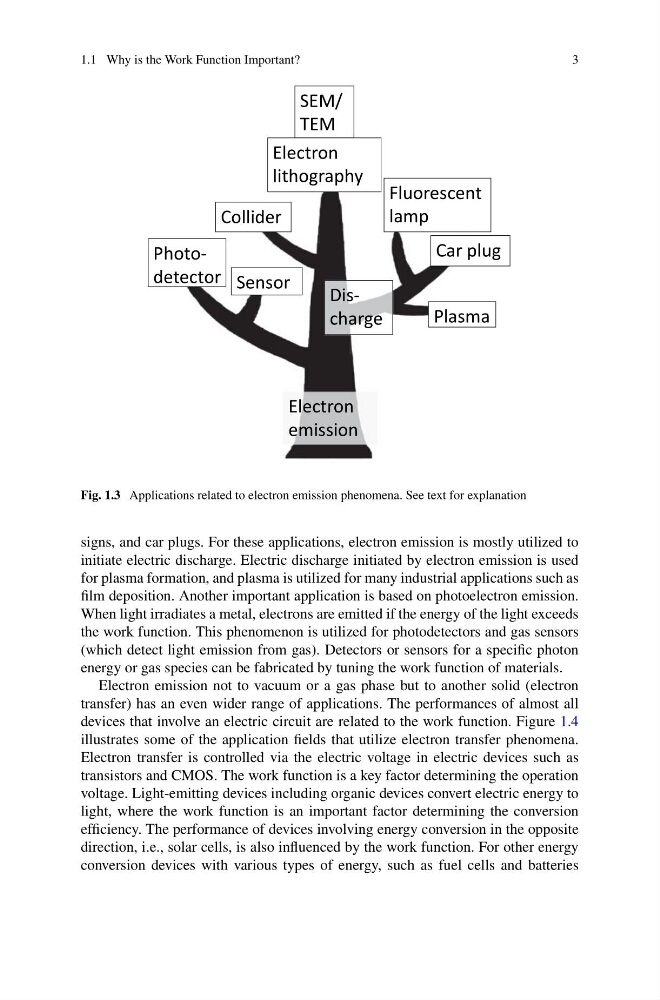
Fig. 1.3 Applications related to electron emission phenomena. See text for explanation
signs, and car plugs. For these applications, electron emission is mostly utilized to
initiate electric discharge. Electric discharge initiated by electron emission is used
for plasma formation, and plasma is utilized for many industrial applications such as
film deposition. Another important application is based on photoelectron emission.
When light irradiates a metal, electrons are emitted if the energy of the light exceeds
the work function. This phenomenon is utilized for photodetectors and gas sensors
(which detect light emission from gas). Detectors or sensors for a specific photon
energy or gas species can be fabricated by tuning the work function of materials.
Electron emission not to vacuum or a gas phase but to another solid (electron
transfer) has an even wider range of applications. The performances of almost all
devices that involve an electric circuit are related to the work function. Figure 1.4
illustrates some of the application fields that utilize electron transfer phenomena.
Electron transfer is controlled via the electric voltage in electric devices such as
transistors and CMOS. The work function is a key factor determining the operation
voltage. Light-emitting devices including organic devices convert electric energy to
light, where the work function is an important factor determining the conversion
efficiency. The performance of devices involving energy conversion in the opposite
direction, i.e., solar cells, is also influenced by the work function. For other energy
conversion devices with various types of energy, such as fuel cells and batteries
3
Collider
Car plug
SEM/
TEM
Fluorescent
lamp
Electron
lithography
Electron
emission
Discharge
Plasma
Photodetector Sensor
Fig. 1.3 Applications related to electron emission phenomena. See text for explanation
signs, and car plugs. For these applications, electron emission is mostly utilized to
initiate electric discharge. Electric discharge initiated by electron emission is used
for plasma formation, and plasma is utilized for many industrial applications such as
film deposition. Another important application is based on photoelectron emission.
When light irradiates a metal, electrons are emitted if the energy of the light exceeds
the work function. This phenomenon is utilized for photodetectors and gas sensors
(which detect light emission from gas). Detectors or sensors for a specific photon
energy or gas species can be fabricated by tuning the work function of materials.
Electron emission not to vacuum or a gas phase but to another solid (electron
transfer) has an even wider range of applications. The performances of almost all
devices that involve an electric circuit are related to the work function. Figure 1.4
illustrates some of the application fields that utilize electron transfer phenomena.
Electron transfer is controlled via the electric voltage in electric devices such as
transistors and CMOS. The work function is a key factor determining the operation
voltage. Light-emitting devices including organic devices convert electric energy to
light, where the work function is an important factor determining the conversion
efficiency. The performance of devices involving energy conversion in the opposite
direction, i.e., solar cells, is also influenced by the work function. For other energy
conversion devices with various types of energy, such as fuel cells and batteries