

3 Retinoic Acid-Regulated Target Genes During Development …
69
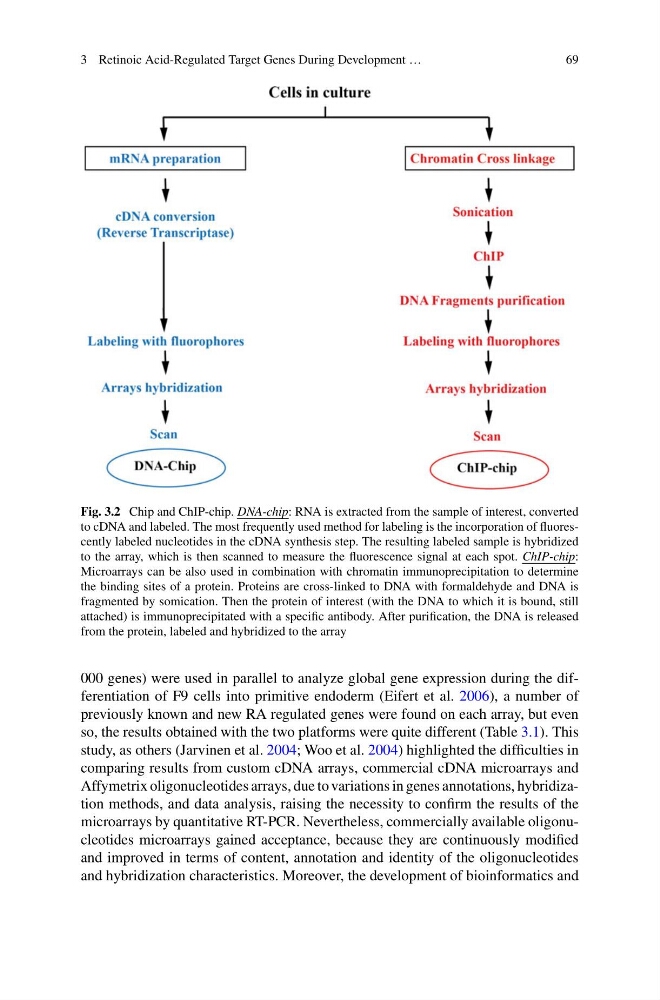
Fig. 3.2 Chip and ChIP-chip. DNA-chip: RNA is extracted from the sample of interest, converted
to cDNA and labeled. The most frequently used method for labeling is the incorporation of fluorescently labeled nucleotides in the cDNA synthesis step. The resulting labeled sample is hybridized
to the array, which is then scanned to measure the fluorescence signal at each spot. ChIP-chip:
Microarrays can be also used in combination with chromatin immunoprecipitation to determine
the binding sites of a protein. Proteins are cross-linked to DNA with formaldehyde and DNA is
fragmented by somication. Then the protein of interest (with the DNA to which it is bound, still
attached) is immunoprecipitated with a specific antibody. After purification, the DNA is released
from the protein, labeled and hybridized to the array
000 genes) were used in parallel to analyze global gene expression during the differentiation of F9 cells into primitive endoderm (Eifert et al. 2006), a number of
previously known and new RA regulated genes were found on each array, but even
so, the results obtained with the two platforms were quite different (Table 3.1). This
study, as others (Jarvinen et al. 2004; Woo et al. 2004) highlighted the difficulties in
comparing results from custom cDNA arrays, commercial cDNA microarrays and
Affymetrix oligonucleotides arrays, due to variations in genes annotations, hybridization methods, and data analysis, raising the necessity to confirm the results of the
microarrays by quantitative RT-PCR. Nevertheless, commercially available oligonucleotides microarrays gained acceptance, because they are continuously modified
and improved in terms of content, annotation and identity of the oligonucleotides
and hybridization characteristics. Moreover, the development of bioinformatics and
69
Fig. 3.2 Chip and ChIP-chip. DNA-chip: RNA is extracted from the sample of interest, converted
to cDNA and labeled. The most frequently used method for labeling is the incorporation of fluorescently labeled nucleotides in the cDNA synthesis step. The resulting labeled sample is hybridized
to the array, which is then scanned to measure the fluorescence signal at each spot. ChIP-chip:
Microarrays can be also used in combination with chromatin immunoprecipitation to determine
the binding sites of a protein. Proteins are cross-linked to DNA with formaldehyde and DNA is
fragmented by somication. Then the protein of interest (with the DNA to which it is bound, still
attached) is immunoprecipitated with a specific antibody. After purification, the DNA is released
from the protein, labeled and hybridized to the array
000 genes) were used in parallel to analyze global gene expression during the differentiation of F9 cells into primitive endoderm (Eifert et al. 2006), a number of
previously known and new RA regulated genes were found on each array, but even
so, the results obtained with the two platforms were quite different (Table 3.1). This
study, as others (Jarvinen et al. 2004; Woo et al. 2004) highlighted the difficulties in
comparing results from custom cDNA arrays, commercial cDNA microarrays and
Affymetrix oligonucleotides arrays, due to variations in genes annotations, hybridization methods, and data analysis, raising the necessity to confirm the results of the
microarrays by quantitative RT-PCR. Nevertheless, commercially available oligonucleotides microarrays gained acceptance, because they are continuously modified
and improved in terms of content, annotation and identity of the oligonucleotides
and hybridization characteristics. Moreover, the development of bioinformatics and