

12
M. A. Asson-Batres
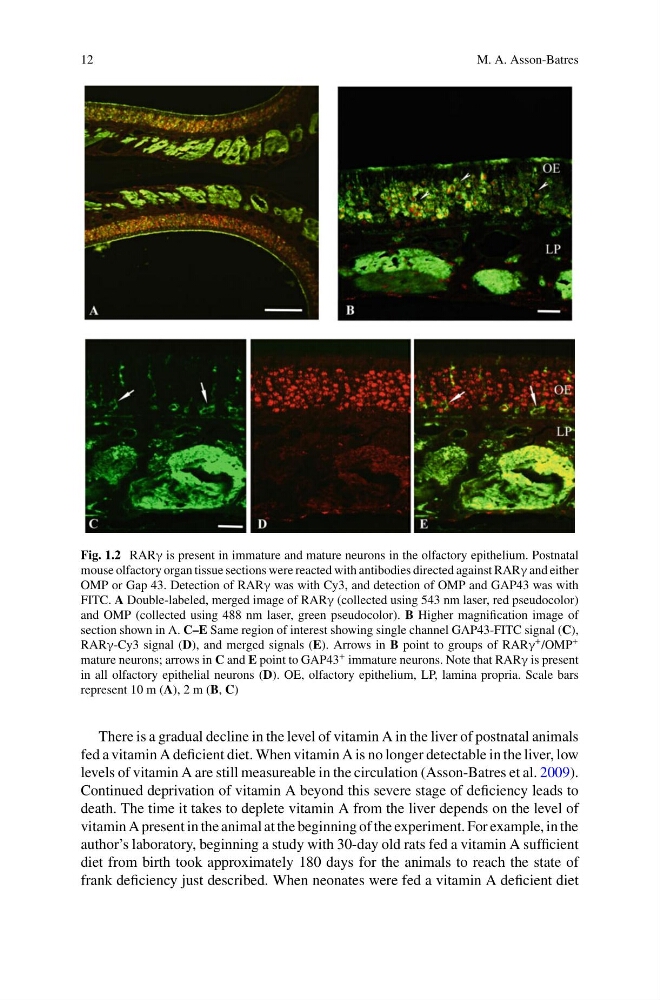
Fig. 1.2 RARγ is present in immature and mature neurons in the olfactory epithelium. Postnatal
mouse olfactory organ tissue sections were reacted with antibodies directed against RARγ and either
OMP or Gap 43. Detection of RARγ was with Cy3, and detection of OMP and GAP43 was with
FITC. A Double-labeled, merged image of RARγ (collected using 543 nm laser, red pseudocolor)
and OMP (collected using 488 nm laser, green pseudocolor). B Higher magnification image of
section shown in A. C–E Same region of interest showing single channel GAP43-FITC signal (C),
RARγ-Cy3 signal (D), and merged signals (E). Arrows in B point to groups of RARγ + /OMP +
mature neurons; arrows in C and E point to GAP43 + immature neurons. Note that RARγ is present
in all olfactory epithelial neurons (D). OE, olfactory epithelium, LP, lamina propria. Scale bars
represent 10 m (A), 2 m (B, C)
There is a gradual decline in the level of vitamin A in the liver of postnatal animals
fed a vitamin A deficient diet. When vitamin A is no longer detectable in the liver, low
levels of vitamin A are still measureable in the circulation (Asson-Batres et al. 2009).
Continued deprivation of vitamin A beyond this severe stage of deficiency leads to
death. The time it takes to deplete vitamin A from the liver depends on the level of
vitamin A present in the animal at the beginning of the experiment. For example, in the
author’s laboratory, beginning a study with 30-day old rats fed a vitamin A sufficient
diet from birth took approximately 180 days for the animals to reach the state of
frank deficiency just described. When neonates were fed a vitamin A deficient diet
M. A. Asson-Batres
Fig. 1.2 RARγ is present in immature and mature neurons in the olfactory epithelium. Postnatal
mouse olfactory organ tissue sections were reacted with antibodies directed against RARγ and either
OMP or Gap 43. Detection of RARγ was with Cy3, and detection of OMP and GAP43 was with
FITC. A Double-labeled, merged image of RARγ (collected using 543 nm laser, red pseudocolor)
and OMP (collected using 488 nm laser, green pseudocolor). B Higher magnification image of
section shown in A. C–E Same region of interest showing single channel GAP43-FITC signal (C),
RARγ-Cy3 signal (D), and merged signals (E). Arrows in B point to groups of RARγ + /OMP +
mature neurons; arrows in C and E point to GAP43 + immature neurons. Note that RARγ is present
in all olfactory epithelial neurons (D). OE, olfactory epithelium, LP, lamina propria. Scale bars
represent 10 m (A), 2 m (B, C)
There is a gradual decline in the level of vitamin A in the liver of postnatal animals
fed a vitamin A deficient diet. When vitamin A is no longer detectable in the liver, low
levels of vitamin A are still measureable in the circulation (Asson-Batres et al. 2009).
Continued deprivation of vitamin A beyond this severe stage of deficiency leads to
death. The time it takes to deplete vitamin A from the liver depends on the level of
vitamin A present in the animal at the beginning of the experiment. For example, in the
author’s laboratory, beginning a study with 30-day old rats fed a vitamin A sufficient
diet from birth took approximately 180 days for the animals to reach the state of
frank deficiency just described. When neonates were fed a vitamin A deficient diet