

4 OPV with a Crystalline Organic Pigment Active Layer Up to 10 μm
7 7
liquid molecule is to induce crystallization of the deposited film and precisely control
the crystal grain size. Since the liquid molecule itself is more volatile than the pigment
molecule, it can be removed from the deposited film if the substrate was heated during
the growth of the deposited film. Polydimethylsiloxane (PDMS) with an appropriate
chain length was used as the co-evaporant molecule, and the substrate temperature
was kept at 70 °C during deposition. The other layers were deposited at a substrate
temperature of 25 °C without co-evaporant molecules. The thin interfacial layers
above and below the active layer were used for the purpose of extracting and blocking
electrons and holes from the active layer, and as a template for growth of the active
layer.
4.2.2 Relationship Between Active Layer Thickness
and Solar Cell Characteristics
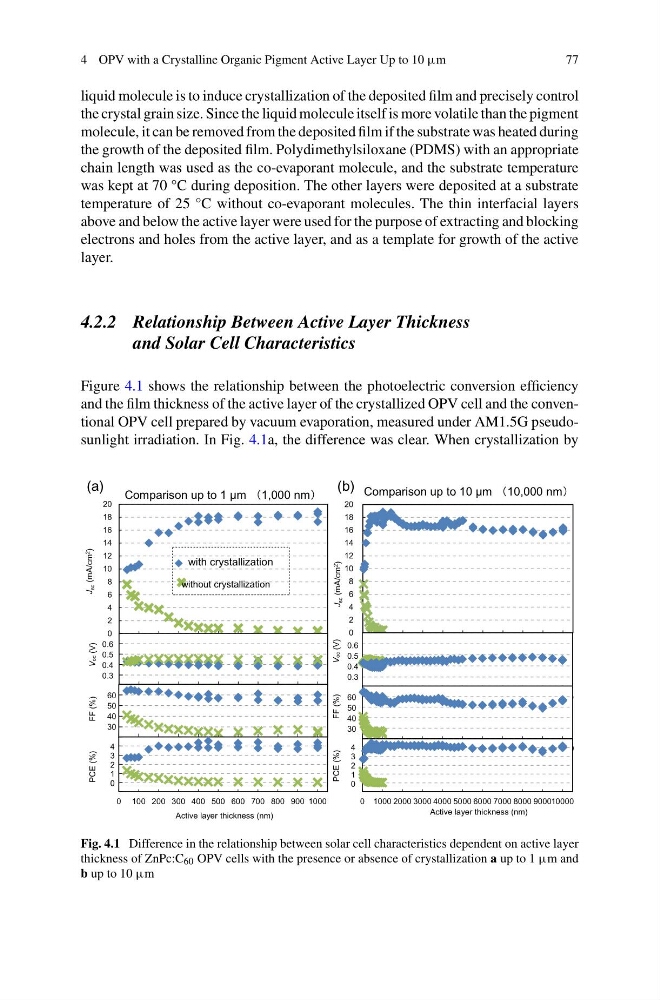
Figure 4.1 shows the relationship between the photoelectric conversion efficiency
and the film thickness of the active layer of the crystallized OPV cell and the conventional OPV cell prepared by vacuum evaporation, measured under AM1.5G pseudosunlight irradiation. In Fig. 4.1a, the difference was clear. When crystallization by
0
2
4
6
8
10
12
14
16
18
20
J
sc (mA/cm 2
)
Active layer thickness (nm)
(a)
(b)
with crystallization
without crystallization
100200300400500600700800900
100200300400500600700800900
0 100 200 300 400 500 600 700 800 900 1000
Active layer thickness (nm)
PCE (%)
FF (%)
Voc (V)
4
3
2
1
0
60
50
40
30
0.6
0.5
0.4
0.3
0
2
4
6
8
10
12
14
16
18
20
1000 2000 3000 4000 5000 6000 7000 8000 9000
J
sc (mA/cm 2
)
Active layer thickness (nm)
1000 2000 3000 4000 5000 6000 7000 8000 900010000
1000 2000 3000 4000 5000 6000 7000 8000 900010000
0 1000 2000 3000 4000 5000 6000 7000 8000 900010000
PCE (%)
FF (%)
Voc (V)
0.6
0.5
0.4
0.3
60
50
40
30
4
3
2
1
0
Active layer thickness (nm)
Comparison up to 1 µm 1,000 nm
Comparison up to 10 µm 10,000 nm
Fig. 4.1 Difference in the relationship between solar cell characteristics dependent on active layer
thickness of ZnPc:C 60 OPV cells with the presence or absence of crystallization a up to 1 μm and
b up to 10 μm
7 7
liquid molecule is to induce crystallization of the deposited film and precisely control
the crystal grain size. Since the liquid molecule itself is more volatile than the pigment
molecule, it can be removed from the deposited film if the substrate was heated during
the growth of the deposited film. Polydimethylsiloxane (PDMS) with an appropriate
chain length was used as the co-evaporant molecule, and the substrate temperature
was kept at 70 °C during deposition. The other layers were deposited at a substrate
temperature of 25 °C without co-evaporant molecules. The thin interfacial layers
above and below the active layer were used for the purpose of extracting and blocking
electrons and holes from the active layer, and as a template for growth of the active
layer.
4.2.2 Relationship Between Active Layer Thickness
and Solar Cell Characteristics
Figure 4.1 shows the relationship between the photoelectric conversion efficiency
and the film thickness of the active layer of the crystallized OPV cell and the conventional OPV cell prepared by vacuum evaporation, measured under AM1.5G pseudosunlight irradiation. In Fig. 4.1a, the difference was clear. When crystallization by
0
2
4
6
8
10
12
14
16
18
20
J
sc (mA/cm 2
)
Active layer thickness (nm)
(a)
(b)
with crystallization
without crystallization
100200300400500600700800900
100200300400500600700800900
0 100 200 300 400 500 600 700 800 900 1000
Active layer thickness (nm)
PCE (%)
FF (%)
Voc (V)
4
3
2
1
0
60
50
40
30
0.6
0.5
0.4
0.3
0
2
4
6
8
10
12
14
16
18
20
1000 2000 3000 4000 5000 6000 7000 8000 9000
J
sc (mA/cm 2
)
Active layer thickness (nm)
1000 2000 3000 4000 5000 6000 7000 8000 900010000
1000 2000 3000 4000 5000 6000 7000 8000 900010000
0 1000 2000 3000 4000 5000 6000 7000 8000 900010000
PCE (%)
FF (%)
Voc (V)
0.6
0.5
0.4
0.3
60
50
40
30
4
3
2
1
0
Active layer thickness (nm)
Comparison up to 1 µm 1,000 nm
Comparison up to 10 µm 10,000 nm
Fig. 4.1 Difference in the relationship between solar cell characteristics dependent on active layer
thickness of ZnPc:C 60 OPV cells with the presence or absence of crystallization a up to 1 μm and
b up to 10 μm