

326 L. BOSCÁN ET AL.
later: in 1990 for 100 MW onshore wind capacity to be added before
1994, and in 1996 for 200 MW onshore wind capacity by the year 2000.
Denmark also had the first offshore wind farm in the world, which began
operating in Vindeby, Denmark in 1991 (Danish Energy Agency 2016).
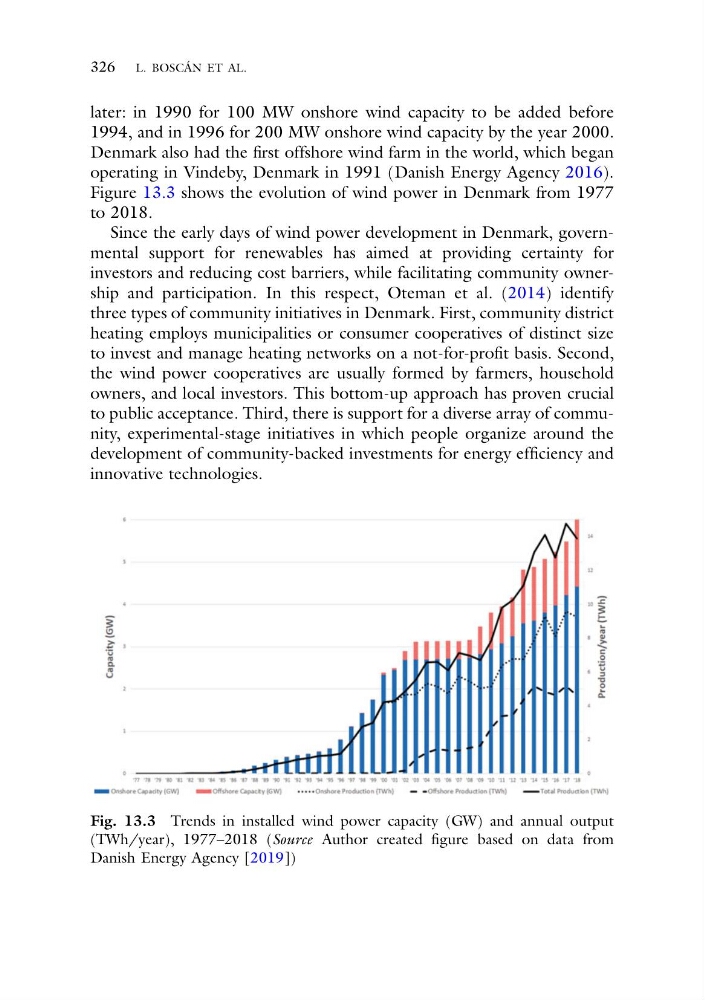
Figure 13.3 shows the evolution of wind power in Denmark from 1977
to 2018.
Since the early days of wind power development in Denmark, governmental support for renewables has aimed at providing certainty for
investors and reducing cost barriers, while facilitating community ownership and participation. In this respect, Oteman et al. (2014) identify
three types of community initiatives in Denmark. First, community district
heating employs municipalities or consumer cooperatives of distinct size
to invest and manage heating networks on a not-for-profit basis. Second,
the wind power cooperatives are usually formed by farmers, household
owners, and local investors. This bottom-up approach has proven crucial
to public acceptance. Third, there is support for a diverse array of community, experimental-stage initiatives in which people organize around the
development of community-backed investments for energy efficiency and
innovative technologies.
Fig. 13.3 Trends in installed wind power capacity (GW) and annual output
(TWh/year), 1977–2018 (Source Author created figure based on data from
Danish Energy Agency [2019])
later: in 1990 for 100 MW onshore wind capacity to be added before
1994, and in 1996 for 200 MW onshore wind capacity by the year 2000.
Denmark also had the first offshore wind farm in the world, which began
operating in Vindeby, Denmark in 1991 (Danish Energy Agency 2016).
Figure 13.3 shows the evolution of wind power in Denmark from 1977
to 2018.
Since the early days of wind power development in Denmark, governmental support for renewables has aimed at providing certainty for
investors and reducing cost barriers, while facilitating community ownership and participation. In this respect, Oteman et al. (2014) identify
three types of community initiatives in Denmark. First, community district
heating employs municipalities or consumer cooperatives of distinct size
to invest and manage heating networks on a not-for-profit basis. Second,
the wind power cooperatives are usually formed by farmers, household
owners, and local investors. This bottom-up approach has proven crucial
to public acceptance. Third, there is support for a diverse array of community, experimental-stage initiatives in which people organize around the
development of community-backed investments for energy efficiency and
innovative technologies.
Fig. 13.3 Trends in installed wind power capacity (GW) and annual output
(TWh/year), 1977–2018 (Source Author created figure based on data from
Danish Energy Agency [2019])