

13 BEYOND WIND: NEW CHALLENGES TO THE EXPANSION …
323
energy efficiency. The heat planning goals were legally operationalized
in 1979. This initiated a radical transition from individual usage of oil
to collective supply systems based on natural gas and district heating.
According to the first energy plan estimates, 800 thousand individual
boilers needed to switch to natural gas and coal (Mortensen and Overgaard 1992; Danish Energy Agency 2016). The law mandated that
municipalities, in cooperation with locally owned heating utilities, estimate and plan local heat requirements and methods that would substitute
oil and could harness surplus heat from different activities. Zoning and
planning occurred between 1981 and 1982 and constituted the basis for
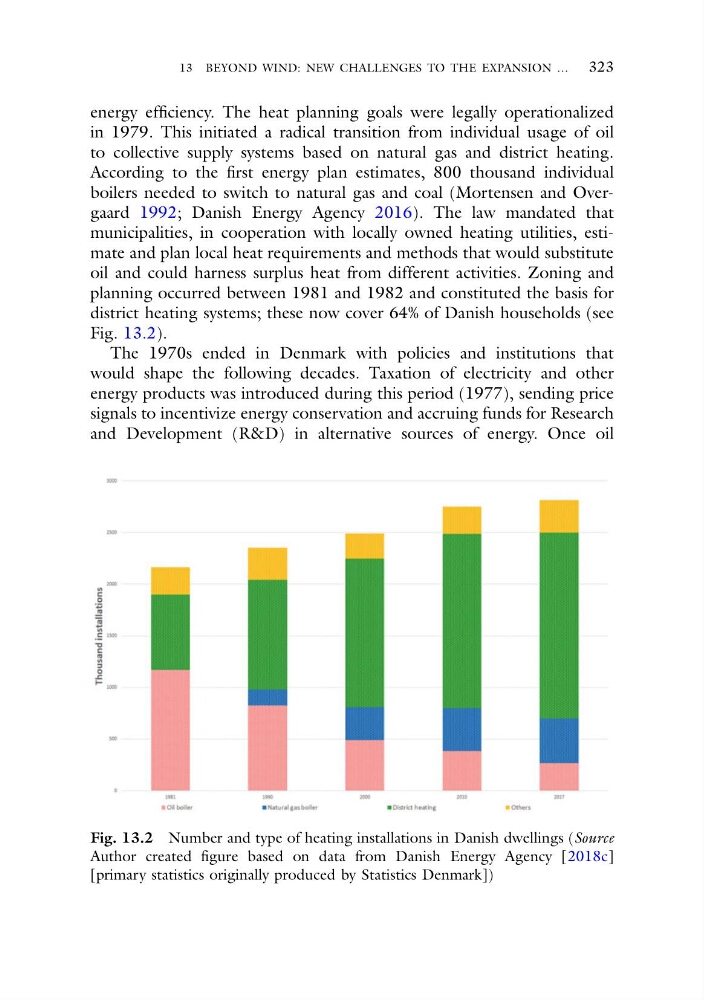
district heating systems; these now cover 64% of Danish households (see
Fig. 13.2).
The 1970s ended in Denmark with policies and institutions that
would shape the following decades. Taxation of electricity and other
energy products was introduced during this period (1977), sending price
signals to incentivize energy conservation and accruing funds for Research
and Development (R&D) in alternative sources of energy. Once oil
Fig. 13.2 Number and type of heating installations in Danish dwellings (Source
Author created figure based on data from Danish Energy Agency [2018c]
[primary statistics originally produced by Statistics Denmark])
323
energy efficiency. The heat planning goals were legally operationalized
in 1979. This initiated a radical transition from individual usage of oil
to collective supply systems based on natural gas and district heating.
According to the first energy plan estimates, 800 thousand individual
boilers needed to switch to natural gas and coal (Mortensen and Overgaard 1992; Danish Energy Agency 2016). The law mandated that
municipalities, in cooperation with locally owned heating utilities, estimate and plan local heat requirements and methods that would substitute
oil and could harness surplus heat from different activities. Zoning and
planning occurred between 1981 and 1982 and constituted the basis for
district heating systems; these now cover 64% of Danish households (see
Fig. 13.2).
The 1970s ended in Denmark with policies and institutions that
would shape the following decades. Taxation of electricity and other
energy products was introduced during this period (1977), sending price
signals to incentivize energy conservation and accruing funds for Research
and Development (R&D) in alternative sources of energy. Once oil
Fig. 13.2 Number and type of heating installations in Danish dwellings (Source
Author created figure based on data from Danish Energy Agency [2018c]
[primary statistics originally produced by Statistics Denmark])