

248 N. H. NGUYEN ET AL.
energy resources have contributed greatly to meeting the increasing
demand so far, but it is very likely that imported fuels will be dominating
the country’s energy context well after 2020.
Vietnam is privileged regarding its untapped potential for renewable
energy. Adoption of energy efficiency and demand-side management
measures have not been fully developed. More efficient use of the
renewable energy potential would make Vietnam’s electricity mix more
diverse and therefore more resilient, flexible, and sustainable. It would
also decrease Vietnam’s future need for imported energy sources and
electricity from other countries in the region. The current National
Renewable Energy Strategy (RES) sets goals for each renewable energy
source, and for the first time, solar power was taken into account. The
targets of the RES were also mainstreamed in the revised National Master
Power Development Plan (PDPr), reflecting a more concrete and stronger
political commitment for energy transition in Vietnam.
Energy Context
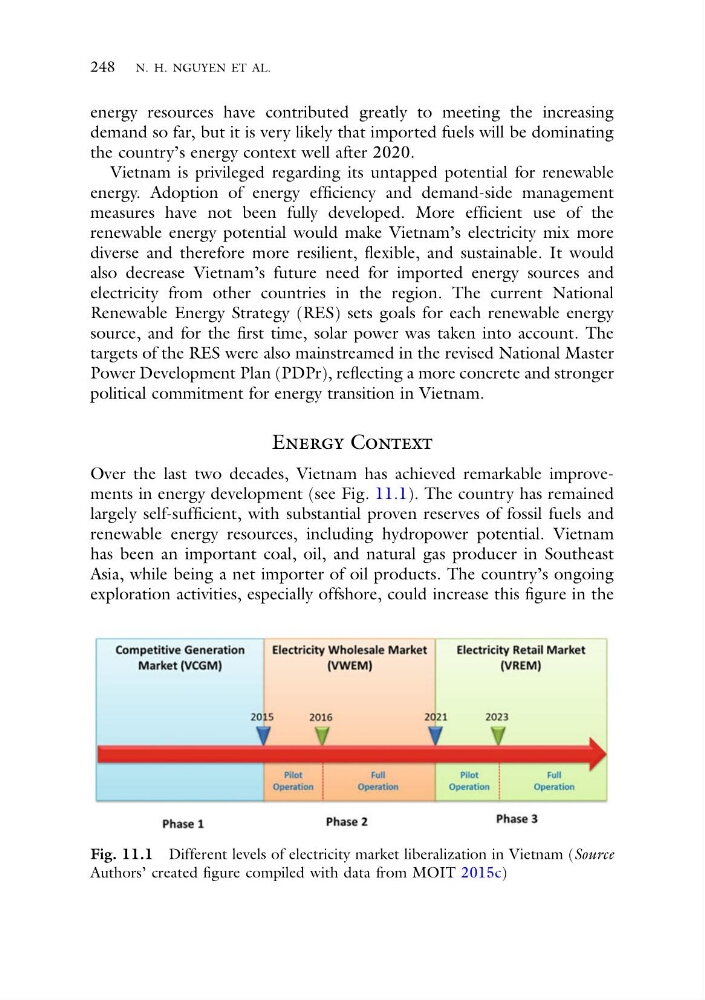
Over the last two decades, Vietnam has achieved remarkable improvements in energy development (see Fig. 11.1). The country has remained
largely self-sufficient, with substantial proven reserves of fossil fuels and
renewable energy resources, including hydropower potential. Vietnam
has been an important coal, oil, and natural gas producer in Southeast
Asia, while being a net importer of oil products. The country’s ongoing
exploration activities, especially offshore, could increase this figure in the
Fig. 11.1 Different levels of electricity market liberalization in Vietnam (Source
Authors’ created figure compiled with data from MOIT 2015c)
energy resources have contributed greatly to meeting the increasing
demand so far, but it is very likely that imported fuels will be dominating
the country’s energy context well after 2020.
Vietnam is privileged regarding its untapped potential for renewable
energy. Adoption of energy efficiency and demand-side management
measures have not been fully developed. More efficient use of the
renewable energy potential would make Vietnam’s electricity mix more
diverse and therefore more resilient, flexible, and sustainable. It would
also decrease Vietnam’s future need for imported energy sources and
electricity from other countries in the region. The current National
Renewable Energy Strategy (RES) sets goals for each renewable energy
source, and for the first time, solar power was taken into account. The
targets of the RES were also mainstreamed in the revised National Master
Power Development Plan (PDPr), reflecting a more concrete and stronger
political commitment for energy transition in Vietnam.
Energy Context
Over the last two decades, Vietnam has achieved remarkable improvements in energy development (see Fig. 11.1). The country has remained
largely self-sufficient, with substantial proven reserves of fossil fuels and
renewable energy resources, including hydropower potential. Vietnam
has been an important coal, oil, and natural gas producer in Southeast
Asia, while being a net importer of oil products. The country’s ongoing
exploration activities, especially offshore, could increase this figure in the
Fig. 11.1 Different levels of electricity market liberalization in Vietnam (Source
Authors’ created figure compiled with data from MOIT 2015c)