

10 SOLAR PV IN SINGAPORE IN THE ABSENCE OF SUBSIDIES
231
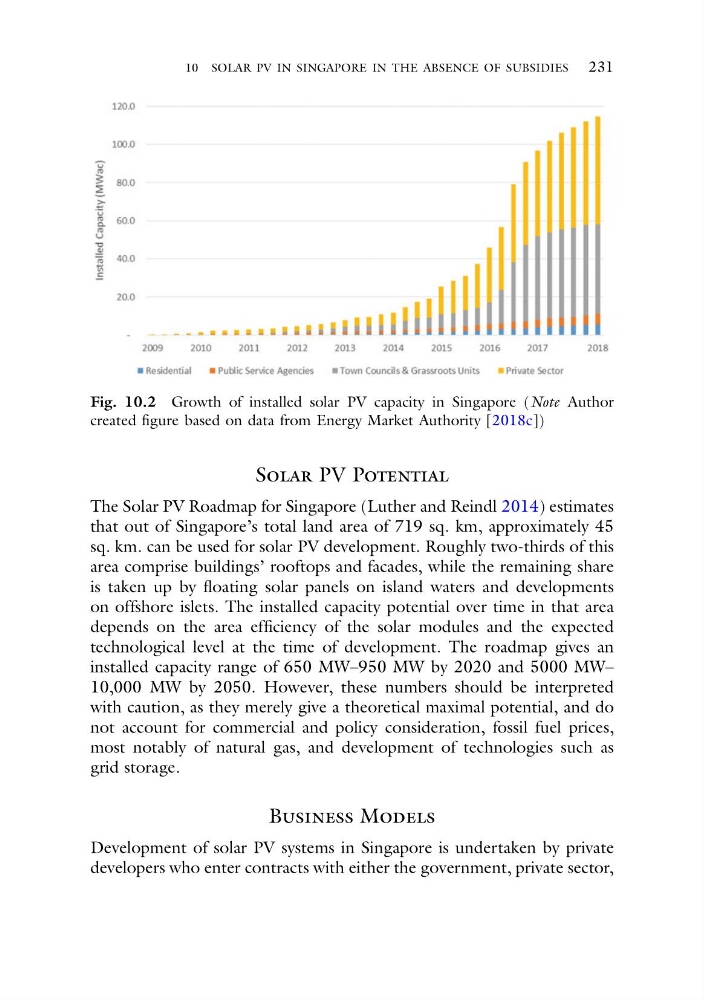
Fig. 10.2 Growth of installed solar PV capacity in Singapore (Note Author
created figure based on data from Energy Market Authority [2018c])
Solar PV Potential
The Solar PV Roadmap for Singapore (Luther and Reindl 2014) estimates
that out of Singapore’s total land area of 719 sq. km, approximately 45
sq. km. can be used for solar PV development. Roughly two-thirds of this
area comprise buildings’ rooftops and facades, while the remaining share
is taken up by floating solar panels on island waters and developments
on offshore islets. The installed capacity potential over time in that area
depends on the area efficiency of the solar modules and the expected
technological level at the time of development. The roadmap gives an
installed capacity range of 650 MW–950 MW by 2020 and 5000 MW–
10,000 MW by 2050. However, these numbers should be interpreted
with caution, as they merely give a theoretical maximal potential, and do
not account for commercial and policy consideration, fossil fuel prices,
most notably of natural gas, and development of technologies such as
grid storage.
Business Models
Development of solar PV systems in Singapore is undertaken by private
developers who enter contracts with either the government, private sector,
231
Fig. 10.2 Growth of installed solar PV capacity in Singapore (Note Author
created figure based on data from Energy Market Authority [2018c])
Solar PV Potential
The Solar PV Roadmap for Singapore (Luther and Reindl 2014) estimates
that out of Singapore’s total land area of 719 sq. km, approximately 45
sq. km. can be used for solar PV development. Roughly two-thirds of this
area comprise buildings’ rooftops and facades, while the remaining share
is taken up by floating solar panels on island waters and developments
on offshore islets. The installed capacity potential over time in that area
depends on the area efficiency of the solar modules and the expected
technological level at the time of development. The roadmap gives an
installed capacity range of 650 MW–950 MW by 2020 and 5000 MW–
10,000 MW by 2050. However, these numbers should be interpreted
with caution, as they merely give a theoretical maximal potential, and do
not account for commercial and policy consideration, fossil fuel prices,
most notably of natural gas, and development of technologies such as
grid storage.
Business Models
Development of solar PV systems in Singapore is undertaken by private
developers who enter contracts with either the government, private sector,