

79
being activated at lower temperatures than usual (Ye 2015; Edeleva et al. 2019),
light-sensitive alkoxyamines, which have led to nitroxide-mediated photopolymerization (Guillaneuf et al. 2010; Telitel et al. 2014), or even alkoxyamines capable of
being activated by a combination of thermal and photochemical mechanisms
(Morris et al. 2015). These findings may contribute to the expansion of NMP in
imprinting technology in the near future.
5.2.2.3 Atom Transfer Radical Polymerization
Based on atom transfer radical addition (ATRA), a modified version of Kharash
addition, was reported by Wang and Matyjaszewski (1995a,b) in order to obtain the
controlled synthesis of PS using 1% mol Copper (Cu) as catalyst. The process was
called ATRP and was studied simultaneously by Kato et al. (1995) and Percec and
Barboiu (1995). Since 1995, ATRP has experienced a remarkable expansion in
polymer chemistry and the number of papers on this topic has grown up exponentially. In ATRP, control over polymerization happens thanks to fast initiation and
catalyzed intermittent activation of dormant species to form propagation radicals.
The first allows for the concurrent growth of chains, while the second avoids premature termination (Ribelli et al. 2019).
The mechanism of traditional ATRP lies in the cleavage of an alkyl halide bond
by a transition metal complex. This reaction involves the addition of the halide to
the metal center and the formation of an oxidized complex and a radical species
(Matyjaszewski 2009, 2018) (Fig. 5.5). The radical is then propagated until it
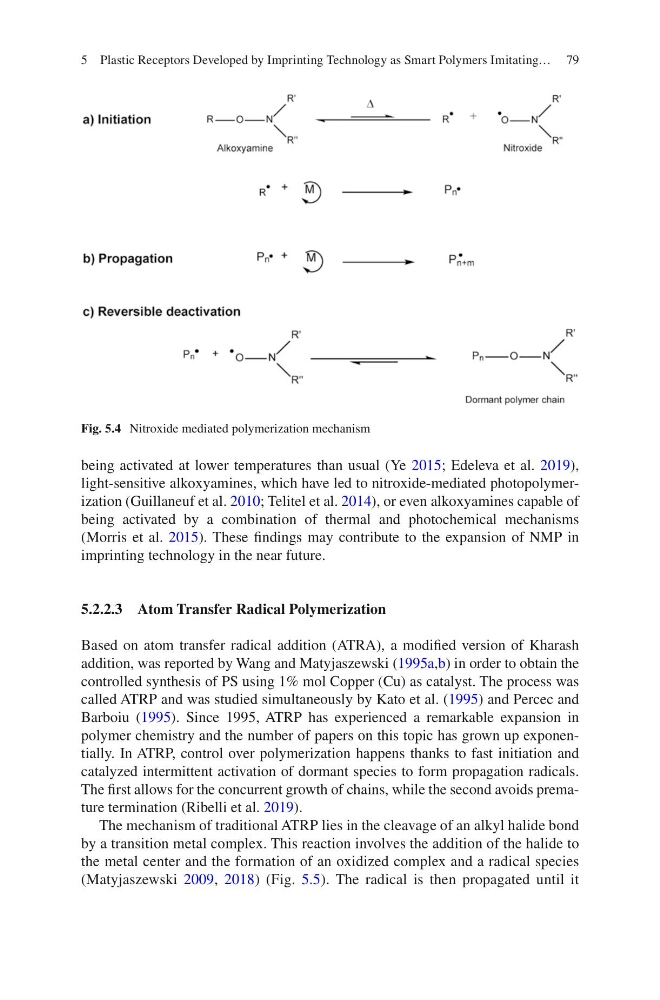
Fig. 5.4 Nitroxide mediated polymerization mechanism
5 Plastic Receptors Developed by Imprinting Technology as Smart Polymers Imitating…
being activated at lower temperatures than usual (Ye 2015; Edeleva et al. 2019),
light-sensitive alkoxyamines, which have led to nitroxide-mediated photopolymerization (Guillaneuf et al. 2010; Telitel et al. 2014), or even alkoxyamines capable of
being activated by a combination of thermal and photochemical mechanisms
(Morris et al. 2015). These findings may contribute to the expansion of NMP in
imprinting technology in the near future.
5.2.2.3 Atom Transfer Radical Polymerization
Based on atom transfer radical addition (ATRA), a modified version of Kharash
addition, was reported by Wang and Matyjaszewski (1995a,b) in order to obtain the
controlled synthesis of PS using 1% mol Copper (Cu) as catalyst. The process was
called ATRP and was studied simultaneously by Kato et al. (1995) and Percec and
Barboiu (1995). Since 1995, ATRP has experienced a remarkable expansion in
polymer chemistry and the number of papers on this topic has grown up exponentially. In ATRP, control over polymerization happens thanks to fast initiation and
catalyzed intermittent activation of dormant species to form propagation radicals.
The first allows for the concurrent growth of chains, while the second avoids premature termination (Ribelli et al. 2019).
The mechanism of traditional ATRP lies in the cleavage of an alkyl halide bond
by a transition metal complex. This reaction involves the addition of the halide to
the metal center and the formation of an oxidized complex and a radical species
(Matyjaszewski 2009, 2018) (Fig. 5.5). The radical is then propagated until it
Fig. 5.4 Nitroxide mediated polymerization mechanism
5 Plastic Receptors Developed by Imprinting Technology as Smart Polymers Imitating…