

168
(limiting oxygen index - LOI and vertical burning test - UL94), as well as the perecentage of phosphorus in the final epoxies. As can be seen, DOPO is highly efficient
in terms of flame retardancy and high LOI value can be achieved in the presence of
low quantity of phosphorus.
Bio-epoxy resins with flame retardant properties have also been developed (Rad
et al. 2019). Lligadas et al. (2006) reported the synthesis of two types of epoxidized
monomers: 10-undecenoyl triglyceride (UDTGE) and methyl 3,4,5-tris(10-undecenoyloxy) benzoate (UDBME) derived from the fatty acids and were used
10-[2′,5′-bis(9-oxiranyl-nonayloxy)phenyl]-9,10-dihydro-9-oxa-10-phosphaphenanthrene-10 oxide (DOPO-III) and bis(m-aminophenyl) methylphosphine oxide
(BAMPO) to improve their flame retardancy and curability, respectively. A higher
glass transition temperature (T g ) of UDBME resin was due to its aromatic form,
while the addition of phosphorus-containing FR decreased the T g in line with the
decrease in cross-link density. Such changes were beneficial for LOI value and charring residue after the incorporation of BAMPO and DOPO-III into epoxy. Menard
et al. (2015) included diglycidyl mono-phosphonated phloroglucinol as a reactive
FR from natural phosphorus components and observed lower thermal stability with
P
O
OH
OH
O
P
O
Si O
O
O
O
P
O O
HO
O
OH
O
P
O
O
NH 2
NH
H 2 N
N
O P
O O
O
O
O P
NH
O
HO
HO
P
O
O
O
P
O
O
H 3 C
O
O
O
OH
HO
O P O
O
O
O
O
O P
OH
O
O
OH
O
P
O
O
C
P
O
O
O
O
O
O
CH 3
P
O
O
COOH
COOH
P
O
O
N
HO
HO
O P
O H
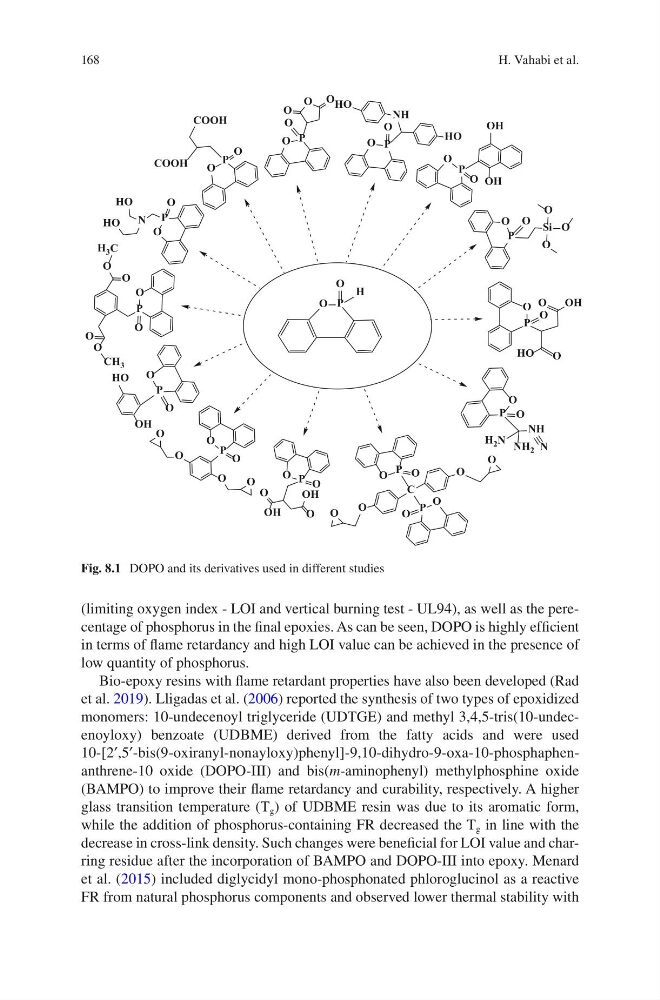
Fig. 8.1 DOPO and its derivatives used in different studies
H. Vahabi et al.
(limiting oxygen index - LOI and vertical burning test - UL94), as well as the perecentage of phosphorus in the final epoxies. As can be seen, DOPO is highly efficient
in terms of flame retardancy and high LOI value can be achieved in the presence of
low quantity of phosphorus.
Bio-epoxy resins with flame retardant properties have also been developed (Rad
et al. 2019). Lligadas et al. (2006) reported the synthesis of two types of epoxidized
monomers: 10-undecenoyl triglyceride (UDTGE) and methyl 3,4,5-tris(10-undecenoyloxy) benzoate (UDBME) derived from the fatty acids and were used
10-[2′,5′-bis(9-oxiranyl-nonayloxy)phenyl]-9,10-dihydro-9-oxa-10-phosphaphenanthrene-10 oxide (DOPO-III) and bis(m-aminophenyl) methylphosphine oxide
(BAMPO) to improve their flame retardancy and curability, respectively. A higher
glass transition temperature (T g ) of UDBME resin was due to its aromatic form,
while the addition of phosphorus-containing FR decreased the T g in line with the
decrease in cross-link density. Such changes were beneficial for LOI value and charring residue after the incorporation of BAMPO and DOPO-III into epoxy. Menard
et al. (2015) included diglycidyl mono-phosphonated phloroglucinol as a reactive
FR from natural phosphorus components and observed lower thermal stability with
P
O
OH
OH
O
P
O
Si O
O
O
O
P
O O
HO
O
OH
O
P
O
O
NH 2
NH
H 2 N
N
O P
O O
O
O
O P
NH
O
HO
HO
P
O
O
O
P
O
O
H 3 C
O
O
O
OH
HO
O P O
O
O
O
O
O P
OH
O
O
OH
O
P
O
O
C
P
O
O
O
O
O
O
CH 3
P
O
O
COOH
COOH
P
O
O
N
HO
HO
O P
O H
Fig. 8.1 DOPO and its derivatives used in different studies
H. Vahabi et al.