

90
M. H. Köhler et al.
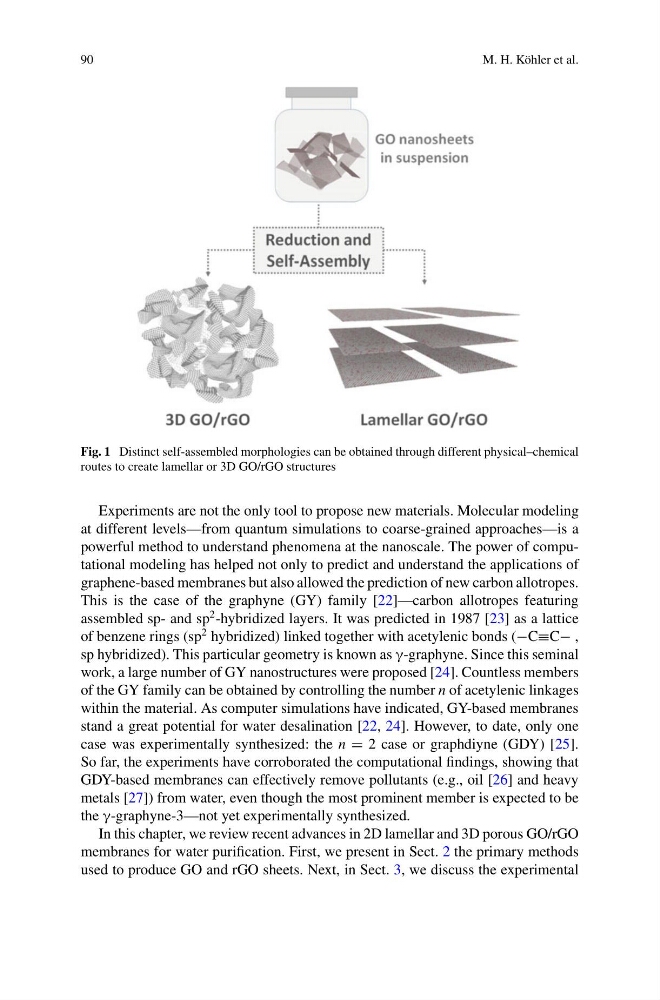
Fig. 1 Distinct self-assembled morphologies can be obtained through different physical–chemical
routes to create lamellar or 3D GO/rGO structures
Experiments are not the only tool to propose new materials. Molecular modeling
at different levels—from quantum simulations to coarse-grained approaches—is a
powerful method to understand phenomena at the nanoscale. The power of computational modeling has helped not only to predict and understand the applications of
graphene-based membranes but also allowed the prediction of new carbon allotropes.
This is the case of the graphyne (GY) family [22]—carbon allotropes featuring
assembled sp- and sp
2 -hybridized layers. It was predicted in 1987 [23] as a lattice
of benzene rings (sp
2 hybridized) linked together with acetylenic bonds (−C≡C− ,
sp hybridized). This particular geometry is known as γ-graphyne. Since this seminal
work, a large number of GY nanostructures were proposed [24]. Countless members
of the GY family can be obtained by controlling the number n of acetylenic linkages
within the material. As computer simulations have indicated, GY-based membranes
stand a great potential for water desalination [22, 24]. However, to date, only one
case was experimentally synthesized: the n = 2 case or graphdiyne (GDY) [25].
So far, the experiments have corroborated the computational findings, showing that
GDY-based membranes can effectively remove pollutants (e.g., oil [26] and heavy
metals [27]) from water, even though the most prominent member is expected to be
the γ-graphyne-3—not yet experimentally synthesized.
In this chapter, we review recent advances in 2D lamellar and 3D porous GO/rGO
membranes for water purification. First, we present in Sect. 2 the primary methods
used to produce GO and rGO sheets. Next, in Sect. 3, we discuss the experimental
M. H. Köhler et al.
Fig. 1 Distinct self-assembled morphologies can be obtained through different physical–chemical
routes to create lamellar or 3D GO/rGO structures
Experiments are not the only tool to propose new materials. Molecular modeling
at different levels—from quantum simulations to coarse-grained approaches—is a
powerful method to understand phenomena at the nanoscale. The power of computational modeling has helped not only to predict and understand the applications of
graphene-based membranes but also allowed the prediction of new carbon allotropes.
This is the case of the graphyne (GY) family [22]—carbon allotropes featuring
assembled sp- and sp
2 -hybridized layers. It was predicted in 1987 [23] as a lattice
of benzene rings (sp
2 hybridized) linked together with acetylenic bonds (−C≡C− ,
sp hybridized). This particular geometry is known as γ-graphyne. Since this seminal
work, a large number of GY nanostructures were proposed [24]. Countless members
of the GY family can be obtained by controlling the number n of acetylenic linkages
within the material. As computer simulations have indicated, GY-based membranes
stand a great potential for water desalination [22, 24]. However, to date, only one
case was experimentally synthesized: the n = 2 case or graphdiyne (GDY) [25].
So far, the experiments have corroborated the computational findings, showing that
GDY-based membranes can effectively remove pollutants (e.g., oil [26] and heavy
metals [27]) from water, even though the most prominent member is expected to be
the γ-graphyne-3—not yet experimentally synthesized.
In this chapter, we review recent advances in 2D lamellar and 3D porous GO/rGO
membranes for water purification. First, we present in Sect. 2 the primary methods
used to produce GO and rGO sheets. Next, in Sect. 3, we discuss the experimental