

Nano-Porous Graphene as Free-Standing Membranes
65
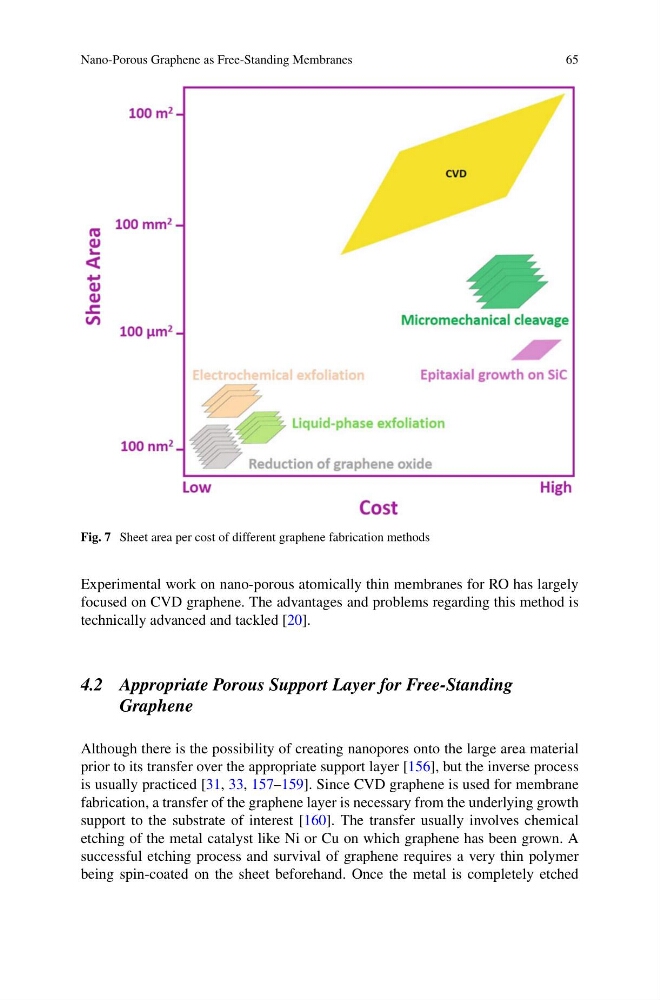
Fig. 7 Sheet area per cost of different graphene fabrication methods
Experimental work on nano-porous atomically thin membranes for RO has largely
focused on CVD graphene. The advantages and problems regarding this method is
technically advanced and tackled [20].
4.2 Appropriate Porous Support Layer for Free-Standing
Graphene
Although there is the possibility of creating nanopores onto the large area material
prior to its transfer over the appropriate support layer [156], but the inverse process
is usually practiced [31, 33, 157–159]. Since CVD graphene is used for membrane
fabrication, a transfer of the graphene layer is necessary from the underlying growth
support to the substrate of interest [160]. The transfer usually involves chemical
etching of the metal catalyst like Ni or Cu on which graphene has been grown. A
successful etching process and survival of graphene requires a very thin polymer
being spin-coated on the sheet beforehand. Once the metal is completely etched
65
Fig. 7 Sheet area per cost of different graphene fabrication methods
Experimental work on nano-porous atomically thin membranes for RO has largely
focused on CVD graphene. The advantages and problems regarding this method is
technically advanced and tackled [20].
4.2 Appropriate Porous Support Layer for Free-Standing
Graphene
Although there is the possibility of creating nanopores onto the large area material
prior to its transfer over the appropriate support layer [156], but the inverse process
is usually practiced [31, 33, 157–159]. Since CVD graphene is used for membrane
fabrication, a transfer of the graphene layer is necessary from the underlying growth
support to the substrate of interest [160]. The transfer usually involves chemical
etching of the metal catalyst like Ni or Cu on which graphene has been grown. A
successful etching process and survival of graphene requires a very thin polymer
being spin-coated on the sheet beforehand. Once the metal is completely etched