

Emerging Water Pollutants and Wastewater Treatments
25
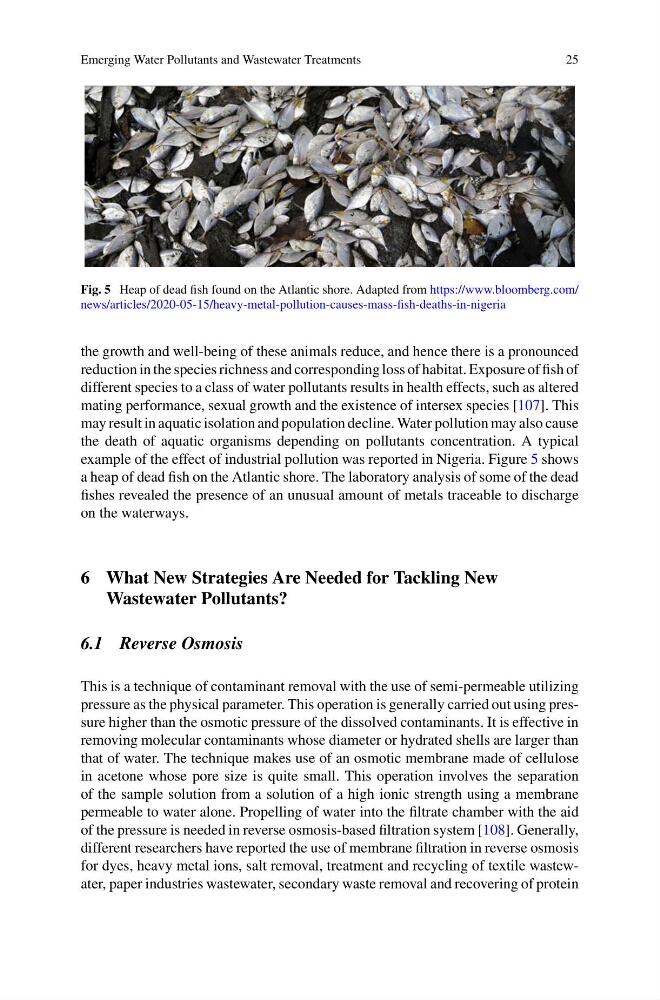
Fig. 5 Heap of dead fish found on the Atlantic shore. Adapted from https://www.bloomberg.com/
news/articles/2020-05-15/heavy-metal-pollution-causes-mass-fish-deaths-in-nigeria
the growth and well-being of these animals reduce, and hence there is a pronounced
reduction in the species richness and corresponding loss of habitat. Exposure of fish of
different species to a class of water pollutants results in health effects, such as altered
mating performance, sexual growth and the existence of intersex species [107]. This
may result in aquatic isolation and population decline. Water pollution may also cause
the death of aquatic organisms depending on pollutants concentration. A typical
example of the effect of industrial pollution was reported in Nigeria. Figure 5 shows
a heap of dead fish on the Atlantic shore. The laboratory analysis of some of the dead
fishes revealed the presence of an unusual amount of metals traceable to discharge
on the waterways.
6 What New Strategies Are Needed for Tackling New
Wastewater Pollutants?
6.1 Reverse Osmosis
This is a technique of contaminant removal with the use of semi-permeable utilizing
pressure as the physical parameter. This operation is generally carried out using pressure higher than the osmotic pressure of the dissolved contaminants. It is effective in
removing molecular contaminants whose diameter or hydrated shells are larger than
that of water. The technique makes use of an osmotic membrane made of cellulose
in acetone whose pore size is quite small. This operation involves the separation
of the sample solution from a solution of a high ionic strength using a membrane
permeable to water alone. Propelling of water into the filtrate chamber with the aid
of the pressure is needed in reverse osmosis-based filtration system [108]. Generally,
different researchers have reported the use of membrane filtration in reverse osmosis
for dyes, heavy metal ions, salt removal, treatment and recycling of textile wastewater, paper industries wastewater, secondary waste removal and recovering of protein
25
Fig. 5 Heap of dead fish found on the Atlantic shore. Adapted from https://www.bloomberg.com/
news/articles/2020-05-15/heavy-metal-pollution-causes-mass-fish-deaths-in-nigeria
the growth and well-being of these animals reduce, and hence there is a pronounced
reduction in the species richness and corresponding loss of habitat. Exposure of fish of
different species to a class of water pollutants results in health effects, such as altered
mating performance, sexual growth and the existence of intersex species [107]. This
may result in aquatic isolation and population decline. Water pollution may also cause
the death of aquatic organisms depending on pollutants concentration. A typical
example of the effect of industrial pollution was reported in Nigeria. Figure 5 shows
a heap of dead fish on the Atlantic shore. The laboratory analysis of some of the dead
fishes revealed the presence of an unusual amount of metals traceable to discharge
on the waterways.
6 What New Strategies Are Needed for Tackling New
Wastewater Pollutants?
6.1 Reverse Osmosis
This is a technique of contaminant removal with the use of semi-permeable utilizing
pressure as the physical parameter. This operation is generally carried out using pressure higher than the osmotic pressure of the dissolved contaminants. It is effective in
removing molecular contaminants whose diameter or hydrated shells are larger than
that of water. The technique makes use of an osmotic membrane made of cellulose
in acetone whose pore size is quite small. This operation involves the separation
of the sample solution from a solution of a high ionic strength using a membrane
permeable to water alone. Propelling of water into the filtrate chamber with the aid
of the pressure is needed in reverse osmosis-based filtration system [108]. Generally,
different researchers have reported the use of membrane filtration in reverse osmosis
for dyes, heavy metal ions, salt removal, treatment and recycling of textile wastewater, paper industries wastewater, secondary waste removal and recovering of protein