

234
G.-R. Xu
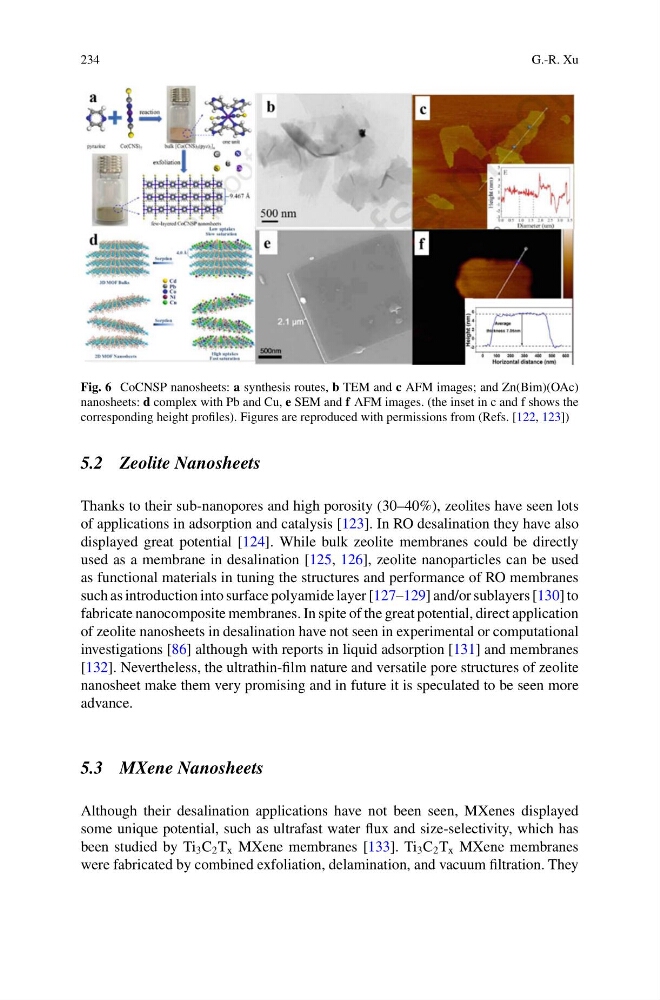
Fig. 6 CoCNSP nanosheets: a synthesis routes, b TEM and c AFM images; and Zn(Bim)(OAc)
nanosheets: d complex with Pb and Cu, e SEM and f AFM images. (the inset in c and f shows the
corresponding height profiles). Figures are reproduced with permissions from (Refs. [122, 123])
5.2 Zeolite Nanosheets
Thanks to their sub-nanopores and high porosity (30–40%), zeolites have seen lots
of applications in adsorption and catalysis [123]. In RO desalination they have also
displayed great potential [124]. While bulk zeolite membranes could be directly
used as a membrane in desalination [125, 126], zeolite nanoparticles can be used
as functional materials in tuning the structures and performance of RO membranes
such as introduction into surface polyamide layer [127–129] and/or sublayers [130] to
fabricate nanocomposite membranes. In spite of the great potential, direct application
of zeolite nanosheets in desalination have not seen in experimental or computational
investigations [86] although with reports in liquid adsorption [131] and membranes
[132]. Nevertheless, the ultrathin-film nature and versatile pore structures of zeolite
nanosheet make them very promising and in future it is speculated to be seen more
advance.
5.3 MXene Nanosheets
Although their desalination applications have not been seen, MXenes displayed
some unique potential, such as ultrafast water flux and size-selectivity, which has
been studied by Ti 3 C 2 T x MXene membranes [133]. Ti 3 C 2 T x MXene membranes
were fabricated by combined exfoliation, delamination, and vacuum filtration. They
G.-R. Xu
Fig. 6 CoCNSP nanosheets: a synthesis routes, b TEM and c AFM images; and Zn(Bim)(OAc)
nanosheets: d complex with Pb and Cu, e SEM and f AFM images. (the inset in c and f shows the
corresponding height profiles). Figures are reproduced with permissions from (Refs. [122, 123])
5.2 Zeolite Nanosheets
Thanks to their sub-nanopores and high porosity (30–40%), zeolites have seen lots
of applications in adsorption and catalysis [123]. In RO desalination they have also
displayed great potential [124]. While bulk zeolite membranes could be directly
used as a membrane in desalination [125, 126], zeolite nanoparticles can be used
as functional materials in tuning the structures and performance of RO membranes
such as introduction into surface polyamide layer [127–129] and/or sublayers [130] to
fabricate nanocomposite membranes. In spite of the great potential, direct application
of zeolite nanosheets in desalination have not seen in experimental or computational
investigations [86] although with reports in liquid adsorption [131] and membranes
[132]. Nevertheless, the ultrathin-film nature and versatile pore structures of zeolite
nanosheet make them very promising and in future it is speculated to be seen more
advance.
5.3 MXene Nanosheets
Although their desalination applications have not been seen, MXenes displayed
some unique potential, such as ultrafast water flux and size-selectivity, which has
been studied by Ti 3 C 2 T x MXene membranes [133]. Ti 3 C 2 T x MXene membranes
were fabricated by combined exfoliation, delamination, and vacuum filtration. They