

Porous Graphene Membranes for Solute Separation …
151
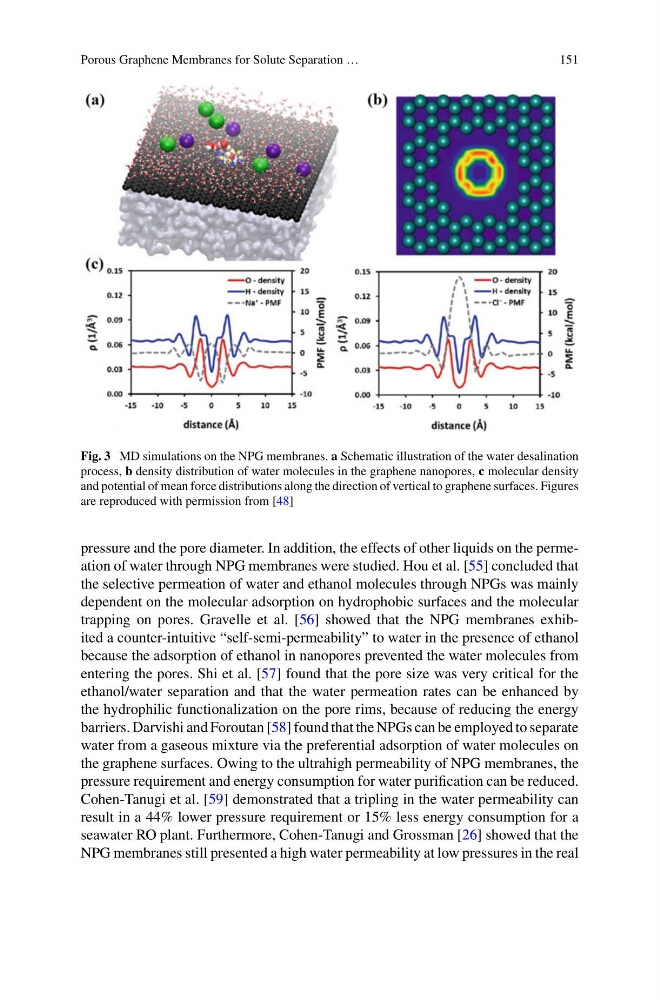
Fig. 3 MD simulations on the NPG membranes. a Schematic illustration of the water desalination
process, b density distribution of water molecules in the graphene nanopores, c molecular density
and potential of mean force distributions along the direction of vertical to graphene surfaces. Figures
are reproduced with permission from [48]
pressure and the pore diameter. In addition, the effects of other liquids on the permeation of water through NPG membranes were studied. Hou et al. [55] concluded that
the selective permeation of water and ethanol molecules through NPGs was mainly
dependent on the molecular adsorption on hydrophobic surfaces and the molecular
trapping on pores. Gravelle et al. [56] showed that the NPG membranes exhibited a counter-intuitive “self-semi-permeability” to water in the presence of ethanol
because the adsorption of ethanol in nanopores prevented the water molecules from
entering the pores. Shi et al. [57] found that the pore size was very critical for the
ethanol/water separation and that the water permeation rates can be enhanced by
the hydrophilic functionalization on the pore rims, because of reducing the energy
barriers. Darvishi and Foroutan [58] found that the NPGs can be employed to separate
water from a gaseous mixture via the preferential adsorption of water molecules on
the graphene surfaces. Owing to the ultrahigh permeability of NPG membranes, the
pressure requirement and energy consumption for water purification can be reduced.
Cohen-Tanugi et al. [59] demonstrated that a tripling in the water permeability can
result in a 44% lower pressure requirement or 15% less energy consumption for a
seawater RO plant. Furthermore, Cohen-Tanugi and Grossman [26] showed that the
NPG membranes still presented a high water permeability at low pressures in the real
151
Fig. 3 MD simulations on the NPG membranes. a Schematic illustration of the water desalination
process, b density distribution of water molecules in the graphene nanopores, c molecular density
and potential of mean force distributions along the direction of vertical to graphene surfaces. Figures
are reproduced with permission from [48]
pressure and the pore diameter. In addition, the effects of other liquids on the permeation of water through NPG membranes were studied. Hou et al. [55] concluded that
the selective permeation of water and ethanol molecules through NPGs was mainly
dependent on the molecular adsorption on hydrophobic surfaces and the molecular
trapping on pores. Gravelle et al. [56] showed that the NPG membranes exhibited a counter-intuitive “self-semi-permeability” to water in the presence of ethanol
because the adsorption of ethanol in nanopores prevented the water molecules from
entering the pores. Shi et al. [57] found that the pore size was very critical for the
ethanol/water separation and that the water permeation rates can be enhanced by
the hydrophilic functionalization on the pore rims, because of reducing the energy
barriers. Darvishi and Foroutan [58] found that the NPGs can be employed to separate
water from a gaseous mixture via the preferential adsorption of water molecules on
the graphene surfaces. Owing to the ultrahigh permeability of NPG membranes, the
pressure requirement and energy consumption for water purification can be reduced.
Cohen-Tanugi et al. [59] demonstrated that a tripling in the water permeability can
result in a 44% lower pressure requirement or 15% less energy consumption for a
seawater RO plant. Furthermore, Cohen-Tanugi and Grossman [26] showed that the
NPG membranes still presented a high water permeability at low pressures in the real