

compartment, being the electron transfer mediated by an artificial co-factor, MV
(that reduces FDH), replacing the NAD
+
/NADH physiological redox partner. The
oxidized artificial mediator is then regenerated at the electrode surface. The EFC
anode is platinum where water is oxidized to oxygen. The overall system was
demonstrated to be able to work continuously with a formate production yield of
about 60%. In another example, a DET bi-enzymatic EFC using immobilized FDH
(in both the cathode and the anode) on carbon nanotubes modified carbon felt was
reported with a coulombic efficiency of 60%. In this, the cathodic compartment was
continuously fed with gaseous CO 2 and NADH was added to the anodic chamber
[77]. Also, a hybrid microbial fuel cell (MFC) fed with wastewater pollutants
coupled with a EFC with an immobilized FDH in the cathode, converting CO 2 to
formate, was successfully reported [78]. Next sections will better describe these
systems.
Although several proposals have been made using free enzymes in solution, the
immobilization of enzymes, by different methods, e.g. covalent binding, adsorption,
encapsulation, entrapment in hydrogel or polymeric matrices, amongst others, has
been the preferential approach in order to enhance the stability and possible
reutilization [37, 64, 65, 68, 69, 79].
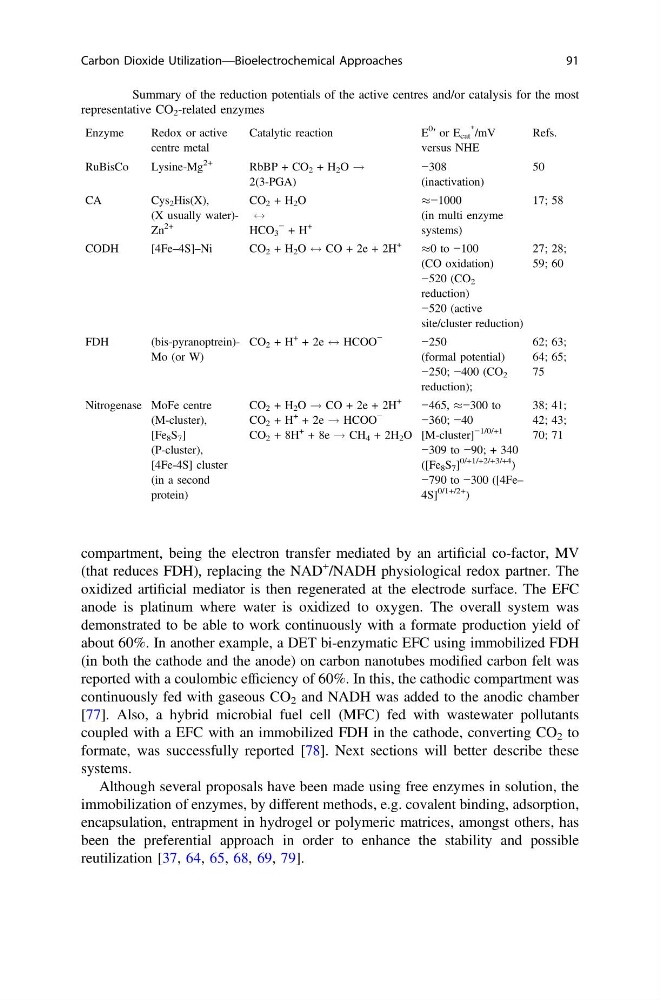
Table 1 Summary of the reduction potentials of the active centres and/or catalysis for the most
representative CO 2 -related enzymes
Enzyme
Redox or active
centre metal
Catalytic reaction
E
0
′ or E cat
*
/mV
versus NHE
Refs.
RuBisCo
Lysine-Mg
2+
RbBP + CO 2 + H 2 O !
2(3-PGA)
−308
(inactivation)
50
CA
Cys 2 His(X),
(X usually water)Zn
2+
CO 2 + H 2 O
$
HCO 3
− + H
+
%−1000
(in multi enzyme
systems)
17; 58
CODH
[4Fe–4S]–Ni
CO 2 + H 2 O $ CO + 2e + 2H
+
%0 to −100
(CO oxidation)
−520 (CO 2
reduction)
−520 (active
site/cluster reduction)
27; 28;
59; 60
FDH
(bis-pyranoptrein)Mo (or W)
CO 2 + H
+ + 2e $ HCOO
−
−250
(formal potential)
−250; −400 (CO 2
reduction);
62; 63;
64; 65;
75
Nitrogenase MoFe centre
(M-cluster),
[Fe 8 S 7 ]
(P-cluster),
[4Fe-4S] cluster
(in a second
protein)
CO 2 + H 2 O ! CO + 2e + 2H
+
CO 2 + H
+ + 2e ! HCOO
−
CO 2 + 8H
+ + 8e ! CH 4 + 2H 2 O
−465, %−300 to
−360; −40
[M-cluster]
−1/0/+1
−309 to −90; + 340
([Fe 8 S 7 ]
0/+1/+2/+3/+4
)
−790 to −300 ([4Fe–
4S]
0/1+/2+
)
38; 41;
42; 43;
70; 71
Carbon Dioxide Utilization—Bioelectrochemical Approaches
91
(that reduces FDH), replacing the NAD
+
/NADH physiological redox partner. The
oxidized artificial mediator is then regenerated at the electrode surface. The EFC
anode is platinum where water is oxidized to oxygen. The overall system was
demonstrated to be able to work continuously with a formate production yield of
about 60%. In another example, a DET bi-enzymatic EFC using immobilized FDH
(in both the cathode and the anode) on carbon nanotubes modified carbon felt was
reported with a coulombic efficiency of 60%. In this, the cathodic compartment was
continuously fed with gaseous CO 2 and NADH was added to the anodic chamber
[77]. Also, a hybrid microbial fuel cell (MFC) fed with wastewater pollutants
coupled with a EFC with an immobilized FDH in the cathode, converting CO 2 to
formate, was successfully reported [78]. Next sections will better describe these
systems.
Although several proposals have been made using free enzymes in solution, the
immobilization of enzymes, by different methods, e.g. covalent binding, adsorption,
encapsulation, entrapment in hydrogel or polymeric matrices, amongst others, has
been the preferential approach in order to enhance the stability and possible
reutilization [37, 64, 65, 68, 69, 79].
Table 1 Summary of the reduction potentials of the active centres and/or catalysis for the most
representative CO 2 -related enzymes
Enzyme
Redox or active
centre metal
Catalytic reaction
E
0
′ or E cat
*
/mV
versus NHE
Refs.
RuBisCo
Lysine-Mg
2+
RbBP + CO 2 + H 2 O !
2(3-PGA)
−308
(inactivation)
50
CA
Cys 2 His(X),
(X usually water)Zn
2+
CO 2 + H 2 O
$
HCO 3
− + H
+
%−1000
(in multi enzyme
systems)
17; 58
CODH
[4Fe–4S]–Ni
CO 2 + H 2 O $ CO + 2e + 2H
+
%0 to −100
(CO oxidation)
−520 (CO 2
reduction)
−520 (active
site/cluster reduction)
27; 28;
59; 60
FDH
(bis-pyranoptrein)Mo (or W)
CO 2 + H
+ + 2e $ HCOO
−
−250
(formal potential)
−250; −400 (CO 2
reduction);
62; 63;
64; 65;
75
Nitrogenase MoFe centre
(M-cluster),
[Fe 8 S 7 ]
(P-cluster),
[4Fe-4S] cluster
(in a second
protein)
CO 2 + H 2 O ! CO + 2e + 2H
+
CO 2 + H
+ + 2e ! HCOO
−
CO 2 + 8H
+ + 8e ! CH 4 + 2H 2 O
−465, %−300 to
−360; −40
[M-cluster]
−1/0/+1
−309 to −90; + 340
([Fe 8 S 7 ]
0/+1/+2/+3/+4
)
−790 to −300 ([4Fe–
4S]
0/1+/2+
)
38; 41;
42; 43;
70; 71
Carbon Dioxide Utilization—Bioelectrochemical Approaches
91