

Leeb et al. [80] obtained bioactive peptides such as fragment f(9–14) from
hydrolysis of b-LG with a yield of 52%, using a chromatography ion exchange
adsorption membrane.
Hippauf et al. [81] purified peptides in the chromatography adsorption column
mainly by hydrophobic interactions using an activated charcoal focus on peptides
containing Trp, such as Ile-Trp or Ala-Trp.
Bhut et al. [82] proposed chromatographic membrane processes that combine a
functionalized membrane with ligands (e.g., ionic exchangers) used in protein
separation.
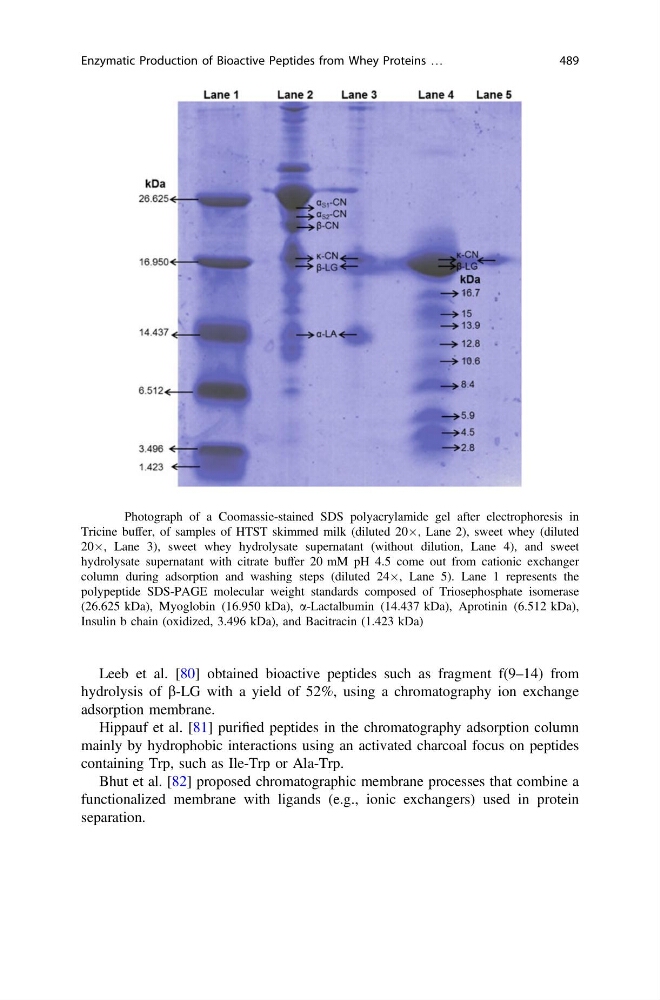
Fig. 4 Photograph of a Coomassie-stained SDS polyacrylamide gel after electrophoresis in
Tricine buffer, of samples of HTST skimmed milk (diluted 20Â, Lane 2), sweet whey (diluted
20Â, Lane 3), sweet whey hydrolysate supernatant (without dilution, Lane 4), and sweet
hydrolysate supernatant with citrate buffer 20 mM pH 4.5 come out from cationic exchanger
column during adsorption and washing steps (diluted 24Â, Lane 5). Lane 1 represents the
polypeptide SDS-PAGE molecular weight standards composed of Triosephosphate isomerase
(26.625 kDa), Myoglobin (16.950 kDa), a-Lactalbumin (14.437 kDa), Aprotinin (6.512 kDa),
Insulin b chain (oxidized, 3.496 kDa), and Bacitracin (1.423 kDa)
Enzymatic Production of Bioactive Peptides from Whey Proteins …
489
hydrolysis of b-LG with a yield of 52%, using a chromatography ion exchange
adsorption membrane.
Hippauf et al. [81] purified peptides in the chromatography adsorption column
mainly by hydrophobic interactions using an activated charcoal focus on peptides
containing Trp, such as Ile-Trp or Ala-Trp.
Bhut et al. [82] proposed chromatographic membrane processes that combine a
functionalized membrane with ligands (e.g., ionic exchangers) used in protein
separation.
Fig. 4 Photograph of a Coomassie-stained SDS polyacrylamide gel after electrophoresis in
Tricine buffer, of samples of HTST skimmed milk (diluted 20Â, Lane 2), sweet whey (diluted
20Â, Lane 3), sweet whey hydrolysate supernatant (without dilution, Lane 4), and sweet
hydrolysate supernatant with citrate buffer 20 mM pH 4.5 come out from cationic exchanger
column during adsorption and washing steps (diluted 24Â, Lane 5). Lane 1 represents the
polypeptide SDS-PAGE molecular weight standards composed of Triosephosphate isomerase
(26.625 kDa), Myoglobin (16.950 kDa), a-Lactalbumin (14.437 kDa), Aprotinin (6.512 kDa),
Insulin b chain (oxidized, 3.496 kDa), and Bacitracin (1.423 kDa)
Enzymatic Production of Bioactive Peptides from Whey Proteins …
489