

bonds, while metallic-proteases use divalent cations such as zinc in the formation of
a coordination complex activating water molecules for the catalytic process [30].
According to the above classification and the sequence polypeptide chain where the
proteases act (P 1 –P′ 1 ), it was also demonstrated that other residues of neighboring
amino acids (P 2 , P 3 , P′ 2 , P′ 3 , …) play a critical effect on the hydrolytic process of
that specific peptide bond.
Digestive enzymes are commercially available from animal tissues such as
porcine or bovine and are by far the most used enzymes for hydrolysis of milk and
whey proteins and production of bioactive peptides used as additives in “functional
foods” [31]. In this large group of enzymes, trypsin (serine endopeptidase,
EC.3.4.21.4), pepsin (aspartic endopeptidase, EC.3.4.23.1), and chymotrypsin
(serine endopeptidase, EC.3.4.21.1) are the most relevant.
A significant number of studies have been performed on the hydrolysis of WPC,
WPI, and purified proteins, such as a-LA and b-LG. Cheison et al. [32] described
the efficiency and specificity of trypsin, obtaining high hydrolysis with b-LG and
low hydrolysis with a-LA at 25 °C and pH 8.5 after 2 h. Contrastingly, Acid
Protease A hydrolyzed a-LA efficiently at 37.5 °C, and pH 3 after 2 h [33].
Hydrolysis of these protein substrates, for example, with trypsin in the pH range 7–
8, chymotrypsin at pH 7.8, and pepsin at pH 2.6 led to DH between 6–22%, but the
type of peptides generated was dependent on the specificity of the protease. The
difference of the pH values used in hydrolysis is due to the mechanism and charge
of the amino acid involved in the active site of the different proteases. However, the
pH value is also an essential factor in the susceptibility of the protein parent
molecules to proteolytic action, as the dissociation of b-LG dimers occur for pH
values between 2 and 7.5. In contrast, the b-LG self-association occurs in the form
of dimers or octamers at extreme values of this range [34]. These authors also
observed that potassium phosphate buffer at high concentrations causes b-LG
dimerization that affects the accessibility of proteases to the polypeptide chain and
therefore prevents hydrolysis of peptide bonds inside specific dimer regions.
- Enzymes
- Fermentation processes
Methods for release of
Bioactive Peptides
Physical
Chemical
Biological
- Heat of protein-rich
food processing
- Acid catalysts
- Alkaline catalysts
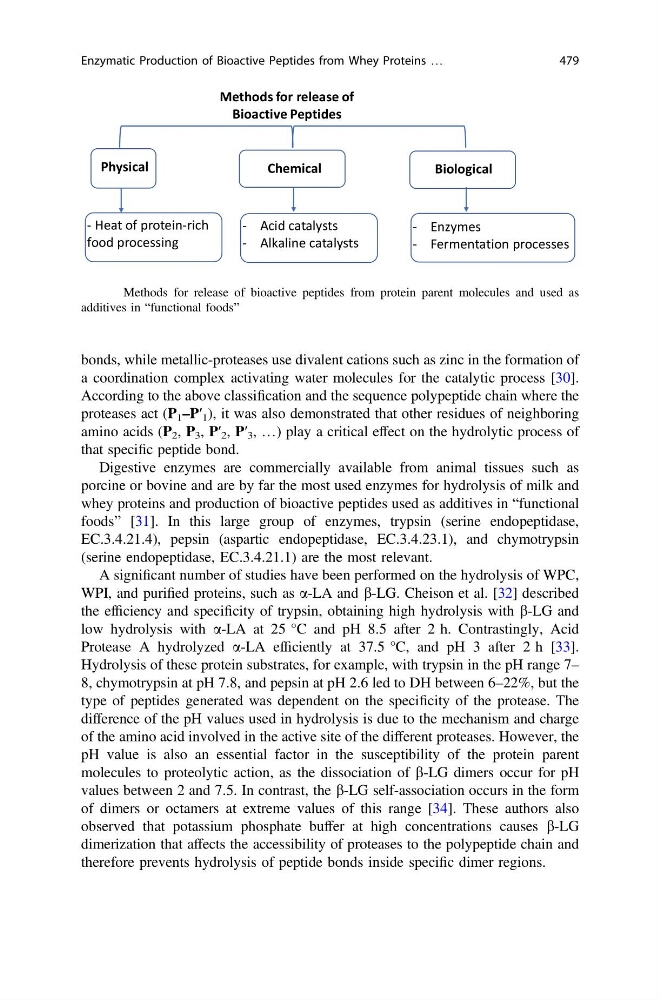
Fig. 2 Methods for release of bioactive peptides from protein parent molecules and used as
additives in “functional foods”
Enzymatic Production of Bioactive Peptides from Whey Proteins …
479
a coordination complex activating water molecules for the catalytic process [30].
According to the above classification and the sequence polypeptide chain where the
proteases act (P 1 –P′ 1 ), it was also demonstrated that other residues of neighboring
amino acids (P 2 , P 3 , P′ 2 , P′ 3 , …) play a critical effect on the hydrolytic process of
that specific peptide bond.
Digestive enzymes are commercially available from animal tissues such as
porcine or bovine and are by far the most used enzymes for hydrolysis of milk and
whey proteins and production of bioactive peptides used as additives in “functional
foods” [31]. In this large group of enzymes, trypsin (serine endopeptidase,
EC.3.4.21.4), pepsin (aspartic endopeptidase, EC.3.4.23.1), and chymotrypsin
(serine endopeptidase, EC.3.4.21.1) are the most relevant.
A significant number of studies have been performed on the hydrolysis of WPC,
WPI, and purified proteins, such as a-LA and b-LG. Cheison et al. [32] described
the efficiency and specificity of trypsin, obtaining high hydrolysis with b-LG and
low hydrolysis with a-LA at 25 °C and pH 8.5 after 2 h. Contrastingly, Acid
Protease A hydrolyzed a-LA efficiently at 37.5 °C, and pH 3 after 2 h [33].
Hydrolysis of these protein substrates, for example, with trypsin in the pH range 7–
8, chymotrypsin at pH 7.8, and pepsin at pH 2.6 led to DH between 6–22%, but the
type of peptides generated was dependent on the specificity of the protease. The
difference of the pH values used in hydrolysis is due to the mechanism and charge
of the amino acid involved in the active site of the different proteases. However, the
pH value is also an essential factor in the susceptibility of the protein parent
molecules to proteolytic action, as the dissociation of b-LG dimers occur for pH
values between 2 and 7.5. In contrast, the b-LG self-association occurs in the form
of dimers or octamers at extreme values of this range [34]. These authors also
observed that potassium phosphate buffer at high concentrations causes b-LG
dimerization that affects the accessibility of proteases to the polypeptide chain and
therefore prevents hydrolysis of peptide bonds inside specific dimer regions.
- Enzymes
- Fermentation processes
Methods for release of
Bioactive Peptides
Physical
Chemical
Biological
- Heat of protein-rich
food processing
- Acid catalysts
- Alkaline catalysts
Fig. 2 Methods for release of bioactive peptides from protein parent molecules and used as
additives in “functional foods”
Enzymatic Production of Bioactive Peptides from Whey Proteins …
479