

pulping is performed at a low pH (i.e., pH 1.5–5), using metal sulfites, generated by
reaction of sulfur dioxide with alkali metal or alkaline earth hydroxides, and leading
to acid-catalyzed cleavage of the ether bonds in lignin. This results in lignosulfonates that are soluble and therefore can be separated from the cellulose fibers and
used in a range of different marketable products. Soda pulping involves cooking of
lignocellulosic biomass with sodium hydroxide at similar temperatures and with
similar effects on the lignin as kraft pulping. Also here, the fragmented, albeit
sulfur-free lignin can be recovered from the spent liquid at low pH.
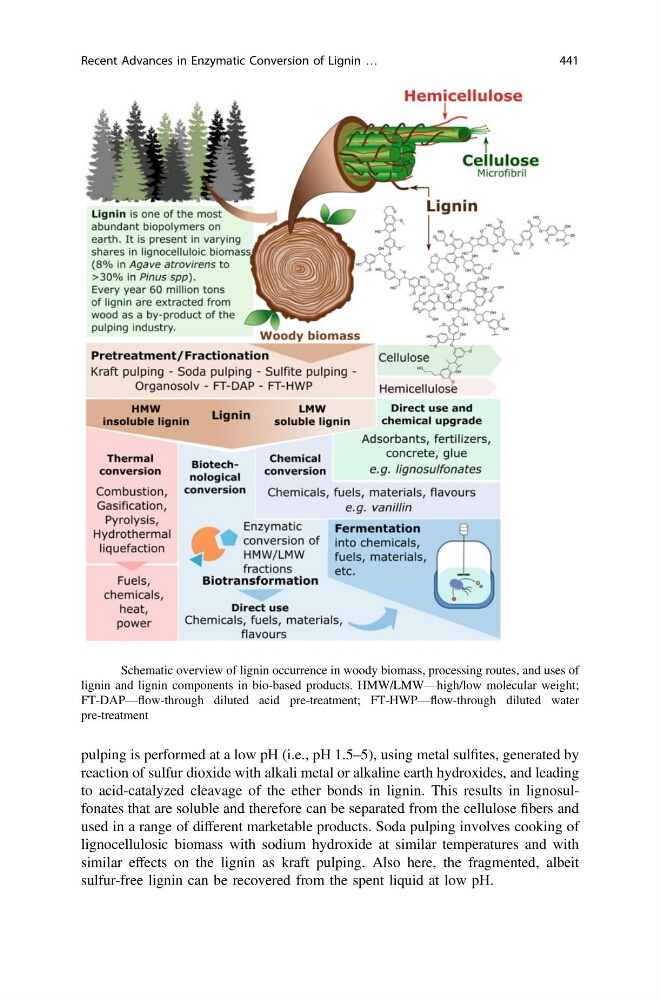
Fig. 1 Schematic overview of lignin occurrence in woody biomass, processing routes, and uses of
lignin and lignin components in bio-based products. HMW/LMW—high/low molecular weight;
FT-DAP—flow-through diluted acid pre-treatment; FT-HWP—flow-through diluted water
pre-treatment
Recent Advances in Enzymatic Conversion of Lignin …
441
reaction of sulfur dioxide with alkali metal or alkaline earth hydroxides, and leading
to acid-catalyzed cleavage of the ether bonds in lignin. This results in lignosulfonates that are soluble and therefore can be separated from the cellulose fibers and
used in a range of different marketable products. Soda pulping involves cooking of
lignocellulosic biomass with sodium hydroxide at similar temperatures and with
similar effects on the lignin as kraft pulping. Also here, the fragmented, albeit
sulfur-free lignin can be recovered from the spent liquid at low pH.
Fig. 1 Schematic overview of lignin occurrence in woody biomass, processing routes, and uses of
lignin and lignin components in bio-based products. HMW/LMW—high/low molecular weight;
FT-DAP—flow-through diluted acid pre-treatment; FT-HWP—flow-through diluted water
pre-treatment
Recent Advances in Enzymatic Conversion of Lignin …
441