

(unpublished results), prospecting higher productivities during summer periods.
Future technology development is expected to bring forward PPBPonds as attractive systems for low-cost PHA production from waste streams with high carbon,
nitrogen, and phosphorus recovery levels.
Acknowledgements The authors acknowledge FCC Aqualia for providing pictures of the
INCOVER PPBPonds at Chiclana de la Frontera WWTP. The authors would also like to
acknowledge the financial support from the Fundação para a Ciência e Tecnologia for the Grant
PD/BD / 114574/2016 and the support by the Applied Molecular Biosciences Unit—UCIBIO
which is financed by national funds from FCT (UIDB/04378/2020).
References
1. Rao MA, Scelza R, Scotti R et al (2010) Role of enzymes in the remediation of polluted
environments. J Soil Sci Plant Nutr 10:333–353
2. IPCC 2018: Summary for Policymakers (2018) In: Masson-Delmotte V, Zhai P, Pörtner HO
et al (eds) Global Warming of 1.5 °C. An IPCC Special Report on the impacts of global
warming of 1.5 °C above pre-industrial levels and related global greenhouse gas emission
pathways, in the context of strengthening the global response to the threat of climate change,
sustainable development, and efforts to eradicate poverty. World Meteorological Organization, Geneva, Switzerland, 32 pp.
3. Agarwal N, Banternghansa C, Bui LTM (2010) Toxic exposure in America: estimating fetal
and infant health outcomes from 14 years of TRI reporting. J Health Econ
4. Khan MA, Ghouri AM (2011) Environmental pollution: its effects on life and its remedies.
Res World J Arts Sci Commer 2:276–285
5. Gianfreda L, Rao MA, Scelza R, De La Luz Mora M (2016) Role of enzymes in
environment cleanup/remediation. In: Dhillon G, Kaur S (eds) Agro-industrial wastes as
feedstock for enzyme production: apply and exploit the emerging and valuable use options
of waste biomass. Academic Press.
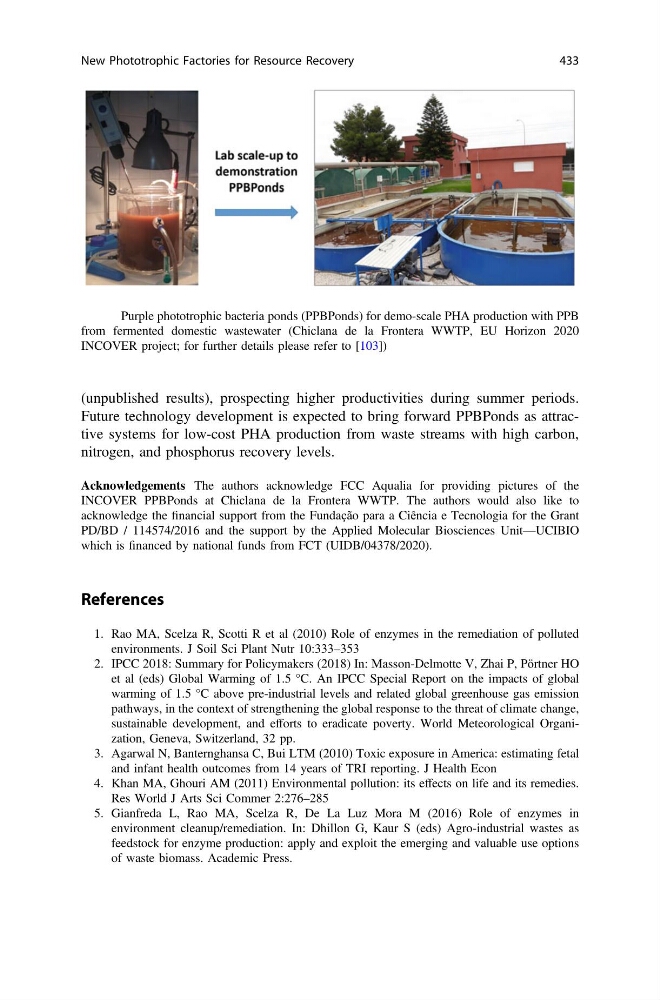
Fig. 6 Purple phototrophic bacteria ponds (PPBPonds) for demo-scale PHA production with PPB
from fermented domestic wastewater (Chiclana de la Frontera WWTP, EU Horizon 2020
INCOVER project; for further details please refer to [103])
New Phototrophic Factories for Resource Recovery
433
Future technology development is expected to bring forward PPBPonds as attractive systems for low-cost PHA production from waste streams with high carbon,
nitrogen, and phosphorus recovery levels.
Acknowledgements The authors acknowledge FCC Aqualia for providing pictures of the
INCOVER PPBPonds at Chiclana de la Frontera WWTP. The authors would also like to
acknowledge the financial support from the Fundação para a Ciência e Tecnologia for the Grant
PD/BD / 114574/2016 and the support by the Applied Molecular Biosciences Unit—UCIBIO
which is financed by national funds from FCT (UIDB/04378/2020).
References
1. Rao MA, Scelza R, Scotti R et al (2010) Role of enzymes in the remediation of polluted
environments. J Soil Sci Plant Nutr 10:333–353
2. IPCC 2018: Summary for Policymakers (2018) In: Masson-Delmotte V, Zhai P, Pörtner HO
et al (eds) Global Warming of 1.5 °C. An IPCC Special Report on the impacts of global
warming of 1.5 °C above pre-industrial levels and related global greenhouse gas emission
pathways, in the context of strengthening the global response to the threat of climate change,
sustainable development, and efforts to eradicate poverty. World Meteorological Organization, Geneva, Switzerland, 32 pp.
3. Agarwal N, Banternghansa C, Bui LTM (2010) Toxic exposure in America: estimating fetal
and infant health outcomes from 14 years of TRI reporting. J Health Econ
4. Khan MA, Ghouri AM (2011) Environmental pollution: its effects on life and its remedies.
Res World J Arts Sci Commer 2:276–285
5. Gianfreda L, Rao MA, Scelza R, De La Luz Mora M (2016) Role of enzymes in
environment cleanup/remediation. In: Dhillon G, Kaur S (eds) Agro-industrial wastes as
feedstock for enzyme production: apply and exploit the emerging and valuable use options
of waste biomass. Academic Press.
Fig. 6 Purple phototrophic bacteria ponds (PPBPonds) for demo-scale PHA production with PPB
from fermented domestic wastewater (Chiclana de la Frontera WWTP, EU Horizon 2020
INCOVER project; for further details please refer to [103])
New Phototrophic Factories for Resource Recovery
433