

In accumulation tests, the culture attained 20% PHB content (gPHB/gVSS) with
a polymer storage yield of 0.70 ± 0.04 Cmol PHB/Cmol Acet [99]. Subsequent
studies showed that the acetate enriched PMC was also capable of consuming VFA
mixtures (acetate, propionate, and butyrate), attaining similar PHA contents of 20%,
but producing a PHA co-polymer of better quality with an HB:HV molar fraction of
84:16 [100].
Since this technology can only achieve economic feasibility if operated in outdoor conditions, the PMC capability of enduring transient illumination was tested,
at laboratory scale, under FF dark/light conditions. This resulted in a decrease of
microalgae levels, but that were still capable of sustaining the system oxygen needs.
With the microalgae decrease, more light and carbon source became available for
the PHA accumulating bacteria, leading to higher metabolic rates and to an increase
of the PHA content up to 30% [101]. At this time, the PHB storage yield reached
0.90 ± 0.09 Cmol PHB/Cmol Substrate (acetate + internal glycogen) which
resulted from the decrease of microalgae that could compete for the acetate and
also, from the lower oxygen availability that enabled the higher carbon conversion
efficiencies typically observed in PPB.
The studies with PMCs selected under the feast and famine strategy show that
targeting PPB for their PHA storage capacity as carbon reserve enables effective
culture selection. The results indicated that the PMC technology under dynamic
feeding comprises the requirements for outdoor operation namely stability under
dark/light conditions and capability of using VFA mixtures, typically found in
fermented wastewaters, for PHA co-polymer production. Nevertheless, subsequent
studies addressed the possibility of selecting PMCs by exploring PPB capability of
storing PHA as electron sink. In this case, PMCs were selected under continuous
illumination (halogen lamp), permanent presence of acetate (in a so-called permanent feast) and presence of ammonia to promote cell redox balance via PHB
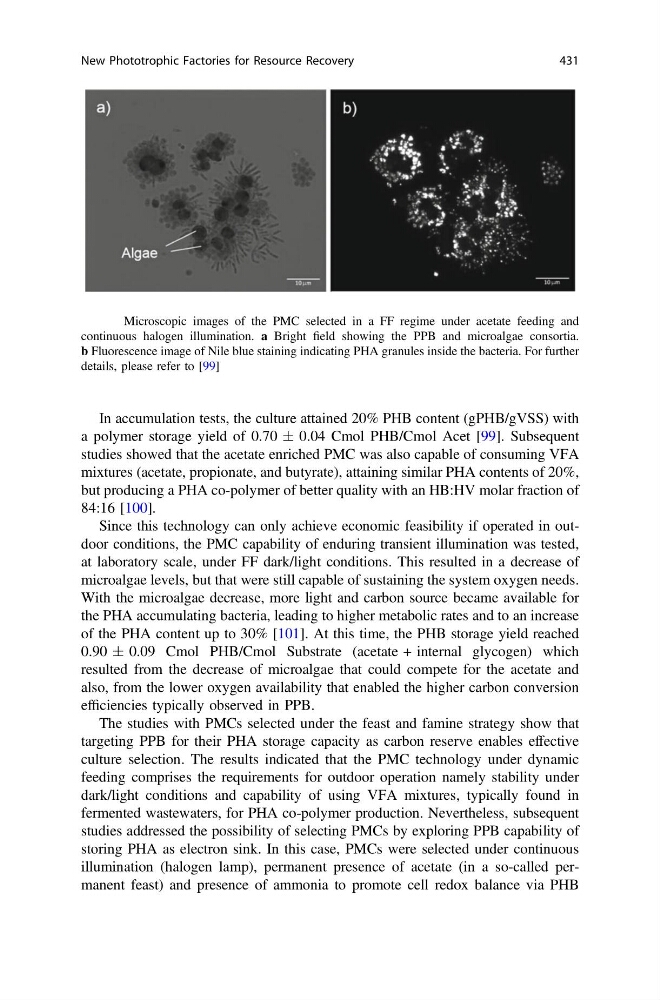
Fig. 5 Microscopic images of the PMC selected in a FF regime under acetate feeding and
continuous halogen illumination. a Bright field showing the PPB and microalgae consortia.
b Fluorescence image of Nile blue staining indicating PHA granules inside the bacteria. For further
details, please refer to [99]
New Phototrophic Factories for Resource Recovery
431
a polymer storage yield of 0.70 ± 0.04 Cmol PHB/Cmol Acet [99]. Subsequent
studies showed that the acetate enriched PMC was also capable of consuming VFA
mixtures (acetate, propionate, and butyrate), attaining similar PHA contents of 20%,
but producing a PHA co-polymer of better quality with an HB:HV molar fraction of
84:16 [100].
Since this technology can only achieve economic feasibility if operated in outdoor conditions, the PMC capability of enduring transient illumination was tested,
at laboratory scale, under FF dark/light conditions. This resulted in a decrease of
microalgae levels, but that were still capable of sustaining the system oxygen needs.
With the microalgae decrease, more light and carbon source became available for
the PHA accumulating bacteria, leading to higher metabolic rates and to an increase
of the PHA content up to 30% [101]. At this time, the PHB storage yield reached
0.90 ± 0.09 Cmol PHB/Cmol Substrate (acetate + internal glycogen) which
resulted from the decrease of microalgae that could compete for the acetate and
also, from the lower oxygen availability that enabled the higher carbon conversion
efficiencies typically observed in PPB.
The studies with PMCs selected under the feast and famine strategy show that
targeting PPB for their PHA storage capacity as carbon reserve enables effective
culture selection. The results indicated that the PMC technology under dynamic
feeding comprises the requirements for outdoor operation namely stability under
dark/light conditions and capability of using VFA mixtures, typically found in
fermented wastewaters, for PHA co-polymer production. Nevertheless, subsequent
studies addressed the possibility of selecting PMCs by exploring PPB capability of
storing PHA as electron sink. In this case, PMCs were selected under continuous
illumination (halogen lamp), permanent presence of acetate (in a so-called permanent feast) and presence of ammonia to promote cell redox balance via PHB
Fig. 5 Microscopic images of the PMC selected in a FF regime under acetate feeding and
continuous halogen illumination. a Bright field showing the PPB and microalgae consortia.
b Fluorescence image of Nile blue staining indicating PHA granules inside the bacteria. For further
details, please refer to [99]
New Phototrophic Factories for Resource Recovery
431