

redox cofactors (Table 1). Notably, all four NiR classes have been employed in
nitrite biosensing. Cytochrome c (cc) NiRs, the most explored class, are oligomers
containing multiple heme c groups, including a five-coordinated active site for
nitrite binding (Fig. 10b) [80]. The sirohemic NiRs, the second class of ammoniaforming enzymes, harbor a siroheme active site connected by a bridging sulfur
cysteine to a [4Fe–4S] cluster involved in ET [79]. The nitric oxide-forming
enzyme class encompasses CuNiRs, which contain type-I copper centers, involved
in ET, and type-II copper centers, as the active site and cytochrome cd 1 NiRs, with
heme c and heme d 1 groups as the electron acceptor and the substrate-binding sites,
respectively [240, 241].
NO
À
2 þ 8H
þ
þ 6e
À
! NH
þ
4 þ 2H 2 O
ð11Þ
NO
À
2 þ 2H
þ
þ e
À
! NO þ H 2 O
ð12Þ
Similarly to NaR, the majority of NiR-based biosensors rely on amperometric/
voltammetric transducers, still, optical and conductometric biosensors have also
been reported [206]. MV and viologen containing conducting polymers are the
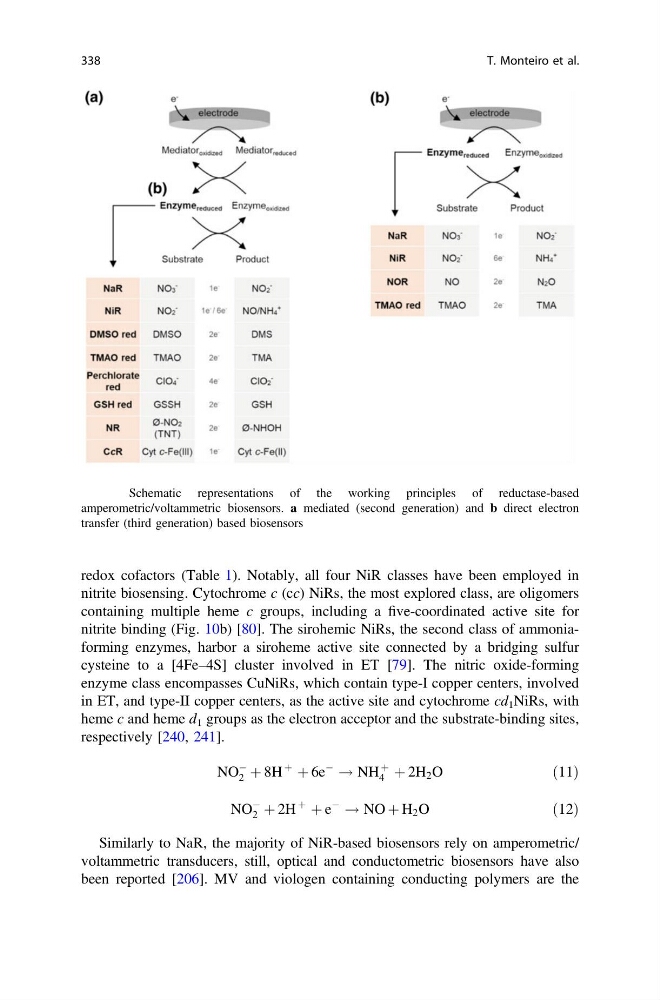
Fig. 11 Schematic representations of the working principles of reductase-based
amperometric/voltammetric biosensors. a mediated (second generation) and b direct electron
transfer (third generation) based biosensors
338
T. Monteiro et al.
nitrite biosensing. Cytochrome c (cc) NiRs, the most explored class, are oligomers
containing multiple heme c groups, including a five-coordinated active site for
nitrite binding (Fig. 10b) [80]. The sirohemic NiRs, the second class of ammoniaforming enzymes, harbor a siroheme active site connected by a bridging sulfur
cysteine to a [4Fe–4S] cluster involved in ET [79]. The nitric oxide-forming
enzyme class encompasses CuNiRs, which contain type-I copper centers, involved
in ET, and type-II copper centers, as the active site and cytochrome cd 1 NiRs, with
heme c and heme d 1 groups as the electron acceptor and the substrate-binding sites,
respectively [240, 241].
NO
À
2 þ 8H
þ
þ 6e
À
! NH
þ
4 þ 2H 2 O
ð11Þ
NO
À
2 þ 2H
þ
þ e
À
! NO þ H 2 O
ð12Þ
Similarly to NaR, the majority of NiR-based biosensors rely on amperometric/
voltammetric transducers, still, optical and conductometric biosensors have also
been reported [206]. MV and viologen containing conducting polymers are the
Fig. 11 Schematic representations of the working principles of reductase-based
amperometric/voltammetric biosensors. a mediated (second generation) and b direct electron
transfer (third generation) based biosensors
338
T. Monteiro et al.