

iron-sulphur near the electrode [33]. However, the main limitation of immobilization of hydrogenase by adsorption for biotechnological applications is that only one
monolayer of enzyme is able to establish DET with the electrode, thus, the amount
of produced H 2 is obviously small. Furthermore, the operational stability is very
low due to enzyme desorption from the electrode [34].
In order to increase the stability of hydrogenase immobilization and to monitor
the process, the adsorption of the Fe–Fe hydrogenase from Clamydomonas reinhardtii onto gold electrodes modified with self-assembled monolayers of thiols
functionalized with a carboxylic group and of different chain length was studied.
This hydrogenase was chosen because its H 2 -production activity and its small size,
allowing for a higher enzyme coverage over the electrode surface. The adsorption
kinetics was monitored by surface-enhanced infrared absorption spectroscopy
(SEIRAS), while the total amount of immobilized enzyme was measured by surface
plasmon resonance (SPR). The SPR study indicated that a monolayer of hydrogenase was bound to the SAM-modified electrode, whereas the SEIRA spectra
indicated that the protein film was stable. The electrocatalytic H 2 -production
measured in presence of MV in the solution was 1.3 µmol  min
−1
 mg
−1 ,
which was only 1% of the activity measured with the same enzyme in solution [35].
More recently, the adsorption of hydrogenase on nanostructured electrodes is
being studied in order to improve the amount of enzyme adsorbed by geometric area
and the DET. Kihara et al. reported DET of T. roseopersicina Ni–Fe hydrogenase on
a electrode modified with a single-walled carbon nanotube (SWCNT) forest. The
vertically aligned SWCNTs allowed stable confinement of the hydrogenase on their
side walls and DET with the electrode. However, the maximum rate of electrocatalytic H 2 -production was only 0.72 µmol  min
−1
 mg
−1 [36]. Higher
DET-based electrocatalytic currents of H 2 -production up to −2 mA Â cm
−2 were
measured in a study that was performed with the C. reinhardtii FeFe-hydrogenase
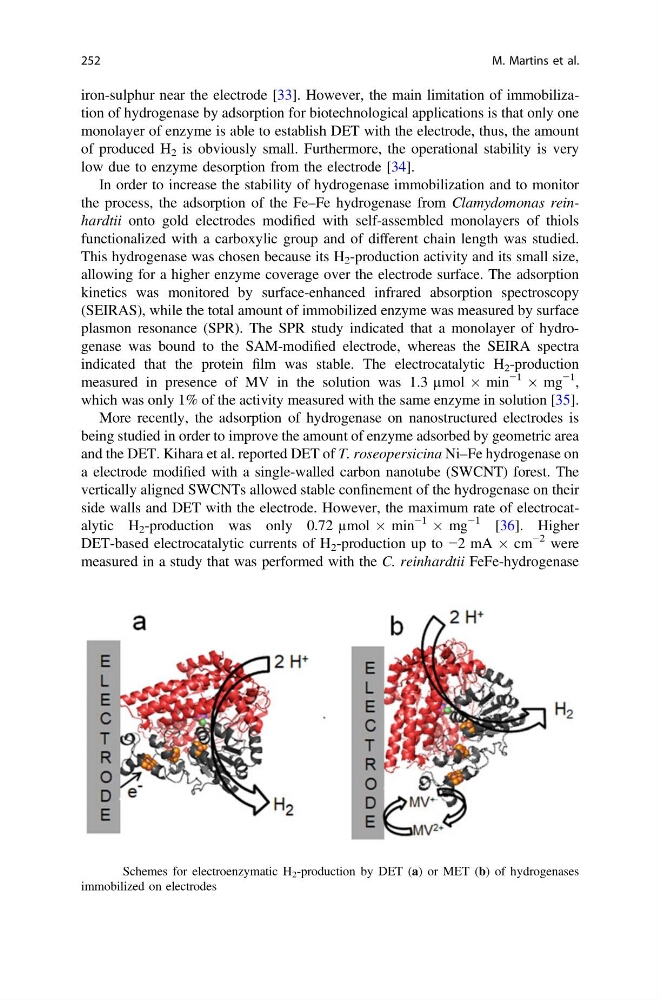
Fig. 3 Schemes for electroenzymatic H 2 -production by DET (a) or MET (b) of hydrogenases
immobilized on electrodes
252
M. Martins et al.
monolayer of enzyme is able to establish DET with the electrode, thus, the amount
of produced H 2 is obviously small. Furthermore, the operational stability is very
low due to enzyme desorption from the electrode [34].
In order to increase the stability of hydrogenase immobilization and to monitor
the process, the adsorption of the Fe–Fe hydrogenase from Clamydomonas reinhardtii onto gold electrodes modified with self-assembled monolayers of thiols
functionalized with a carboxylic group and of different chain length was studied.
This hydrogenase was chosen because its H 2 -production activity and its small size,
allowing for a higher enzyme coverage over the electrode surface. The adsorption
kinetics was monitored by surface-enhanced infrared absorption spectroscopy
(SEIRAS), while the total amount of immobilized enzyme was measured by surface
plasmon resonance (SPR). The SPR study indicated that a monolayer of hydrogenase was bound to the SAM-modified electrode, whereas the SEIRA spectra
indicated that the protein film was stable. The electrocatalytic H 2 -production
measured in presence of MV in the solution was 1.3 µmol  min
−1
 mg
−1 ,
which was only 1% of the activity measured with the same enzyme in solution [35].
More recently, the adsorption of hydrogenase on nanostructured electrodes is
being studied in order to improve the amount of enzyme adsorbed by geometric area
and the DET. Kihara et al. reported DET of T. roseopersicina Ni–Fe hydrogenase on
a electrode modified with a single-walled carbon nanotube (SWCNT) forest. The
vertically aligned SWCNTs allowed stable confinement of the hydrogenase on their
side walls and DET with the electrode. However, the maximum rate of electrocatalytic H 2 -production was only 0.72 µmol  min
−1
 mg
−1 [36]. Higher
DET-based electrocatalytic currents of H 2 -production up to −2 mA Â cm
−2 were
measured in a study that was performed with the C. reinhardtii FeFe-hydrogenase
Fig. 3 Schemes for electroenzymatic H 2 -production by DET (a) or MET (b) of hydrogenases
immobilized on electrodes
252
M. Martins et al.