

(SOM) (microorganisms, enzymes), (ii) fixing atmospheric N (rhizobia, bradyrhizobia), (iii) increasing phosphorus availability (mycorrhizal fungi), (iv) degrading
pesticides (microorganisms, enzymes), v) controlling pathogens (microorganisms)
and (vi) improving soil structure (bacteria, fungi). Soil enzymes have a major
biogeochemical significance because they catalyze most of the reactions in soil
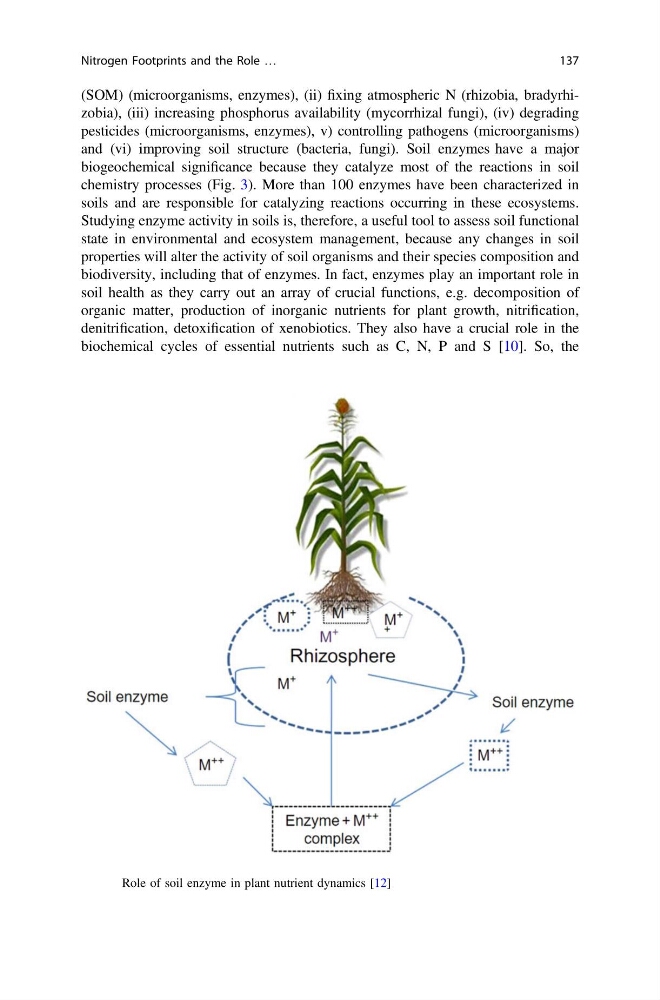
chemistry processes (Fig. 3). More than 100 enzymes have been characterized in
soils and are responsible for catalyzing reactions occurring in these ecosystems.
Studying enzyme activity in soils is, therefore, a useful tool to assess soil functional
state in environmental and ecosystem management, because any changes in soil
properties will alter the activity of soil organisms and their species composition and
biodiversity, including that of enzymes. In fact, enzymes play an important role in
soil health as they carry out an array of crucial functions, e.g. decomposition of
organic matter, production of inorganic nutrients for plant growth, nitrification,
denitrification, detoxification of xenobiotics. They also have a crucial role in the
biochemical cycles of essential nutrients such as C, N, P and S [10]. So, the
Fig. 3 Role of soil enzyme in plant nutrient dynamics [12]
Nitrogen Footprints and the Role …
137
pesticides (microorganisms, enzymes), v) controlling pathogens (microorganisms)
and (vi) improving soil structure (bacteria, fungi). Soil enzymes have a major
biogeochemical significance because they catalyze most of the reactions in soil
chemistry processes (Fig. 3). More than 100 enzymes have been characterized in
soils and are responsible for catalyzing reactions occurring in these ecosystems.
Studying enzyme activity in soils is, therefore, a useful tool to assess soil functional
state in environmental and ecosystem management, because any changes in soil
properties will alter the activity of soil organisms and their species composition and
biodiversity, including that of enzymes. In fact, enzymes play an important role in
soil health as they carry out an array of crucial functions, e.g. decomposition of
organic matter, production of inorganic nutrients for plant growth, nitrification,
denitrification, detoxification of xenobiotics. They also have a crucial role in the
biochemical cycles of essential nutrients such as C, N, P and S [10]. So, the
Fig. 3 Role of soil enzyme in plant nutrient dynamics [12]
Nitrogen Footprints and the Role …
137