

bi-functional aldehyde/alcohol dehydrogenase (AdhE) or the CoA-dependent
acetaldehyde dehydrogenase (Ald). The formed acetaldehyde is then further
reduced to ethanol by an alcohol dehydrogenase (Adh). In the second main route,
acetate is reduced in a highly endergonic reaction with reduced ferredoxin as
electron donor to acetaldehyde by an acetaldehyde:ferredoxin oxidoreductase
(AOR), followed by the conversion to ethanol by Adh. C. autoethanogenum has a
NADP
+
-specific electron-bifurcating hydrogenase that forms a complex with a
formate dehydrogenase, providing reducing equivalents for the reduction of CO 2 to
formate [19]. In addition, it has an electron-bifurcating, ferredoxin-dependent
transhydrogenase (Nfn) [83]. These enzyme complexes along with the presence of
the AOR make C. autoethanogenum an ideal platform for industrial production of
ethanol.
The use of C. autoethanogenum on an industrial scale is not only restricted
to ethanol production from syngas. In 2011, it was discovered that
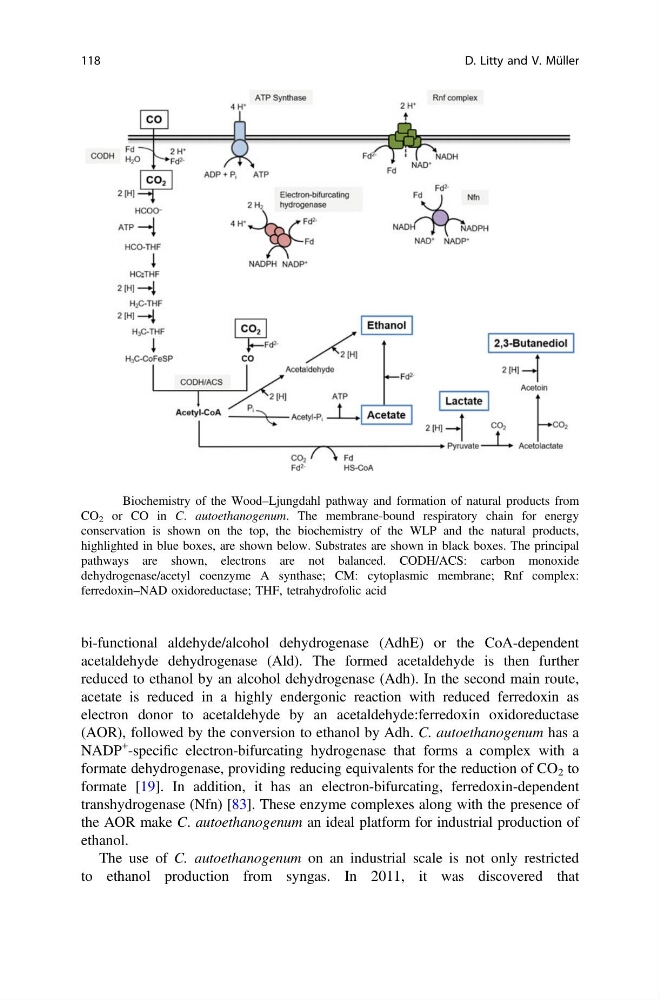
Fig. 2 Biochemistry of the Wood–Ljungdahl pathway and formation of natural products from
CO 2 or CO in C. autoethanogenum. The membrane-bound respiratory chain for energy
conservation is shown on the top, the biochemistry of the WLP and the natural products,
highlighted in blue boxes, are shown below. Substrates are shown in black boxes. The principal
pathways are shown, electrons are not balanced. CODH/ACS: carbon monoxide
dehydrogenase/acetyl coenzyme A synthase; CM: cytoplasmic membrane; Rnf complex:
ferredoxin–NAD oxidoreductase; THF, tetrahydrofolic acid
118
D. Litty and V. Müller
acetaldehyde dehydrogenase (Ald). The formed acetaldehyde is then further
reduced to ethanol by an alcohol dehydrogenase (Adh). In the second main route,
acetate is reduced in a highly endergonic reaction with reduced ferredoxin as
electron donor to acetaldehyde by an acetaldehyde:ferredoxin oxidoreductase
(AOR), followed by the conversion to ethanol by Adh. C. autoethanogenum has a
NADP
+
-specific electron-bifurcating hydrogenase that forms a complex with a
formate dehydrogenase, providing reducing equivalents for the reduction of CO 2 to
formate [19]. In addition, it has an electron-bifurcating, ferredoxin-dependent
transhydrogenase (Nfn) [83]. These enzyme complexes along with the presence of
the AOR make C. autoethanogenum an ideal platform for industrial production of
ethanol.
The use of C. autoethanogenum on an industrial scale is not only restricted
to ethanol production from syngas. In 2011, it was discovered that
Fig. 2 Biochemistry of the Wood–Ljungdahl pathway and formation of natural products from
CO 2 or CO in C. autoethanogenum. The membrane-bound respiratory chain for energy
conservation is shown on the top, the biochemistry of the WLP and the natural products,
highlighted in blue boxes, are shown below. Substrates are shown in black boxes. The principal
pathways are shown, electrons are not balanced. CODH/ACS: carbon monoxide
dehydrogenase/acetyl coenzyme A synthase; CM: cytoplasmic membrane; Rnf complex:
ferredoxin–NAD oxidoreductase; THF, tetrahydrofolic acid
118
D. Litty and V. Müller