

3.1 Acetobacterium woodii
The acetogenic bacterium A. woodii is a model organism to investigate the biochemistry and the energy metabolism of acetogenic bacteria. It can utilize, among
others, monosaccharides such as fructose and C1 compounds such as formate,
methanol or H 2 + CO 2 as substrate for growth. The major end product is always
acetate [18, 45]. A. woodii is one of the few acetogens known to produce high
amounts of acetate and therefore of special interest [46]. Acetate, a highly valuable
chemical used as precursor in various chemical derivates has a global demand of
approximately 18 million tons per year in 2019 [47]. Generally, acetate is produced
by using petrochemical feedstocks in a methyl carbonylation process (Monsanto
process) [5]. A more sustainable way to produce acetate is to use A. woodii as
biocatalyst under autotrophic conditions. Previous strategies to improve acetate
production are mainly based on process optimization [46, 48]. With 44 g/L, the
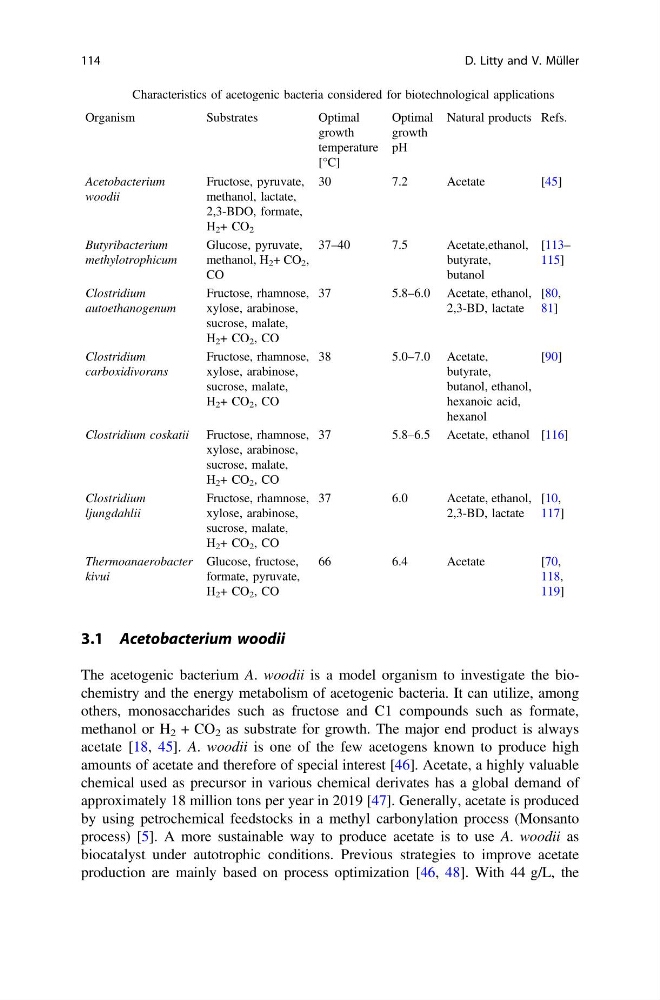
Table 1 Characteristics of acetogenic bacteria considered for biotechnological applications
Organism
Substrates
Optimal
growth
temperature
[°C]
Optimal
growth
pH
Natural products Refs.
Acetobacterium
woodii
Fructose, pyruvate,
methanol, lactate,
2,3-BDO, formate,
H 2 + CO 2
30
7.2
Acetate
[45]
Butyribacterium
methylotrophicum
Glucose, pyruvate,
methanol, H 2 + CO 2 ,
CO
37–40
7.5
Acetate,ethanol,
butyrate,
butanol
[113–
115]
Clostridium
autoethanogenum
Fructose, rhamnose,
xylose, arabinose,
sucrose, malate,
H 2 + CO 2 , CO
37
5.8–6.0 Acetate, ethanol,
2,3-BD, lactate
[80,
81]
Clostridium
carboxidivorans
Fructose, rhamnose,
xylose, arabinose,
sucrose, malate,
H 2 + CO 2 , CO
38
5.0–7.0 Acetate,
butyrate,
butanol, ethanol,
hexanoic acid,
hexanol
[90]
Clostridium coskatii Fructose, rhamnose,
xylose, arabinose,
sucrose, malate,
H 2 + CO 2 , CO
37
5.8–6.5 Acetate, ethanol [116]
Clostridium
ljungdahlii
Fructose, rhamnose,
xylose, arabinose,
sucrose, malate,
H 2 + CO 2 , CO
37
6.0
Acetate, ethanol,
2,3-BD, lactate
[10,
117]
Thermoanaerobacter
kivui
Glucose, fructose,
formate, pyruvate,
H 2 + CO 2 , CO
66
6.4
Acetate
[70,
118,
119]
114
D. Litty and V. Müller
The acetogenic bacterium A. woodii is a model organism to investigate the biochemistry and the energy metabolism of acetogenic bacteria. It can utilize, among
others, monosaccharides such as fructose and C1 compounds such as formate,
methanol or H 2 + CO 2 as substrate for growth. The major end product is always
acetate [18, 45]. A. woodii is one of the few acetogens known to produce high
amounts of acetate and therefore of special interest [46]. Acetate, a highly valuable
chemical used as precursor in various chemical derivates has a global demand of
approximately 18 million tons per year in 2019 [47]. Generally, acetate is produced
by using petrochemical feedstocks in a methyl carbonylation process (Monsanto
process) [5]. A more sustainable way to produce acetate is to use A. woodii as
biocatalyst under autotrophic conditions. Previous strategies to improve acetate
production are mainly based on process optimization [46, 48]. With 44 g/L, the
Table 1 Characteristics of acetogenic bacteria considered for biotechnological applications
Organism
Substrates
Optimal
growth
temperature
[°C]
Optimal
growth
pH
Natural products Refs.
Acetobacterium
woodii
Fructose, pyruvate,
methanol, lactate,
2,3-BDO, formate,
H 2 + CO 2
30
7.2
Acetate
[45]
Butyribacterium
methylotrophicum
Glucose, pyruvate,
methanol, H 2 + CO 2 ,
CO
37–40
7.5
Acetate,ethanol,
butyrate,
butanol
[113–
115]
Clostridium
autoethanogenum
Fructose, rhamnose,
xylose, arabinose,
sucrose, malate,
H 2 + CO 2 , CO
37
5.8–6.0 Acetate, ethanol,
2,3-BD, lactate
[80,
81]
Clostridium
carboxidivorans
Fructose, rhamnose,
xylose, arabinose,
sucrose, malate,
H 2 + CO 2 , CO
38
5.0–7.0 Acetate,
butyrate,
butanol, ethanol,
hexanoic acid,
hexanol
[90]
Clostridium coskatii Fructose, rhamnose,
xylose, arabinose,
sucrose, malate,
H 2 + CO 2 , CO
37
5.8–6.5 Acetate, ethanol [116]
Clostridium
ljungdahlii
Fructose, rhamnose,
xylose, arabinose,
sucrose, malate,
H 2 + CO 2 , CO
37
6.0
Acetate, ethanol,
2,3-BD, lactate
[10,
117]
Thermoanaerobacter
kivui
Glucose, fructose,
formate, pyruvate,
H 2 + CO 2 , CO
66
6.4
Acetate
[70,
118,
119]
114
D. Litty and V. Müller