

particles are electrostatically assembled on to this layer [22b, 24, 27]. The next
step involves the assembly of polycationic molecules based on cyclophanes such
as cyclobis (paraquat- p-phenylene) [185], cyclobis (paraquat- p-biphenylene) [186],
pyridinium salts and an octacationic Pd(II) macrocycle [187] as given in Scheme
20.4. This procedure of metal particle and organic molecule attachment is repeated
to yield multilayers of the assembly [28]. Similar preparation techniques have
been reported where the crosslinking units are replaced by polymers, other
nanoparticles or biomaterials [164, 188, 189]. The crosslinker molecule, cyclobis
(paraquat- p-phenylene), is electro-active and hence the redox activity can be followed electrochemically. The redox activity increases with the number of layers
anchored onto the surface, indicating that the assembly exhibits dimensional
activity. Coulometric analysis yields coverages of 1.5 Â 10
À11 mol cm
À2 per layer,
that leads to an estimate of 100 crosslinker molecules per gold particle. This is in
excellent agreement with the number estimated to precipitate the gold colloid from
the solution [190]. This further emphasizes that the interactions are electroactive
in nature.
The p acceptor properties of the cyclobis (paraquat- p-phenylene) manifest in the
complexation and sensing of p donors such as hydroquinones [190]. The sensing
properties of the cyclobis (paraquat- p-phenylene)-modified surface towards hydroquinone are shown in Figure 20.15. It should be noted that the sensitivity for
hydroquinone sensing could be tuned, based on the number of layers of the
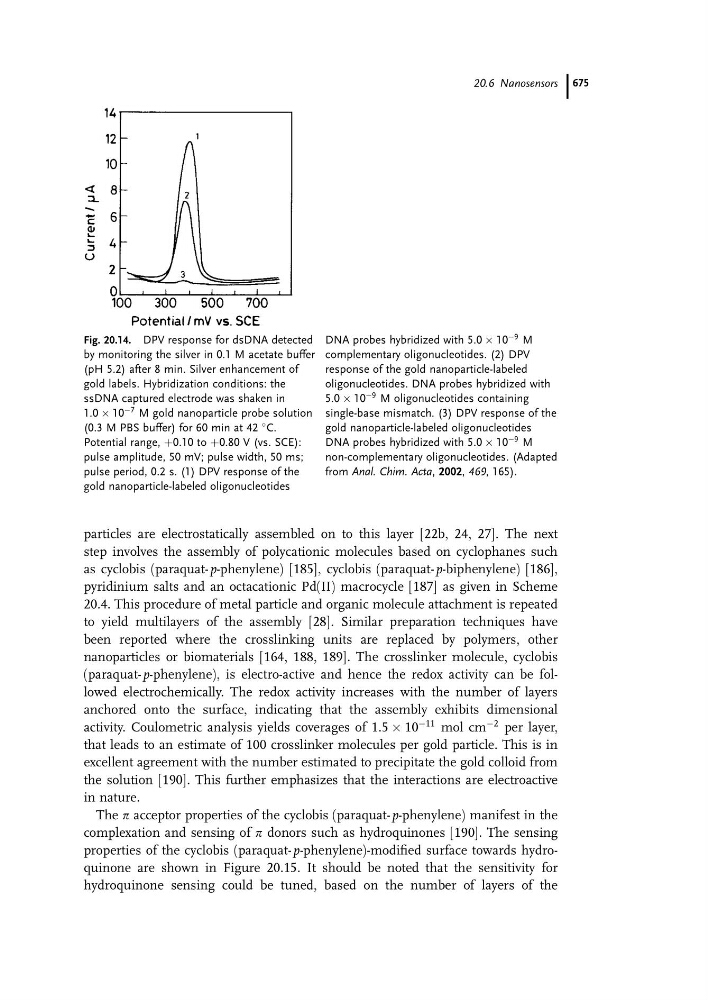
Fig. 20.14. DPV response for dsDNA detected
by monitoring the silver in 0.1 M acetate buffer
(pH 5.2) after 8 min. Silver enhancement of
gold labels. Hybridization conditions: the
ssDNA captured electrode was shaken in
1.0 Â 10
À7 M gold nanoparticle probe solution
(0.3 M PBS buffer) for 60 min at 42
C.
Potential range, þ0.10 to þ0.80 V (vs. SCE):
pulse amplitude, 50 mV; pulse width, 50 ms;
pulse period, 0.2 s. (1) DPV response of the
gold nanoparticle-labeled oligonucleotides
DNA probes hybridized with 5.0 Â 10
À9 M
complementary oligonucleotides. (2) DPV
response of the gold nanoparticle-labeled
oligonucleotides. DNA probes hybridized with
5.0 Â 10
À9 M oligonucleotides containing
single-base mismatch. (3) DPV response of the
gold nanoparticle-labeled oligonucleotides
DNA probes hybridized with 5.0 Â 10
À9 M
non-complementary oligonucleotides. (Adapted
from Anal. Chim. Acta, 2002, 469, 165).
20.6 Nanosensors 675