

[169b]. It should be pointed out that DA and AA do not show separate peaks on
a bare electrode surface. Thus good selectivity and sensitivity is achieved by this
method.
The gold nanoparticle–enzyme modification procedure has also been used to
probe the association of an enzyme and its cofactor [170]. Colloidal gold immobilized on a gold electrode using a dithiol linker is used to adsorb alcohol dehydrogenase (ADH). The interaction between ADH and the oxidized form of
nicotinamide adenine dinucleotide [NAD
þ ] is subsequently probed using electrochemical impedance studies [170]. The association is revealed by an increase in the charge transfer resistance for [Fe(CN) 6 ]
3À=4À when the NAD
þ concentration is increased in the bulk of the solution. Boal and Rotello synthesized
diacyldiamiopyridine-derivatized gold nanoparticles [171] and further interacted
them with flavin through non-covalent complexation. The molecular recognition
based on host–guest interactions between flavin and the pyridine unit determines
the redox activity of flavin. A cathodic shift in the potential is observed with increasing concentration of pyridine-functionalized gold particles.
The inactivation of certain enzymes such as cholesterol oxidase (CO) on interaction with Au nanoparticles is overcome by immobilizing CO and cholesterol esterase (CE) in a carragenean hydrogel and coupling with Au particles loaded with
HRP. This multienzyme device has been shown to be very useful in the determination of cholesterol in serum and whole blood [172]. The sensor operates at low
potentials avoiding major interferences. The presence of the hydrogel enables the
analysis of whole blood with no fouling of the electrode surface.
Electrochemical labels based on gold nanoparticles are of recent origin [173–
177]. Kim and co-workers developed an immuno-chromatographic membrane strip
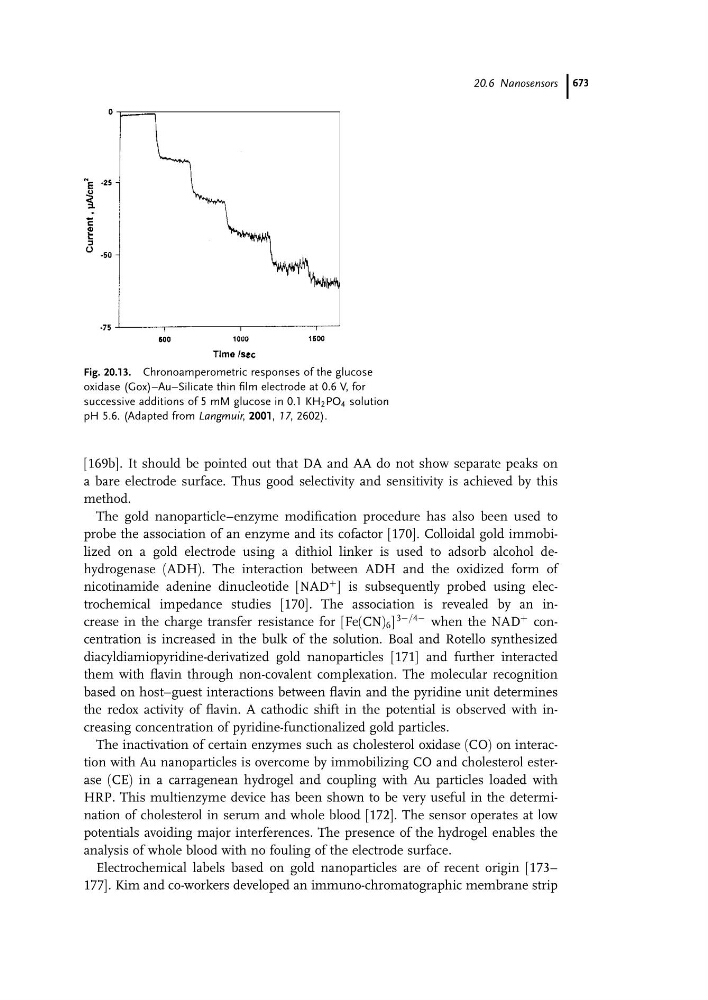
Fig. 20.13. Chronoamperometric responses of the glucose
oxidase (Gox)–Au–Silicate thin film electrode at 0.6 V, for
successive additions of 5 mM glucose in 0.1 KH 2 PO 4 solution
pH 5.6. (Adapted from Langmuir, 2001, 17, 2602).
20.6 Nanosensors 673