

weakly acidic pH used in the reaction prevents the precipitation of the metals into
hydroxides or oxides and facilitates their partial incorporation into the inorganic
framework. These phases have framework compositions of general formula
(Si x Me w Al y P z )O 2 , where x varies from 0 to 0.20 and w from 0 to 0.25. The silicon
substitutes preferentially at the phosphorus site whereas the metal substitutes
exclusively for the aluminum. The introduction of these elements renders the
frameworks negative and therefore requires charge-compensating cations, as in the
aluminosilicate zeolites. When these cations are protons, the materials exhibit acid
catalytic properties that vary as a function of the structural type and the nature of
the substituting element [40].
From the structural point of view, the microporous aluminophosphate-based
compounds include more than 40 different framework types. As in the zeolites, the
three-dimensional structure is delimited by channels and cavities where the templating agent is located. However, there are some differences compared with the
topologies encountered in the zeolite family. The majority of the aluminophosphate-based solids exhibit networks with alternating Al and P on tetrahedral sites.
This rule limits the structural possibilities because rings must be formed by even
numbers of T atoms, thus preventing the occurrence, for example, of 5-ring units.
Thus, no AlPO 4 exists with the MFI type structure, which contains 5-ring units.
The occurrence of coordination numbers greater than four for the aluminum is
another feature of the phosphate-based solids in comparison with the zeolites. For
example, in some phases aluminum adopts five-fold (trigonal bipyramidal) or sixfold (octahedral) coordination. In these cases, anionic species such as hydroxy or
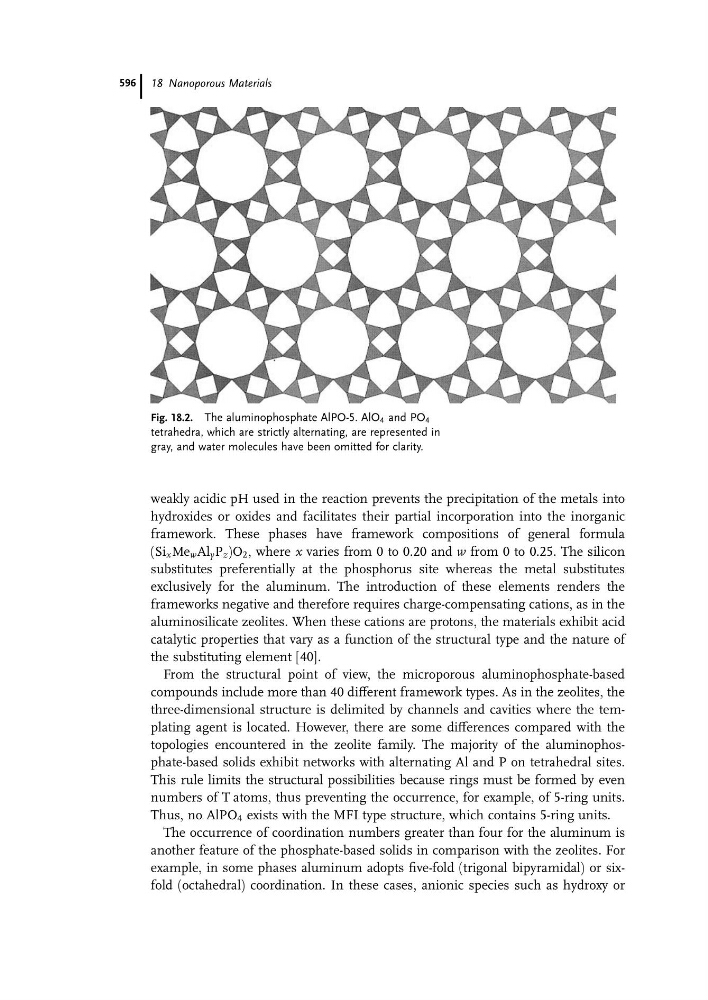
Fig. 18.2. The aluminophosphate AlPO-5. AlO 4 and PO 4
tetrahedra, which are strictly alternating, are represented in
gray, and water molecules have been omitted for clarity.
18 Nanoporous Materials
596