

phasic mixture containing the gold hydrosol and octadecylamine (ODA) molecules
in toluene resulted in the rapid transfer of gold nanoparticles into the organic
phase without the use of acid. This is clearly demonstrated in Figure 3.4A that
shows a picture of two test-tubes with the biphasic mixture before (test-tube to the
right) and after shaking (test-tube to the left). The transfer of the red color from
the lower, aqueous phase to the upper, toluene phase is clearly illustrated. UV–vis
spectra recorded from the gold hydrosol before (curve 3) and after (curve 1) phase
transfer are shown along with the toluene phase after phase transfer (curve 2 in
Figure 3.4B). The almost complete disappearance of the gold nanoparticle plasmon
resonance in curve 1 indicates facile phase transfer of the gold nanoparticles into
toluene. The UV–vis spectrum recorded from the toluene phase after phase transfer of the gold nanoparticles (curve 2) shows a fairly sharp plasmon resonance
from the nanoparticles, indicating little aggregation of the particles. Clearly, during
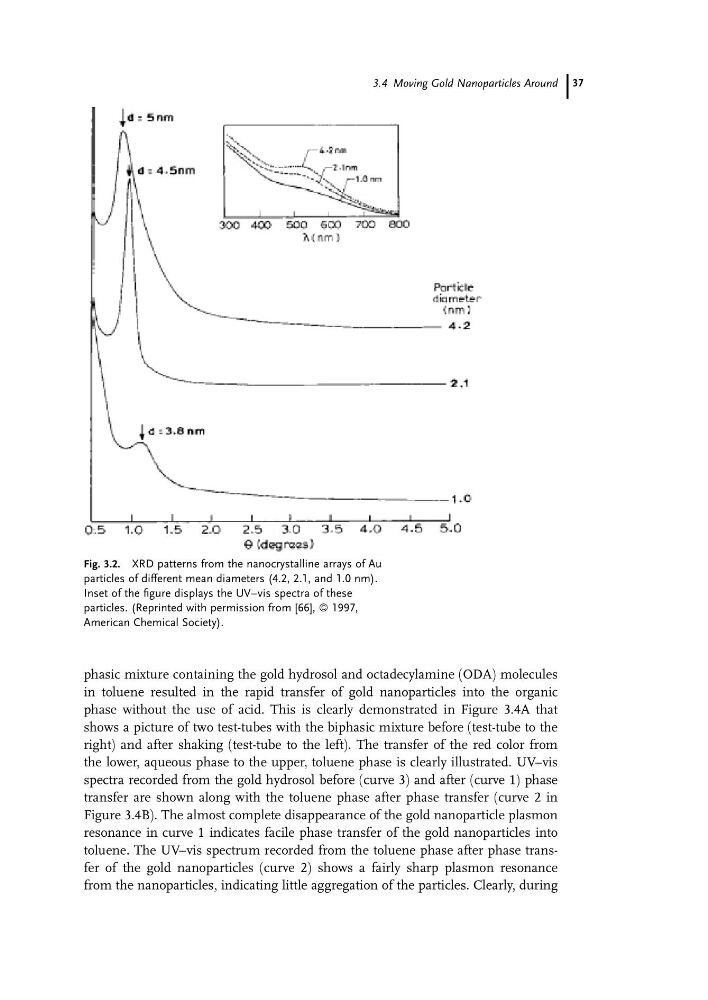
Fig. 3.2. XRD patterns from the nanocrystalline arrays of Au
particles of different mean diameters (4.2, 2.1, and 1.0 nm).
Inset of the figure displays the UV–vis spectra of these
particles. (Reprinted with permission from [66], 8 1997,
American Chemical Society).
3.4 Moving Gold Nanoparticles Around 37
in toluene resulted in the rapid transfer of gold nanoparticles into the organic
phase without the use of acid. This is clearly demonstrated in Figure 3.4A that
shows a picture of two test-tubes with the biphasic mixture before (test-tube to the
right) and after shaking (test-tube to the left). The transfer of the red color from
the lower, aqueous phase to the upper, toluene phase is clearly illustrated. UV–vis
spectra recorded from the gold hydrosol before (curve 3) and after (curve 1) phase
transfer are shown along with the toluene phase after phase transfer (curve 2 in
Figure 3.4B). The almost complete disappearance of the gold nanoparticle plasmon
resonance in curve 1 indicates facile phase transfer of the gold nanoparticles into
toluene. The UV–vis spectrum recorded from the toluene phase after phase transfer of the gold nanoparticles (curve 2) shows a fairly sharp plasmon resonance
from the nanoparticles, indicating little aggregation of the particles. Clearly, during
Fig. 3.2. XRD patterns from the nanocrystalline arrays of Au
particles of different mean diameters (4.2, 2.1, and 1.0 nm).
Inset of the figure displays the UV–vis spectra of these
particles. (Reprinted with permission from [66], 8 1997,
American Chemical Society).
3.4 Moving Gold Nanoparticles Around 37