

poses a major obstacle to the development of electronic devices based upon this
material. Furthermore, excessive or uncontrolled oxidation may deleteriously and
irreversibly alter the useful, inherent properties of the nanocrystallites, compromising their integrity and drastically limiting their utility for other technological
applications. Thus, the desire for greater control over the interfacial properties of
porous silicon has redirected focus from the oxide layer to exploitation of the
chemistry of the freshly etched hydride surface to synthesize covalently bonded
organic monolayers [29]. Passivation of porous silicon with organic moieties imparts resistance to oxidation and gives some regulation over the stability of this
material [30]. Additionally, such groups can be readily manipulated through the
expansive resources of organic and organometallic chemistry, leading to the synthesis of derivatized surfaces exhibiting distinct chemical activities [31–33]. The
tunable reactivity and durability of organically-passivated nanocrystalline silicon
offer the incorporation of stability, selectivity, and recognition into porous silicon,
expanding its usefulness from optoelectronic applications to analytical and chemical devices as well [34].
Beyond the motivation to fabricate working systems from functionalized porous
silicon, there is also more fundamental interest in the reactions of its surfaces.
Because the vast surface of nanocrystalline silicon contains a large fraction of the
total atoms, the composition and environment of the silicon interface are believed
to affect greatly the physical, chemical, and electronic properties of the material. In
particular, functionalization of porous silicon with certain organic groups is known
to diminish photoluminescence [27]; however, the mechanism of quenching has
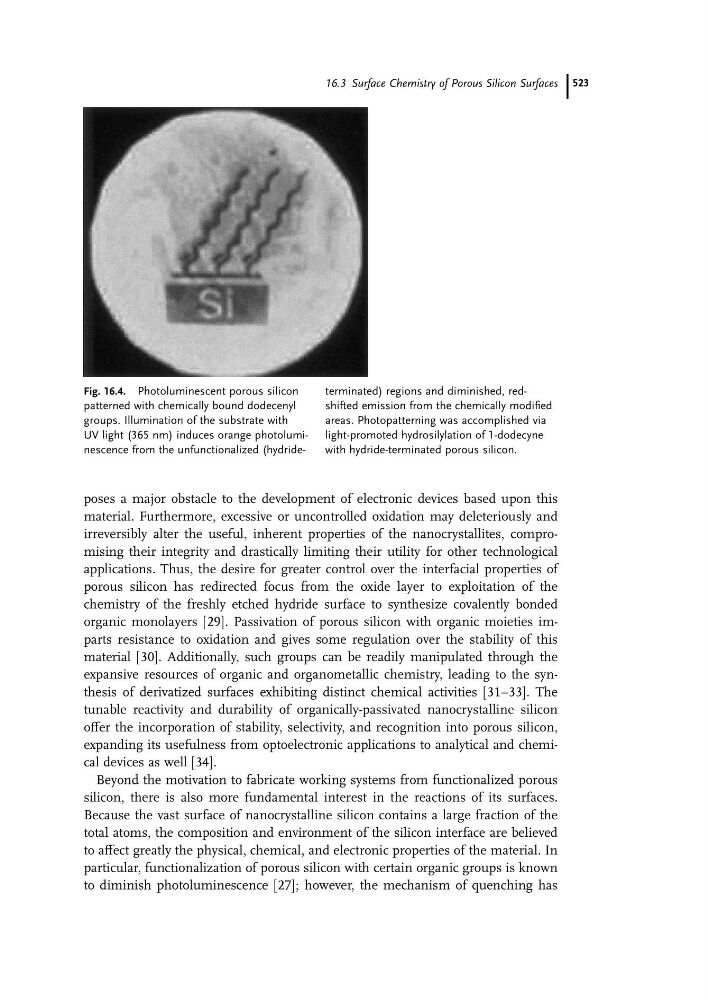
Fig. 16.4. Photoluminescent porous silicon
patterned with chemically bound dodecenyl
groups. Illumination of the substrate with
UV light (365 nm) induces orange photoluminescence from the unfunctionalized (hydrideterminated) regions and diminished, redshifted emission from the chemically modified
areas. Photopatterning was accomplished via
light-promoted hydrosilylation of 1-dodecyne
with hydride-terminated porous silicon.
16.3 Surface Chemistry of Porous Silicon Surfaces 523