

All these spherical clusters can be described, as mentioned above, as
[{(Mo)Mo 5 } 12 (link) 30 ]. It was suggested to call them ‘Keplerates’ because of their
striking similarity to a fragment of Kepler’s early speculative model of the universe, as described in his opus Mysterium Cosmographicum (see Figure 14.15). The
related Keplerate type chemistry is especially interesting for mathematicians
[3c]. Furthermore, these clusters also show, topologically speaking, a similarity to
spherical viruses (Figure 14.16).
14.4
Perspectives for Materials Science and Nanotechnology: En Route to SphericalSurface, Nanoporous-Cluster, and Super-Supramolecular Chemistry including the
Option of Modelling Cell Response
The clusters described above are interesting for materials science and nanotechnology aspects because of their stability, size, solubility (in several solvents), giant
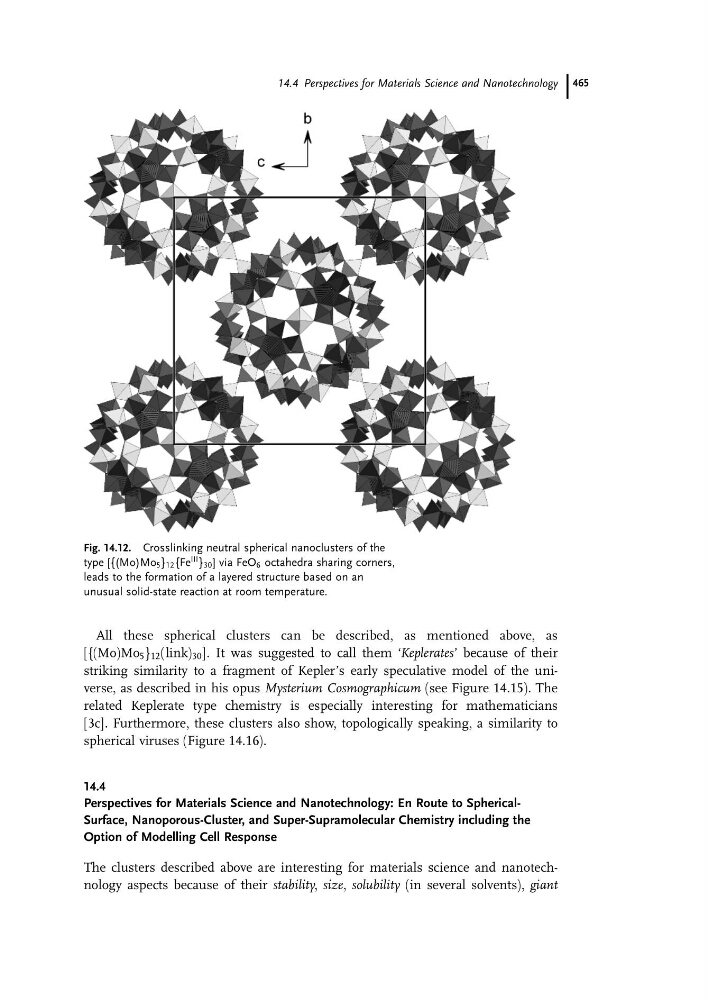
Fig. 14.12. Crosslinking neutral spherical nanoclusters of the
type [{(Mo)Mo 5 } 12 {Fe
III } 30 ] via FeO 6 octahedra sharing corners,
leads to the formation of a layered structure based on an
unusual solid-state reaction at room temperature.
14.4 Perspectives for Materials Science and Nanotechnology 465
[{(Mo)Mo 5 } 12 (link) 30 ]. It was suggested to call them ‘Keplerates’ because of their
striking similarity to a fragment of Kepler’s early speculative model of the universe, as described in his opus Mysterium Cosmographicum (see Figure 14.15). The
related Keplerate type chemistry is especially interesting for mathematicians
[3c]. Furthermore, these clusters also show, topologically speaking, a similarity to
spherical viruses (Figure 14.16).
14.4
Perspectives for Materials Science and Nanotechnology: En Route to SphericalSurface, Nanoporous-Cluster, and Super-Supramolecular Chemistry including the
Option of Modelling Cell Response
The clusters described above are interesting for materials science and nanotechnology aspects because of their stability, size, solubility (in several solvents), giant
Fig. 14.12. Crosslinking neutral spherical nanoclusters of the
type [{(Mo)Mo 5 } 12 {Fe
III } 30 ] via FeO 6 octahedra sharing corners,
leads to the formation of a layered structure based on an
unusual solid-state reaction at room temperature.
14.4 Perspectives for Materials Science and Nanotechnology 465