

1. Wheel-shaped clusters of the type {Mo 154 } and {Mo 176 } [3, 6] with large central
cavities that can be easily modified by means of simple well-known chemical
reactions (see Figure 14.4).
2. Spherical-shaped clusters of the type [(pent) 12 (link) 30 ] [3, 5, 8] with nanoscaled
tunable cavities and tunable pores (see Figure 14.2).
3. Torus-shaped clusters of the type {Mo 57 M 6 } [3a] with potential functional indentations on the cluster surface (see Figure 14.1 right).
The giant wheel molybdenum-oxide based anions can be considered as objects which
show a variety of nanoscale structural functionalities (‘‘nanostructured landscape’’)
not only allowing reactions at a variety of well-defined centres/groups but also
offering the option of acting as potential nano-reactors or -containers. Some relevant reactions are:
. The substitution of H 2 O ligands coordinated to the molybdenum centres of
{Mo 154 } by ambivalent and/or multivalent ligands, for example the amino acid
cystine can be coordinated to the inner wall of the cluster cavity and hence creates hydrophobic and hydrophilic surroundings with different functionalities
(see Figure 14.7) [9].
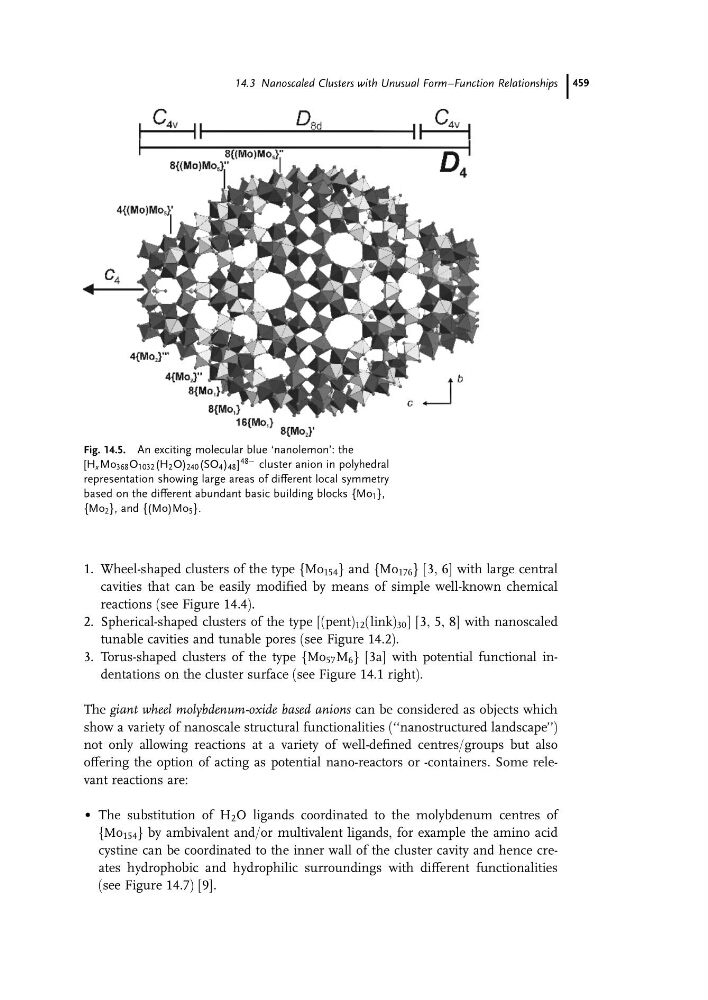
Fig. 14.5. An exciting molecular blue ‘nanolemon’: the
[H x Mo 368 O 1032 (H 2 O) 240 (SO 4 ) 48 ]
48À cluster anion in polyhedral
representation showing large areas of different local symmetry
based on the different abundant basic building blocks {Mo 1 },
{Mo 2 }, and {(Mo)Mo 5 }.
14.3 Nanoscaled Clusters with Unusual Form–Function Relationships 459
cavities that can be easily modified by means of simple well-known chemical
reactions (see Figure 14.4).
2. Spherical-shaped clusters of the type [(pent) 12 (link) 30 ] [3, 5, 8] with nanoscaled
tunable cavities and tunable pores (see Figure 14.2).
3. Torus-shaped clusters of the type {Mo 57 M 6 } [3a] with potential functional indentations on the cluster surface (see Figure 14.1 right).
The giant wheel molybdenum-oxide based anions can be considered as objects which
show a variety of nanoscale structural functionalities (‘‘nanostructured landscape’’)
not only allowing reactions at a variety of well-defined centres/groups but also
offering the option of acting as potential nano-reactors or -containers. Some relevant reactions are:
. The substitution of H 2 O ligands coordinated to the molybdenum centres of
{Mo 154 } by ambivalent and/or multivalent ligands, for example the amino acid
cystine can be coordinated to the inner wall of the cluster cavity and hence creates hydrophobic and hydrophilic surroundings with different functionalities
(see Figure 14.7) [9].
Fig. 14.5. An exciting molecular blue ‘nanolemon’: the
[H x Mo 368 O 1032 (H 2 O) 240 (SO 4 ) 48 ]
48À cluster anion in polyhedral
representation showing large areas of different local symmetry
based on the different abundant basic building blocks {Mo 1 },
{Mo 2 }, and {(Mo)Mo 5 }.
14.3 Nanoscaled Clusters with Unusual Form–Function Relationships 459