

cleation and growth processes and properties carried out in parallel with the experimental work is highly valuable in giving additional insight into the nature of
the oxide-assisted growth and in explaining our experimental results.
Acknowledgement
We are grateful to our colleagues (I. Bello, C. S. Lee, D. S. Y. Tong, N. Wang, N. B.
Wong), post-doctoral fellows (J. Q. Hu, Y. Jiang, B. X. Li, D. D. D. Ma, Z. W. Pan,
H. Y. Peng, W. S. Shi, D. K. Yu), graduate students (F. Au, C. P. Li, X. M. Meng, X.
H. Sun, Y. H. Tang), and visiting professors (T. K. Sham, B. K. Teo, D. P. Yu, Y. F.
Zhang) to COSDAF for their contributions to the work described in this chapter.
The work described herein was supported financially by the Research Grants
Council of Hong Kong SAR (Project No. 8730016 (e.g. CityU 3/01C); 9040459;
9040533 (e.g. CityU 1033/00P); 9040633 (e.g. CityU 1011/01P); and 9040746 (e.g.
CityU 1138/02P)) and City University of Hong Kong.
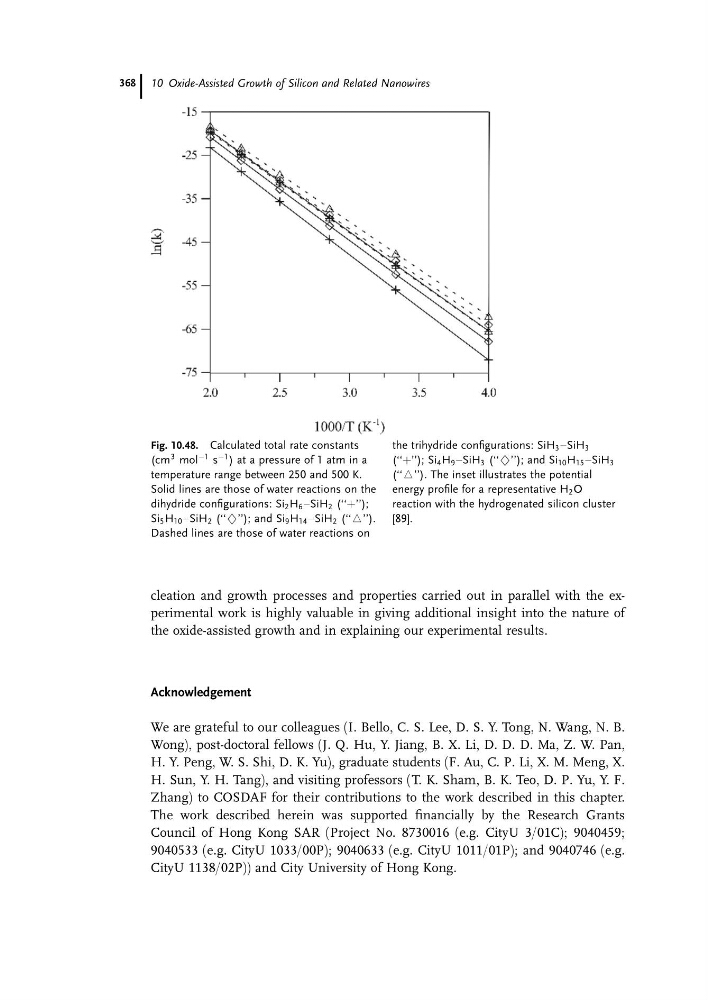
Fig. 10.48. Calculated total rate constants
(cm
3 mol
À1 s
À1 ) at a pressure of 1 atm in a
temperature range between 250 and 500 K.
Solid lines are those of water reactions on the
dihydride configurations: Si 2 H 6 aSiH 2 (‘‘þ’’);
Si 5 H 10 aSiH 2 (‘‘U’’); and Si 9 H 14 aSiH 2 (‘‘s’’).
Dashed lines are those of water reactions on
the trihydride configurations: SiH 3 aSiH 3
(‘‘þ’’); Si 4 H 9 aSiH 3 (‘‘U’’); and Si 10 H 15 aSiH 3
(‘‘s’’). The inset illustrates the potential
energy profile for a representative H 2 O
reaction with the hydrogenated silicon cluster
[89].
10 Oxide-Assisted Growth of Silicon and Related Nanowires
368
the oxide-assisted growth and in explaining our experimental results.
Acknowledgement
We are grateful to our colleagues (I. Bello, C. S. Lee, D. S. Y. Tong, N. Wang, N. B.
Wong), post-doctoral fellows (J. Q. Hu, Y. Jiang, B. X. Li, D. D. D. Ma, Z. W. Pan,
H. Y. Peng, W. S. Shi, D. K. Yu), graduate students (F. Au, C. P. Li, X. M. Meng, X.
H. Sun, Y. H. Tang), and visiting professors (T. K. Sham, B. K. Teo, D. P. Yu, Y. F.
Zhang) to COSDAF for their contributions to the work described in this chapter.
The work described herein was supported financially by the Research Grants
Council of Hong Kong SAR (Project No. 8730016 (e.g. CityU 3/01C); 9040459;
9040533 (e.g. CityU 1033/00P); 9040633 (e.g. CityU 1011/01P); and 9040746 (e.g.
CityU 1138/02P)) and City University of Hong Kong.
Fig. 10.48. Calculated total rate constants
(cm
3 mol
À1 s
À1 ) at a pressure of 1 atm in a
temperature range between 250 and 500 K.
Solid lines are those of water reactions on the
dihydride configurations: Si 2 H 6 aSiH 2 (‘‘þ’’);
Si 5 H 10 aSiH 2 (‘‘U’’); and Si 9 H 14 aSiH 2 (‘‘s’’).
Dashed lines are those of water reactions on
the trihydride configurations: SiH 3 aSiH 3
(‘‘þ’’); Si 4 H 9 aSiH 3 (‘‘U’’); and Si 10 H 15 aSiH 3
(‘‘s’’). The inset illustrates the potential
energy profile for a representative H 2 O
reaction with the hydrogenated silicon cluster
[89].
10 Oxide-Assisted Growth of Silicon and Related Nanowires
368