

ablation and thermal evaporation of semiconductor powders mixed with metal or
oxide catalysts. The solid target used for laser ablation is made of pure Si powder
mixed with metals (Fe, Ni, or Co) and the temperature around the solid target was
maintained in the range 1200 to 1400
C. The temperature of the area around the
substrate on which the nanowire grew was between 900 and 1100
C. The transmission electron microscopy (TEM) investigations showed that Si nanowires obtained by this method were extremely long and highly curved with a typical diameter in the range 20–80 nm (Figure 8.29(a) and (b)). Each wire consisted of an
outer layer of Si oxide and a crystalline Si core. A high density of defects, such as
stacking faults and micro-twins, has been observed in the crystalline Si core. As
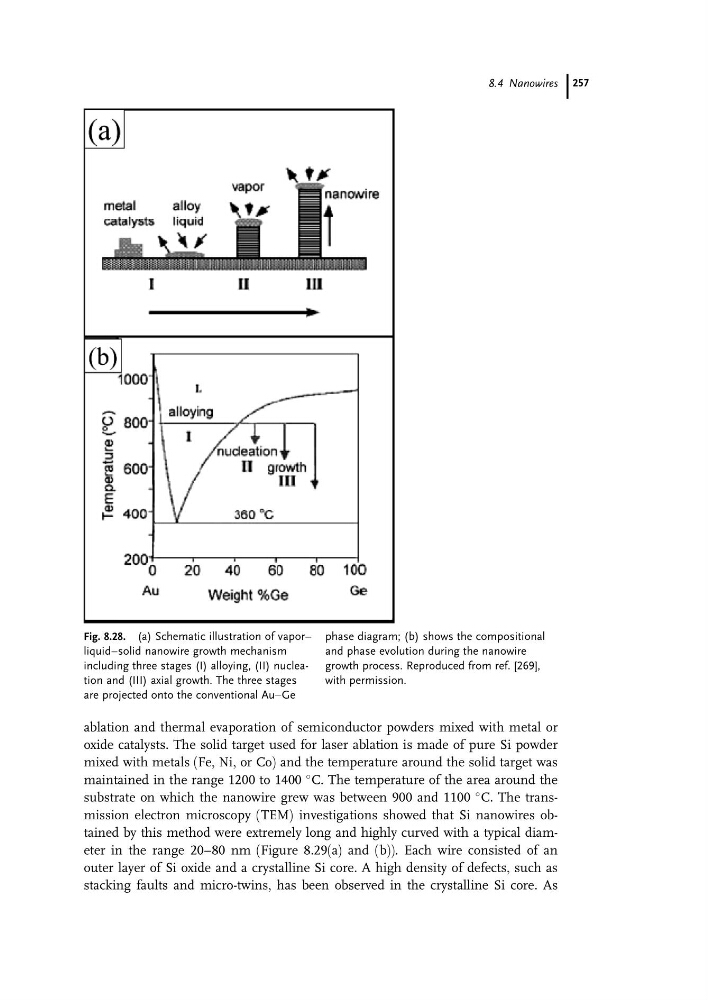
Fig. 8.28. (a) Schematic illustration of vapor–
liquid–solid nanowire growth mechanism
including three stages (I) alloying, (II) nucleation and (III) axial growth. The three stages
are projected onto the conventional AuaGe
phase diagram; (b) shows the compositional
and phase evolution during the nanowire
growth process. Reproduced from ref. [269],
with permission.
8.4 Nanowires 257
oxide catalysts. The solid target used for laser ablation is made of pure Si powder
mixed with metals (Fe, Ni, or Co) and the temperature around the solid target was
maintained in the range 1200 to 1400
C. The temperature of the area around the
substrate on which the nanowire grew was between 900 and 1100
C. The transmission electron microscopy (TEM) investigations showed that Si nanowires obtained by this method were extremely long and highly curved with a typical diameter in the range 20–80 nm (Figure 8.29(a) and (b)). Each wire consisted of an
outer layer of Si oxide and a crystalline Si core. A high density of defects, such as
stacking faults and micro-twins, has been observed in the crystalline Si core. As
Fig. 8.28. (a) Schematic illustration of vapor–
liquid–solid nanowire growth mechanism
including three stages (I) alloying, (II) nucleation and (III) axial growth. The three stages
are projected onto the conventional AuaGe
phase diagram; (b) shows the compositional
and phase evolution during the nanowire
growth process. Reproduced from ref. [269],
with permission.
8.4 Nanowires 257